
What’s the fastest way to get aggressive analog character, performance-ready punch, and that sharp, cuts-through-everything tone in electronic production without building saturation chains or fighting polite VA presets? Analog-modeled synthesizer plugins – they recreate the circuit-level behavior, filter instability, and raw harmonic bite that made classic hardware synths feel alive before digital smoothness became the standard.
With that said, here are the best analog-modeled synth plugins I recommend for producers and sound designers who need thick bass, ripping leads, and finished sounds without the tuning drift, maintenance costs, or studio space requirements of actual vintage hardware.
This guide covers synth plugins from KORG ARP ODYSSEY, UAD Anthem, u-he Diva, Moog Mariana, Softube Model 72, and some more, focusing on instruments that deliver genuine analog behavior through component modeling rather than generic subtractive architecture.
Standard VA synths generate clean oscillators and smooth filters but miss the nonlinear saturation, voice drift, and slightly unruly resonance that made classic analog synths cut through dense mixes without additional processing. On the flip side, real analog hardware shapes sound through circuit-level impedance matching that creates natural density, temperature-dependent oscillator drift that adds organic movement, ladder filter designs that respond musically when pushed hard, and discrete component behavior that can’t be replicated with basic waveform generation.
But now let’s talk about the actual plugins:
1. KORG ARP ODYSSEY
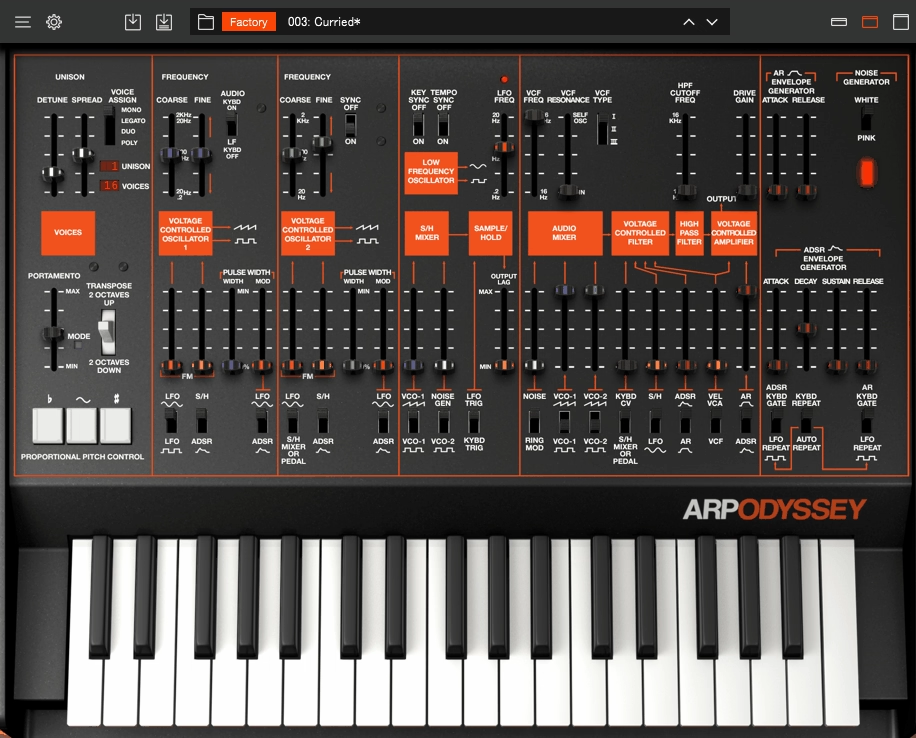
This is basically the 2015 KORG hardware reissue translated into software, then expanded in the ways that actually matter in 2026 workflows where it keeps the Odyssey’s aggressive, performance-first voice.
KORG ARP ODYSSEY adds polyphony, a programmable arpeggiator, and modern effects, so it’s not locked into monophonic lead machine duty, and KORG modeled it with CMT (Component Modeling Technology), meaning they’re aiming at the circuit behavior and signal path response, not just a static sounds like curve.
I think the big reason to pick an Odyssey over the endless Minimoog clones is the tone architecture where it’s sharp and slightly unruly in a way that cuts through dense mixes without needing extra saturation or EQ tricks. KORG lean into that by including all three generations of Odyssey filters, each with its own character, and this matters in practice because it changes the entire behavior of resonance and how the synth sits in the upper mids.
- All Three Filter Generations Plus Drive
You can keep it cleaner and more precise for modern lines, or push it into that classic nasal, ripping tone that makes the Odyssey feel alive, and KORG also include a DRIVE switch that’s intended for extreme, wild sounds. This is not subtle analog warmth but the kind of drive that turns the Odyssey into a more aggressive modern instrument when you want it, especially for basses and lead hooks that need to sound finished without a separate distortion chain.
I like how you can switch between Rev1, Rev2, and Rev3 panel designs as skins, matching different production eras of the original instrument, and KORG explicitly tie preset sounds to the different filter characteristics of each generation, so you’re not just changing the look but using the filter revisions as part of the sound palette.
- Polyphonic Voice Mode Up to 16 Notes
The original identity is duophonic performance with quick panel moves, but KORG added various voice assign modes including polyphonic, and the big practical upgrade is a polyphonic voice mode up to 16 notes. That turns it into a serious chord and stack synth for modern production where you want Odyssey tone on pads, stabs, and harmonic layers without resorting to sampling or multi-tracking.
I found that KORG also expanded modulation in a way that’s relevant when you’re playing it like an instrument rather than programming it like a lab where there’s VCF and VCA modulation via velocity, so it responds more like a modern performance synth while still keeping the Odyssey’s rawness.
- Step Programmable Arpeggiator
The included arpeggiator isn’t a basic up/down filler where KORG call it an arpeggiator with detailed parameter programming capacity, and they explicitly describe it as being programmable like a step sequencer. That’s the kind of arp you can actually build patterns with, not just generate motion, and for contemporary electronic production, this is one of the reasons the plugin version can be more useful than hardware where you get the Odyssey tone plus pattern control inside the DAW without extra MIDI devices.
Tempo integration is handled properly where the arpeggiator and LFO can sync to external MIDI tempo, so it locks to project tempo without drift. I appreciate how this makes the synth feel integrated into modern workflows rather than fighting against them.
- Six Built-In Effects
KORG include six effects and frame them as essential to the modern music scene, and the real point is workflow where the Odyssey is often used in parts that need to feel finished quickly like basses that need thickness, leads that need width, sequences that need movement and space. Having solid onboard effects lets you keep the instrument self-contained instead of building a chain every time you open a new instance.
This analog synth plugin ships with 200 presets, and importantly, KORG describe the library as covering the Odyssey’s main strengths where you get sharp leads, fat basses, freely roaming sequences, and patches from famous songs. That’s the right spread for this synth because it’s not pretending to be a cinematic pad monster but giving you the Odyssey’s sweet spots and the kinds of patches people buy an Odyssey for in the first place.
2. UAD Anthem
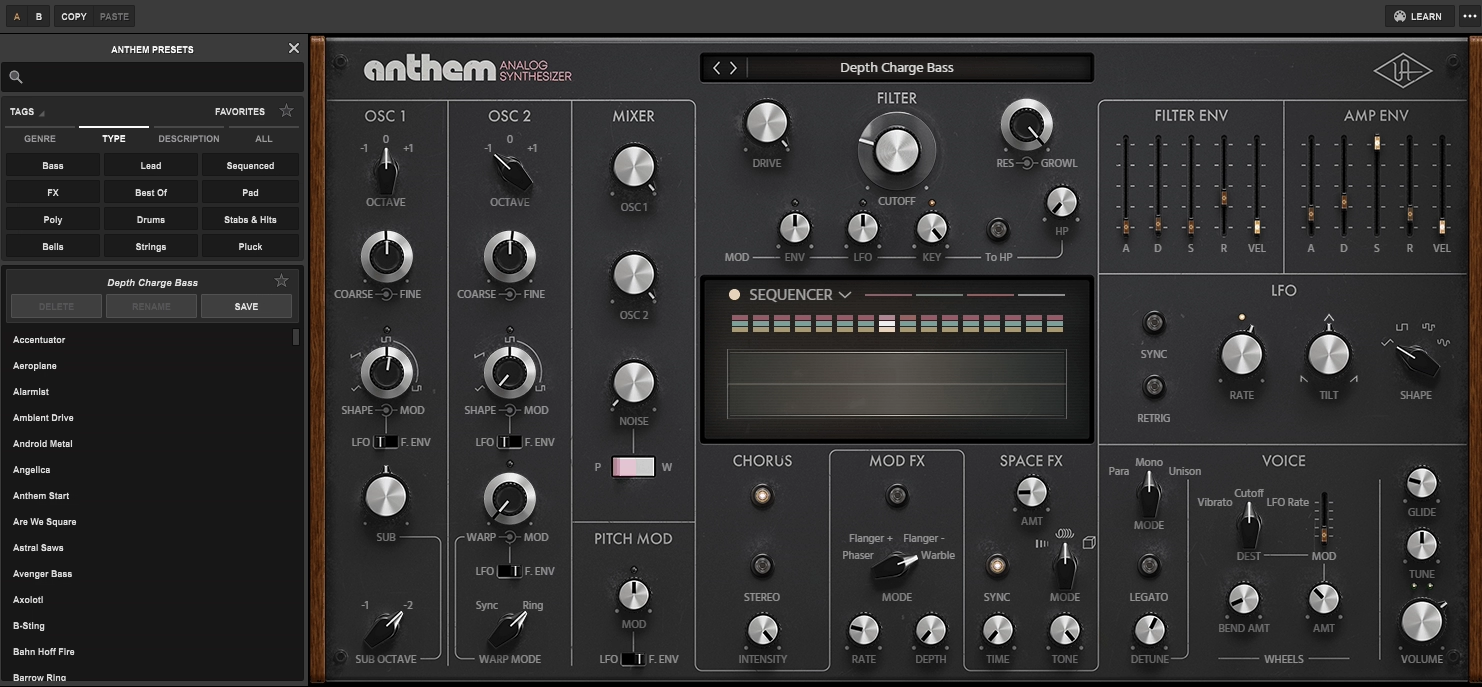
I would recommend you checking out UAD Anthem when you want big mono style tones fast, but still want enough range to cover paraphonic chords and sequenced parts without opening a second instrument. It’s built around a straightforward signal flow with everything on one screen, and the whole design is clearly focused on thick bass, punchy leads, and sequence driven hooks, not deep modular routing.
I found that Anthem’s engine is two analog modeled oscillators plus a sub osc and noise, and the oscillators are set up for practical sound design rather than endless menu choices. The wave shapes are continuously variable, so you can morph from triangle to saw to square and into narrow pulse without stepping through discrete waveforms, and that makes it easy to land on in between shapes that feel more alive than the usual fixed VA set.
- Oscillator Architecture with Sub and Warp
Oscillator 1’s sub is a real mixing feature because you can thicken basses without layering another synth where it goes one or two octaves down, and you can blend it in directly from the panel. Oscillator 2 is where Anthem gets more aggressive where the Warp section can run as sync or ring mod, and it can push up to 36 semitones, so you can get that hard, harmonically rich bite for leads and basses without external distortion.
Noise is implemented the useful way with a level control and a pink or white selector, and I would mainly use it for attack definition on plucks and synth percussion, or to rough up sequences before they hit the filter.
- Filter Drive and Growl for Aggressive Character
The filter section is built to be driven where there’s a dedicated Drive that boosts the mixer output into the filter, and UA explicitly notes it changes saturation, adds growl, and even makes it harder for the filter to self oscillate. That’s exactly the kind of drive control I want on a mono synth style instrument because it lets me get density from the synth itself instead of leaning on a chain after it.
Resonance is paired with a separate Growl control that adds a specific gritty character by modulating cutoff slightly with the incoming waveform, and it’s not a generic dirty filter knob but tuned to exaggerate the filter’s attitude when resonance is up. You also get a high pass filter and a bandpass style behavior when to HP is enabled, which is a practical way to carve bass heavy patches into a mix without reaching for another EQ.
- Paraphonic Mode
Anthem is not a full poly synth, but the voice modes are chosen well where it runs in Monophonic, Unison, and Paraphonic modes. Paraphonic is the important one where it plays up to four voices through the same filter and amp envelopes, and that means you can play chords and stacks that feel like classic paraphonic hardware, but it still behaves like one instrument, one filter, one set of envelopes.
The legato behavior is implemented in a way that matters for sequences and acid style lines because in paraphonic mode it determines whether adding notes retriggers the envelopes or not. If you want tight, per step envelope punches you keep legato off, and if you want smoother overlaps you keep it on.
- Built-In Step Sequencer
Sequencer can generate usable musical motion without external MIDI tools where it has three lanes for gate, pitch, and velocity, and each lane has 16 steps. I like this design because it’s not trying to be a full DAW sequencer but trying to be the thing that turns a static patch into a hook, and tempo is always synced to the DAW, so it behaves predictably in real sessions.
- Onboard Effects for Self Contained Workflow
The onboard effects are exactly the ones you’d expect where there’s a Chorus with mono or stereo switching, a Mod FX section with Phaser, Flange Positive, Flange Negative, and a Warble mode that behaves like wow and flutter.
Then there’s Space FX with Echo, Spring Reverb, and Hall Reverb, with sync for echo time when you want it locked to project tempo, and this matters because Anthem’s whole pitch is no complex plugin chains where if you can get width, movement, and space inside the instrument, you stay in writing mode longer.
3. u-he Diva
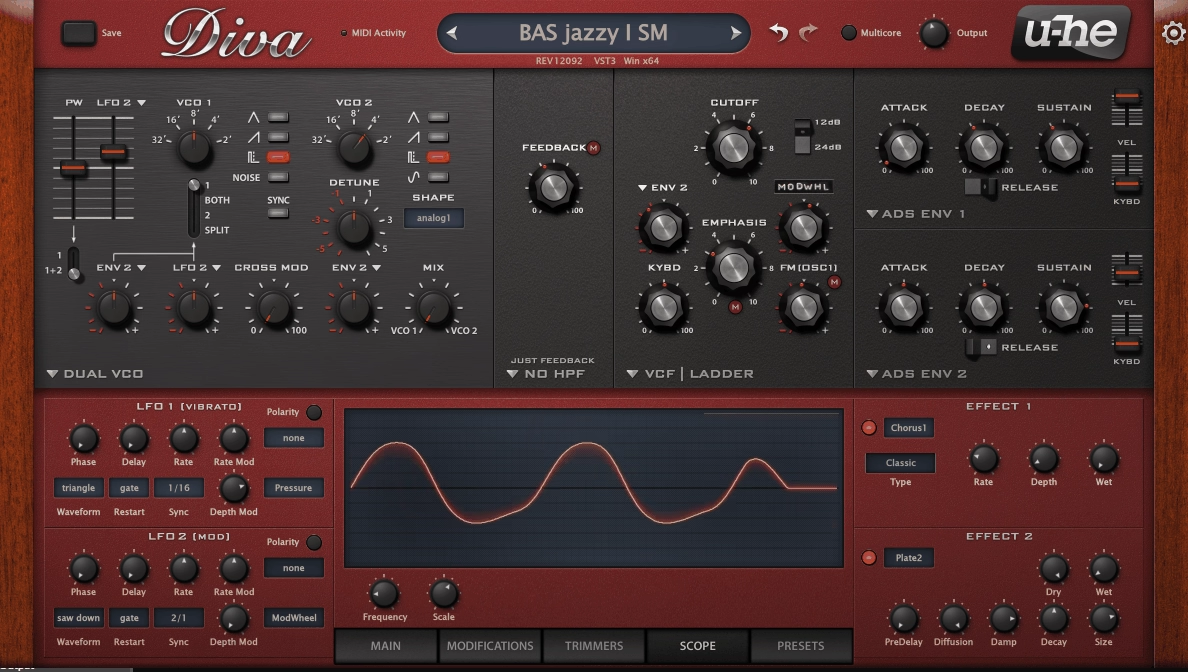
When I need an analog style synth that actually behaves like hardware in the places that matter, I would still reach for u-he Diva because it’s not another subtractive VA. The whole point is circuit level modeling with zero delay feedback filter behavior, and you can hear it most when you push resonance, drive, and filter FM style motion, and that’s the difference between sounds nice and feels like a synth.
To me, the real hook is the modular choice of classic building blocks where Diva is basically a semi modular best of box where you can mix and match oscillators, filters, and envelopes that are modeled after different classic synth designs. On the official spec, it’s five oscillator models, five filter models, and three envelope models, and you can combine them freely, which is something you can’t do with real hardware without owning multiple instruments and a patchbay.
- Five Oscillator and Five Filter Models
The oscillator lineup covers the practical bases you’d actually use where you get multiple VCO flavors, a DCO style option, and a digital oscillator model when you want something cleaner but still inside Diva’s signal path. The filter choices are where it becomes obvious why people keep it installed where Ladder, Cascade, Multimode, Bite, Uhbie are distinct enough that swapping filters changes the whole personality, not just the slope.
I like how this approach lets you build hybrid dream synths by mixing oscillator and filter models where you might run a Minimoog style oscillator into a Jupiter style filter, or combine a clean DCO with a more aggressive ladder filter, and these combinations create sounds you simply can’t get from single vintage emulations.
- Trimmers Section for Voice Character
Where it gets deeper is the stuff Diva hides until you need it where the Trimmers section is the big one because this is where you can dial in voice drift and per voice detune, add slop to cutoff and envelopes, control stacking behavior, and make a patch feel less like one perfect oscillator clone and more like a slightly imperfect instrument.
The Voice Map Modulator is exactly the kind of under the hood control that helps patches stay alive without obvious modulation, and I appreciate how per voice detune behavior means each voice in a chord can drift slightly differently, which is what makes vintage polysynths sound organic rather than rigid.
- Built-In Effects and Arpeggiator
Diva has two stereo effects slots with the essentials you actually want inside the instrument where you get chorus, phaser, plate reverb, delay, and rotary, and they’re there so you can finish a patch quickly without immediately building a chain, especially for pads, plucks, and Juno style chorus stacks.
The arpeggiator is also properly DAW friendly where it’s host syncable with swing and pattern behavior that makes it usable for real parts rather than just up down. I find this particularly useful when you are writing sequences and want the arp to feel integrated into the synth rather than fighting with external MIDI tools.
- Quality Modes and CPU Management
Diva is still known for being CPU hungry, and that’s not a rumor but the cost of what it’s doing. The way you work around it is using the quality modes properly and saving the highest quality for renders where Diva explicitly includes adjustable quality settings and a separate offline bounce option.
The current user guide also calls out a multicore option that distributes voices across CPU cores and recommends setting offline accuracy to best when rendering. In practice, I would draft while writing, go higher for tracking, then print in the best setting when I commit, and this workflow keeps sessions playable without sacrificing the final sound quality.
- Factory Library and Preset Structure
Diva ships with a big factory library, and it’s one of the few synths where I actually think browsing presets teaches you the instrument. The big value is seeing how different oscillator and filter combinations behave, then stealing the structure and swapping components, and even stock, it’s enough to cover bread and butter analog roles without sounding generic.
4. Moog Mariana
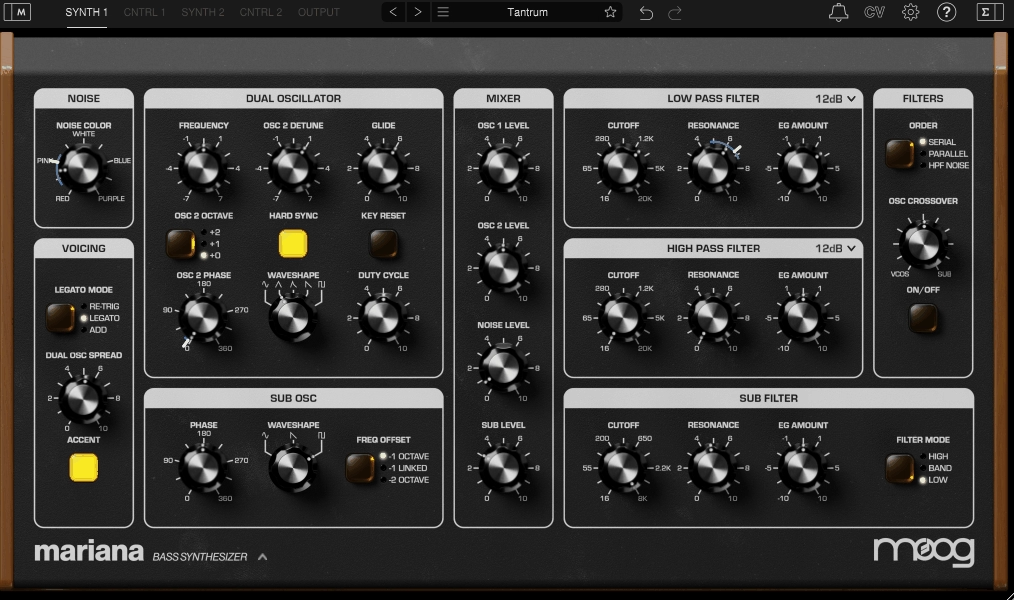
I would say Moog Mariana would work when you want that heavyweight Moog low-end, but also want the conveniences that make bass actually sit in a modern mix without extra routing. The headline for me is the architecture where you get two fully independent layers that you can stack for one huge sound or play duophonically by splitting notes across the layers, and that alone makes Mariana feel more like a production instrument than a one patch monosynth.
I found Mariana is built as SYNTH 1 + CNTRL 1 and SYNTH 2 + CNTRL 2, with a dedicated OUTPUT view where both layers get mixed together. You can keep one layer doing the stable fundamental and punch, then use the second layer for midrange movement, stereo detail, or attack texture, and because the layers are fully independent, you’re not faking complexity with unison detune but actually layering two complete synth voices inside one plugin instance.
- Dual Oscillator Core with Sub Per Layer
Each layer is centered on a dual oscillator core with serious tuning in context controls where you get waveform selection, detune, phase, hard sync, and key reset when you need consistent punch. The wave list is exactly what you’d expect for bass and leads.
The Sub Osc is not a token sub where it can go one or two octaves down, it has its own wave options, and it can be linked to the main oscillator tuning behavior when needed. That makes it easy to create a controlled foundation that stays mono and stable, while the main oscillators do the character work, and Noise is more useful here than in most bass synths because the manual describes a Noise Color control that tilts from white into multiple colored noise options, so you can add crisp attack, gritty texture, or low rumble without reaching for a separate layer.
- Filter Routing with Independent Sub Filter
Mariana’s filtering is where it stops being just another Moog style subtractive where the oscillator and noise mix gets sent to both a low-pass and high-pass filter, and you can switch the routing between serial, parallel, or a split mode where noise is routed through the HPF while the oscillators go through the LPF. That last option is a big deal for me because it lets me add percussive edge and air without contaminating the low end.
The sub oscillator gets its own dedicated multi-mode filter, which is exactly how I want a bass synth to behave where I can keep the sub tight and controlled while it get aggressive with resonance and movement on the main filter path. Then there’s the part that makes Mariana feel modern where you get stereo oscillators and a crossover filter that lets you fine-tune stereo content while keeping a powerful mono bass foundation, and if you’re making bass that has width up top but stays solid in mono down low, this crossover concept is exactly the tool you want.
- Duophonic Play and Performance Controls
Mariana is fundamentally monophonic by design, but Moog makes it clear how they want you to think about it where you get mono behavior per layer, then duophony by using the two layers. There are also practical performance controls like legato behavior options and Dual Osc Spread for stereo placement, plus an Accent function that drives envelopes harder above a velocity threshold, and these are the controls I would use when you want bass parts to feel played, not programmed.
- Built-In Saturation and Compression
Moog explicitly position Mariana as having built-in processing to get bass to a finished state where on the effects and finish side you get tube, tape, and overdrive saturation, plus a tight compressor and real-time metering so you can dial the sound to a professional level without guessing. Delay and chorus are included and can be applied per layer, and Moog specifically mention high-pass filtering in that stereo effects context to preserve mono solidity.
I like how this keeps the workflow self-contained where you’re not building a chain every time you open the synth but getting bass that arrives already mix-ready with the character and processing baked in.
- Deep Modulation Per Layer
This analog synth plugin goes deeper than it looks where Moog call out deep modulation with a full mod matrix editor, and you get multiple LFOs, envelopes, and random generators per layer, which tracks with the instrument being designed for motion-heavy bass, evolving sequences, and animated layers. I like that it stays focused where the modulation system is there to make bass feel alive, not to become a modular programming exercise.
Moog include 200 presets, and that’s enough to cover the core jobs where you get clean and punchy fundamentals, gritty driven bass, wide stereo top layers, and more effecty motion patches. I mostly treat the preset library as a fast audition of how hard I can push the mixer drive, filter routing, and saturation types before I commit to a custom patch.
5. Softube Model 72
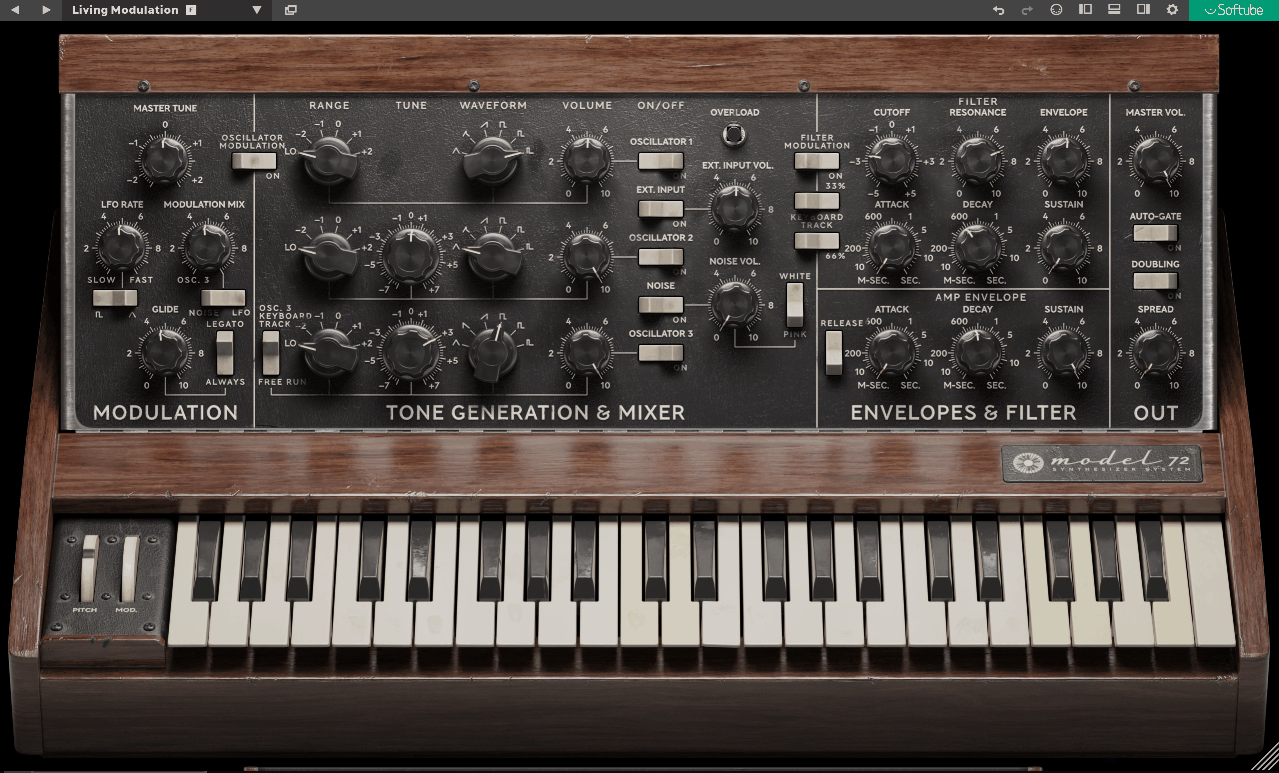
I think of this as a Minimoog style instrument that’s been rebuilt for how you actually work in a DAW where it’s a fully modeled monophonic classic based on a pristine 1972 unit, but the bigger win is that Softube split it into multiple usable forms. Softube Model 72 lets you treat it as a normal synth, a processing box, or a modular building block depending on the project, and that bundle structure is the main reason it stays relevant because you can keep one sound consistent while changing the workflow around it.
I found Model 72 by Softube isn’t just one plugin but comes as Model 72 Instrument, Model 72 FX, a Model 72 module for Softube Amp Room, and seven Model 72 modules for Softube Modular. The Modular side matters if you already use Softube Modular because all the instrument sections show up as separate modules where you can break the synth apart, patch pieces into a larger modular rack, and build Minimoog-ish voices that would be impossible on the original hardware without extra gear.
- Component Modeled Voice with Modern Additions
The core voice is what you’d expect from this lineage where you get fast punch, round low end, and a filter that stays musical when driven. Softube emphasizes that it’s component-modeled and kept the quirks and nonlinearities intact, and that lines up with how it behaves when you push the mixer into the filter.
Where it separates from another Minimoog clone is that Softube made it a system, not a museum piece where they explicitly added software-only features like Doubler, a Stereo Spread effect, and expanded controls beyond the original. That’s the stuff I use when I want mono fundamentals but still need the part to sit wider in a modern mix without layering a second synth.
- Performance Controls Without Complexity
Model 72 follows the original’s performance logic instead of drowning you in a huge modulation matrix where the modulation section mirrors the hardware’s Controllers area and covers master tuning, LFO, and glide/portamento. I like how this is exactly what you want on this kind of mono synth because you can get expressive movement and classic slides quickly without turning the patch into a science project.
- Model 72 FX for External Processing
Model 72 FX is easy to overlook, but it’s one of the more practical parts of the package where it lets you feed external audio through the same character stages and treat the modeled filter and saturation behavior like a processing chain. If you’re trying to make drums, vocals, or samples sit with the same analog-ish density as the synth parts, this is the straight line way to do it, and I appreciate how this turns the synth into a creative processor that can unify different elements in your mix.
- Modular Integration as the Differentiator
Each instrument section is available as a module for Softube Modular, and that’s not marketing fluff because if you want a Minimoog style voice but you also want to patch it into a bigger modular ecosystem, Model 72 is built for that. It’s also Amp Room Ready, which matters if you’re doing guitar or pedal style workflows and want the synth in that same environment.
I’d be honest that this is a Minimoog style mono synth, so if you’re shopping for modern poly synth architecture, this isn’t that category. Also, the system approach makes the most sense if you’re at least curious about Softube Modular or Amp Room because if you only want a single, simple Minimoog plugin and you never plan to use the extra formats, you’re not extracting the full value of what Softube packaged here.
6. UAD Moog Minimoog
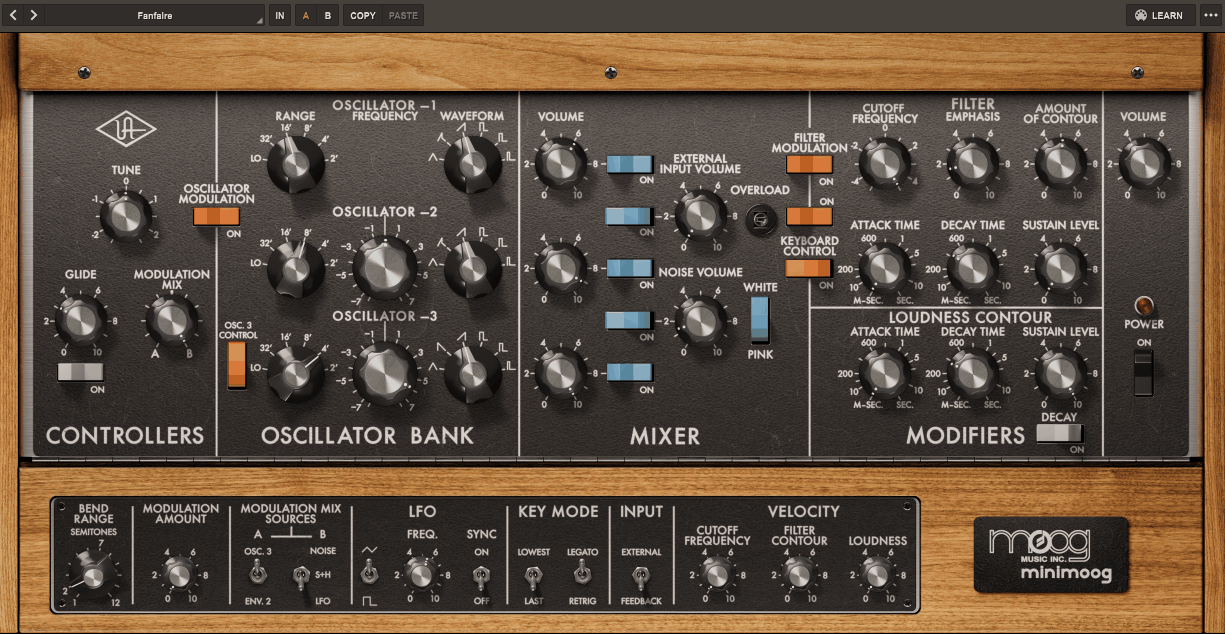
When you want that Model D weight and attitude without fighting a modernized interface, consider reaching for UAD Moog Minimoog. This analog synth plugin is built in an exclusive partnership with Moog, and it’s very clearly aimed at capturing the real behaviors people obsess over. You get the oscillator and ladder filter feel, the way resonance bites, and the slightly unruly nonlinear stuff that makes a Minimoog sound like a Minimoog instead of a polite subtractive synth.
I found the biggest reason it works is that UA didn’t stop at nice harmonics where they talk openly about modeling things like module-to-module coupling, impedance matching, and the classic feedback trick where the Minimoog’s output is routed back into its input for controllable distortion. That feedback behavior is one of those details that’s easy to miss until you’ve used a real unit or a really accurate emulation, and it’s a big part of getting that chewy, pressurized midrange without stacking extra saturation plugins.
- Discrete Transistor VCA and Ladder Filter Modeling
UA’s manual frames their approach as capturing the nuances of the Moog oscillators and ladder filters, plus discrete transistor VCA modeling, which lines up with how the synth holds together when you push levels and envelopes hard. I like how for bass, you’re usually leaning on the core Minimoog strengths where you get solid fundamentals, fast envelope punch, and the ladder filter’s ability to add weight without sounding like an EQ boost.
For leads, it’s about the way the filter can hit self-oscillation and extreme resonance in a musical way, so you can build expressive lines that don’t need a ton of extra processing. Universal Audio explicitly highlights the self-oscillation and extreme resonance side as part of what they’ve captured, and that’s absolutely where this plugin earns its keep.
- Modifications Panel with Modern Additions
I like Minimoogs, but I don’t want to be limited by 1970s ergonomics when I’m writing and mixing in a DAW, and UAD Minimoog includes a modifications panel with practical upgrades like switchable note priority, legato, an extra LFO, and sample and hold. We also get added performance options like bend range, mod amount, and velocity routing that can be mapped to cutoff, filter contour, or loudness.
The important part is that these are presented as optional where if you want the stock experience, you can keep it strict, and if you want it to behave more like a modern instrument, you can. I appreciate how this approach respects both the classic workflow and the needs of contemporary production where you’re not forced into vintage limitations but can embrace them when you want that authentic experience.
7. Cherry Audio Mercury-8
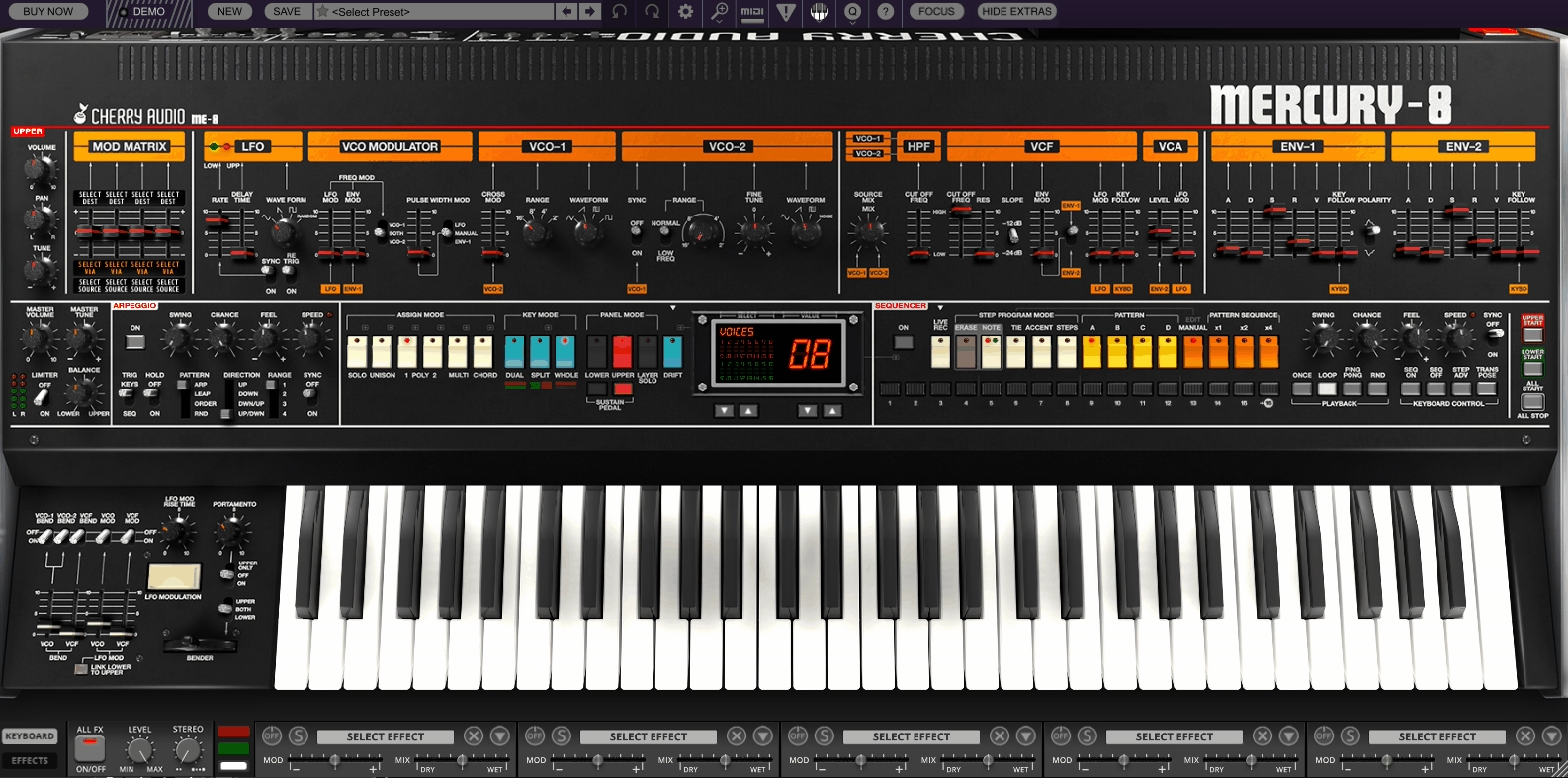
I found Mercury-8 by Cherry Audio is a detailed recreation and enhancement of the Roland Jupiter-8 concept where it keeps the familiar one-panel workflow and the big, expensive polysynth sound, but the synth is designed to go past the original instead of just imitating it.
The headline feature for me is the dual-layer design with 16 voices per layer, so you can stack two full patches without the usual voice loss compromises. That means you can build a wide, finished pad or an 80s layered brass stack inside one instance, and it still behaves like a single instrument when you automate and perform it.
Split and stack modes are part of that same workflow where you can keep a stable low layer and a brighter animated upper layer, or do keyboard splits without opening multiple instruments. I appreciate how this makes complex patches feel immediate rather than requiring external routing or multiple instances.
- Modulation Matrix and Velocity Response
This is where Mercury-8 stops being just a Jupiter UI where it includes a modulation matrix and adds modern response like velocity-sensitive envelopes, which is a big deal if you actually play parts instead of programming static chords. You can make dynamics matter without setting up elaborate MIDI processing outside the synth, and Cherry also leaned into vintage realism controls like analog drift, aging, and voice variance style behavior, so you can get subtle instability and spread without relying on chorus as a crutch.
- Polyphonic Step Sequencer Per Layer
Mercury-8 includes a syncable arpeggiator and a proper polyphonic step sequencer per layer where it’s described as a 16×4 polyphonic step sequencer per layer. That’s the kind of sequencing I would use for evolving chords, gated stacks, and repeating hooks inside a single patch, and I like how this turns the synth into a pattern generator that can carry entire sections without external MIDI tools.
- Three Effect Chains with 20 Effects
The effects section is one of the biggest practical upgrades where you get around 20 effects, and the structure supports three effect chains with up to five effects from that collection. If you’re building a layered patch, you can keep effects local to each layer and still apply a global finishing chain, which is exactly how I want to manage stereo width, modulation, and space without a mess of inserts.
Mercury-8 ships with 600+ factory presets and includes the 64 original Jupiter-8 patches as part of that library, plus it supports Jupiter-8 SysEx patch transfer, so if you’re dealing with hardware or legacy patch libraries you can move sounds back and forth in a real way.
8. E-Phonic Invader 2 (Budget)
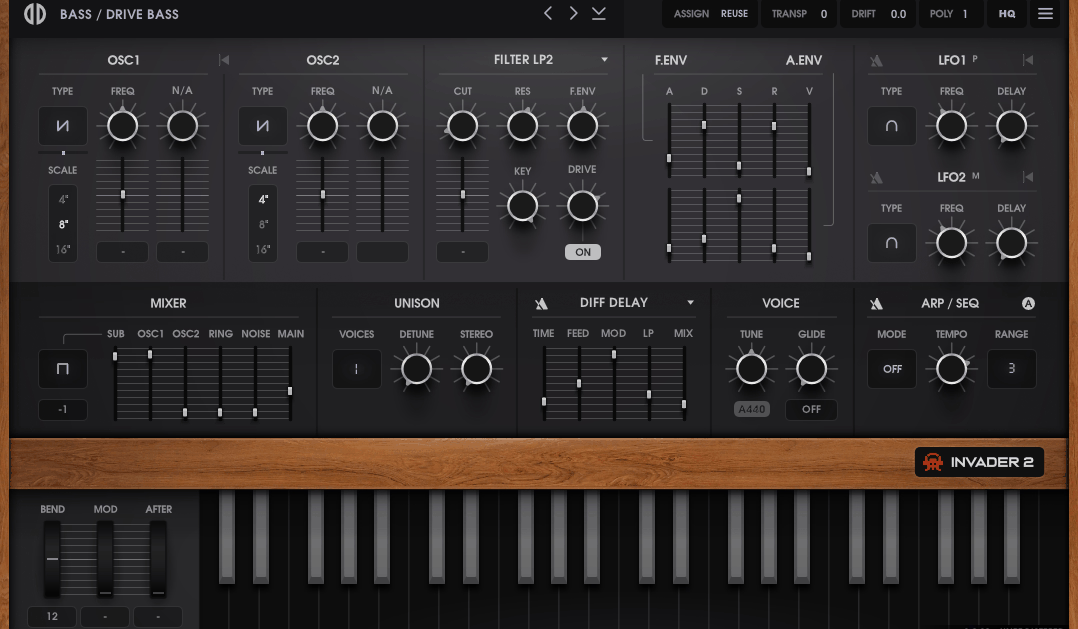
I like this analog synth plugin because it’s the rare cheap option that doesn’t feel cheap once it’s in a mix where the whole deal is straightforward. E-Phonic Invader 2 is a no-nonsense 8 voice analog-modeling polysynth with a proper knob-per-function layout, and you can legally grab a license on a pay what you want model starting at €5. That price is not a gimmick if you just need a solid bread-and-butter poly that loads fast and sounds finished without a pile of external processing.
I found Invader 2 is built around two oscillators plus a sub oscillator, with waveform options that cover the useful analog lanes and a couple of sync variations for brighter, more aggressive tones. You can do the standard two saws slightly apart thing in seconds, then bring the sub in to lock the low end without having to layer another instrument, and it also includes ring modulation and a stereo noise generator, which is enough extra spice to move beyond basic subtractive patches when you want metallic edge or a bit of attack texture.
It ships with 200+ presets, and that’s plenty for a synth in this category because the core architecture is meant to be direct and usable. If you’re moving fast, presets get you to a starting point, then you’ll tweak oscillator balance, unison, and filter tone until it fits the track.
- Polyphonic Stereo Unison Up to 48 Voices
The unison implementation is one of the main reasons I love it where we get polyphonic stereo unison, plus an optional low CPU unison emulation mode, and it can scale up to 48 voices. In practice that means you can make wide, stacked pads and supersaw-style chords without the synth falling apart, and you can choose between better quality or lighter CPU depending on the session.
- Three Filter Types with Drive or High-Pass
Filter-wise, Invader 2 gives you three resonant filter types and a practical either/or option for filter drive or high-pass. The point isn’t endless filter models but that you can quickly pick between a cleaner low-pass feel or a rawer one, then decide whether the patch needs extra bite from drive or needs cleanup from a high-pass so it sits in a dense arrangement.
I like how modulation is intentionally lean where you get two LFOs with a delay function and two envelopes, and that’s enough for most of what you do with a classic poly where you can cover animated filter movement, slow drift, rhythmic wobble, pluck shaping, and basic performance response without having to dig through a matrix.
- Built-In Delay and 16 Step Sequencer
For onboard FX, you get a delay with multiple modes including normal, ping pong, tape, and diffusion, and it’s not trying to compete with a dedicated delay plugin, but it’s good for getting a patch into record-ready territory quickly. The bigger practical feature is the arpeggiator / 16 step sequencer, and for me this is the part that turns Invader 2 from cheap poly into fast idea machine because you can sketch patterns inside the instrument and print them.
I would say it can be particularly useful for situations where you are writing sequences and want to stay in the creative flow rather than switching between the synth and a separate MIDI sequencer, and the fact that it’s built in means the patterns are part of the patch, which makes recall and iteration much faster.
- 4x Oversampling with Quality Modes
On the fidelity side, the engine is 4x oversampled and includes medium and high quality modes, which is exactly what you want at this price point where you can draft fast, then flip to higher quality when you’re committing sounds.

Hello, I’m Viliam, I started this audio plugin focused blog to keep you updated on the latest trends, news and everything plugin related. I’ll put the most emphasis on the topics covering best VST, AU and AAX plugins. If you find some great plugin suggestions for us to include on our site, feel free to let me know, so I can take a look!