
Harmonizer plugins generate real-time vocal harmonies, pitch-shifted layers, and choir-like textures that make productions sound finished and expensive without the time and budget overhead of traditional multi-track vocal sessions.
Here I listed some of best harmonizer plugins I found & recommend for producers and vocal engineers who need instant backing vocals, creative pitch effects, and polyphonic voice generation without the scheduling nightmares, studio rental costs, or endless comping sessions that real vocal stacks require.
This guide covers harmonizer plugins from BLEASS Voices, Eventide H910 Harmonizer, Waves Harmony, Antares Harmony Engine, Eventide Quadravox, and KUASSA Efektor Harmonitron, plus three capable free alternatives that deliver convincing harmony behavior without the price tag.
Standard pitch shifters transpose audio but miss the formant correction, per-voice character shaping, and musical interval intelligence that made classic hardware harmonizers the secret weapon for thick vocal productions and wide guitar arrangements across decades of hit records.
On the flip side, real vocal harmony tracking requires multiple takes that create natural timing variation and vibrato differences, separate vocalists who bring distinct timbral character and pitch tendency, MIDI or theory knowledge to build proper chord voicings, and the ability to blend formants and placement so stacked voices feel like an ensemble rather than copies.
But now let’s talk about the actual plugins:
1. BLEASS Voices
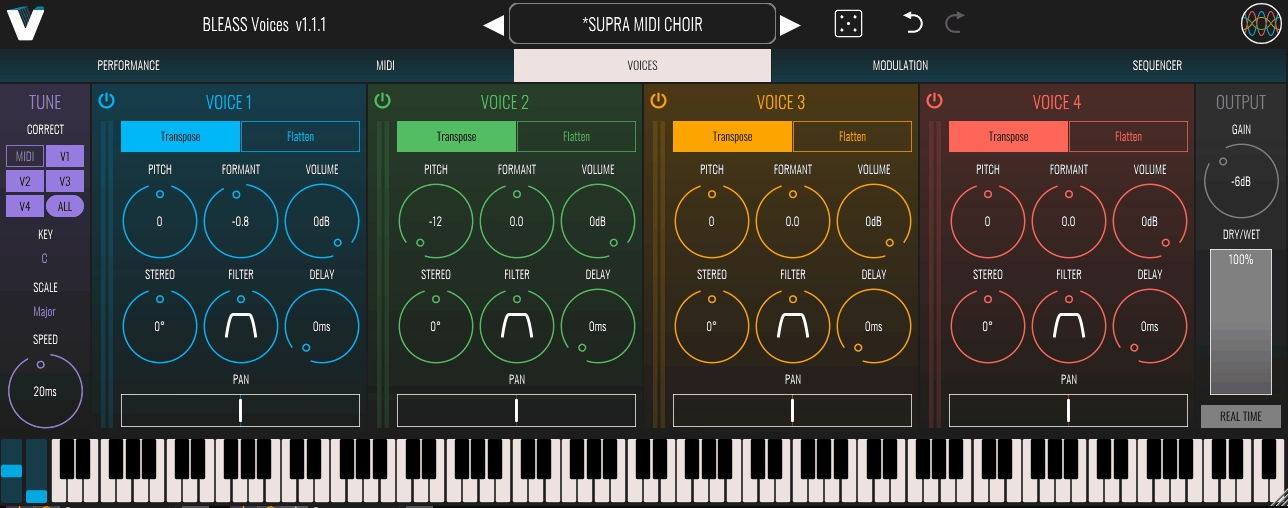
BLEASS Voices is a harmonizer that feels far closer to a playable instrument than a traditional vocal utility, and that distinction matters because this plugin is clearly designed for producers who want harmonies to move, evolve, and perform rather than just sit statically behind a lead.
At its core, Voices is a 12-voice pitch and harmony processor aimed primarily at vocals, but it works just as convincingly on monophonic instruments, spoken word, and sound design material when you lean into its modulation system.
I found the harmonizer is structured around two complementary voice systems that cover almost every real-world harmony use case. The first section gives you four independent harmony voices that can be transposed freely across a two-octave range, allowing you to build classic thirds, fifths, octave stacks, or more experimental interval structures in seconds.
These voices can also be locked to a fixed pitch, which opens the door to robotic unison effects, tuned drones, or tight synthetic layers that stay perfectly stable regardless of the input melody.
- Eight MIDI-Controlled Voices for Real-Time Performance
When it comes to second section, it adds eight MIDI-controlled voices, and this is where BLEASS Voices separates itself from most harmonizer plugins because these voices let you play harmonies in real time from a keyboard or MIDI controller, effectively turning your vocal into a polyphonic instrument that follows the chords you perform. I like how pitch handling is musical rather than brute-force where Voices includes scale-aware pitch correction, meaning harmonies are constrained to a selected key and scale so stacked voices don’t drift into unwanted notes when the input performance becomes expressive or slightly unstable.
This is especially important when using MIDI-triggered harmonies where clean chord voicings depend on predictable pitch behavior rather than raw pitch shifting alone.
- Per-Voice Shaping and Tonal Control
Here, each generated voice is treated as its own sound source rather than a cloned copy of the original signal where you can adjust formant character, level, stereo placement, and timing offset, which makes it possible to build choirs that feel wide and human instead of phase-locked and artificial. Subtle detuning and delay between voices creates natural thickness, while extreme settings push the sound into vocoder-like or synthetic territory.
I found this per-voice control is one of the reasons BLEASS Voices works so well outside of conventional vocal production because it encourages experimentation rather than forcing realism, and you can use it to create everything from tight backing vocals to expansive synthetic textures that barely resemble the original source.
- Fully Assignable Modulation System
Movement is a defining feature of this plugin where BLEASS includes a fully assignable modulation system with envelopes, LFOs, and performance-friendly sources that can be mapped to pitch, formant, amplitude, and other key parameters. Instead of static harmonies, you can create stacks that gently drift, pulse rhythmically, or react dynamically to performance gestures, and support for MPE and expressive MIDI controllers further reinforces the idea that Voices is meant to be played, not just dialed in.
I think this makes it especially attractive for modern electronic, pop, experimental, and cinematic production styles where you want harmonies to feel like living, breathing elements rather than fixed layers. Despite its depth, BLEASS Voices remains approachable where the interface is clean, responsive, and laid out in a way that encourages exploration without overwhelming you with menus. And lastly presets are quite useful, offering everything from subtle backing vocals to full synthetic choirs.
2. Eventide H910 Harmonizer
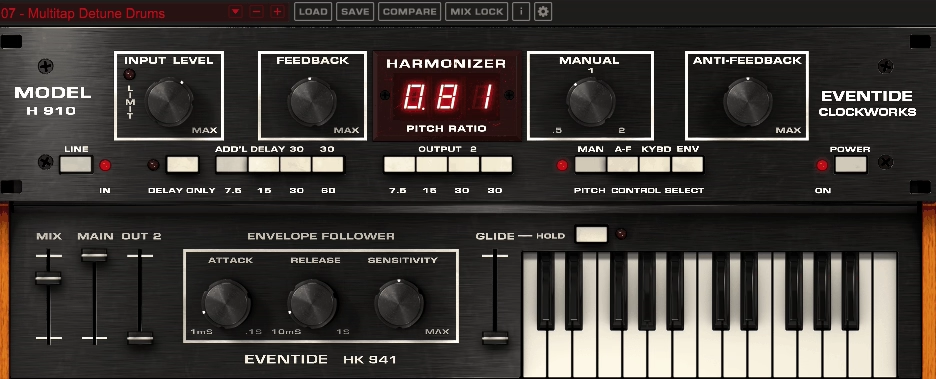
This is one of those plugins that instantly explains why the word harmonizer used to feel futuristic where the original Model H910 by Eventide is widely credited as the world’s first digital effects processor, and even in plugin form it still carries that imperfect, alive, slightly dangerous personality that modern clean pitch shifters usually sand off. Eventide H910 Harmonizer belongs in the 2026 best harmonizer plugin list because if you want harmonies and doubling that sound like a classic record instead of a sterile algorithm, this is a vibe machine that keeps giving, especially when you push it past polite settings.
I found at the center of the H910 sound is the combination of pitch shifting plus delay plus feedback, and it’s the interaction between those three that makes it special.
Yes, you can use it as a straightforward harmonizer by shifting the input up or down by a musical interval, but most people fall in love with it because it nails that classic thickening and doubling trick where you apply a tiny detune and a short delay to create width and depth that feels physical, and that’s the classic lead vocal gets bigger without sounding chorused move.
- Character from Early Digital Hardware Modeling
Now, a big part of why H910 doesn’t sound like a generic pitch shifter is that it’s intentionally modeled as a piece of early digital hardware with very specific sonic fingerprints. The original unit had distinctive analog sections around the conversion and feedback path, and the plugin leans into recreating that nonlinear, slightly gritty feel rather than just reproducing pitch math.
I like how when you dial in simple settings, you often hear this subtle thickness and texture that feels like sound got more expensive, and when you push it harder you can get that famous catching, glitching, mechanical edge that people describe as addictive because it makes tracks feel animated. This is the difference between clean modern pitch shifting and the H910’s character where you’re getting the imperfections and quirks that made the original unit legendary.
- Anti Feedback and Controlled Glitching
If you only use the H910 for clean harmonies, you’re basically using a sports car to drive to the grocery store! One of the iconic controls is Anti Feedback, which modulates pitch around unity in a way that can be subtle and organic or can spiral into that unstable, electrified wobble the H910 is known for, and the plugin also embraces the original unit’s tendency to glitch under certain conditions.
Instead of treating that as a flaw, it becomes a creative feature for unpredictable transitions, robotic textures, and aggressive sound design moments, and when you combine this with delay and feedback, you can also push it into self-oscillation, which is how you get those eerie drones and runaway sci-fi tails that still sound uniquely Eventide. I quite like how this unpredictability is part of the appeal rather than something you have to work around.
- Multi-Source Applications Beyond Vocals
Even though people love talking about it on vocals, the H910 is low-key brutal on sources like guitars, drums, and synths. Pitch shifting a guitar a few cents with a tight delay can make a mono part feel like it’s suddenly living in a wide stereo space, and on drums it can add depth and bigness in a way that’s more attitude than polish, especially when you’re not afraid of a little grime.
On synths, it’s excellent for subtle detune that feels less like chorus and more like the instrument itself is breathing, and that multi-use nature is exactly why so many engineers keep it as a permanent tool rather than a special-effect they reach for once a year. I can only say that this versatility makes it more valuable than plugins that only work well on one source type.
- Real-World Reception and Sweet Spots
What’s telling about H910 is that reviews from actual users tend to converge on the same point where there isn’t really a substitute for its specific sound. People describe it as the kind of classic that instantly thickens vocals and makes you grin when you hear it working, and on the more structured review side, it also scores extremely high for sound quality, ease of use, and features in user reviews.
3. Waves Harmony
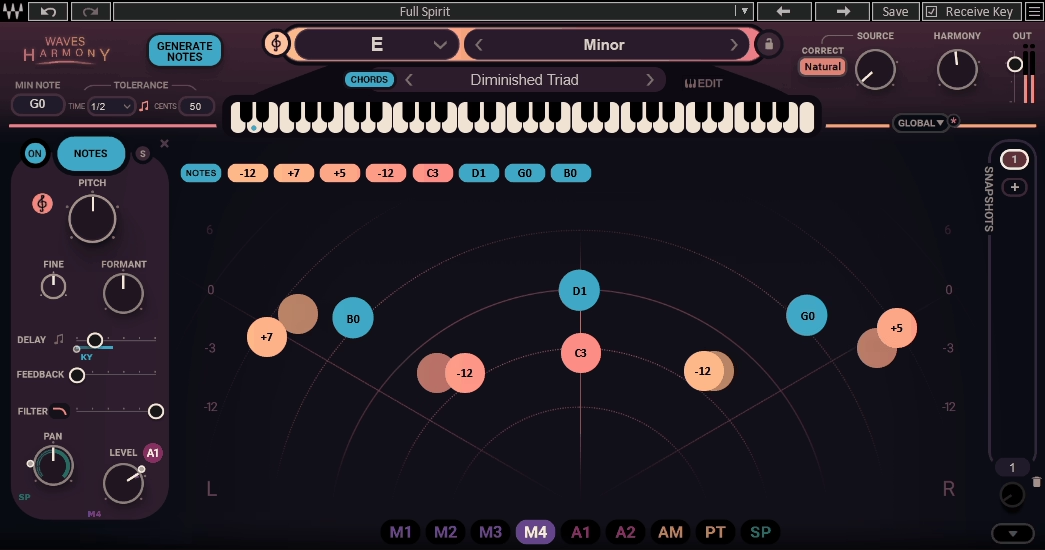
This plugin is built for one main job which is creating convincing multi-part vocal harmonies fast, without forcing you into a slow duplicate tracks, tune, edit, re-stack workflow. Waves Harmony is a harmonizer plugin that can generate up to 8 additional voices from a single vocal in real time, and it’s designed to be usable both in studio sessions and in live contexts where you need harmonies to react immediately.
I can see, Harmony gives you three workflow modes, and this is the reason it fits a lot of different producers instead of only music theory people or only MIDI people.
In Automatic mode, you pick from chord preset banks and Harmony generates harmonies quickly, which I find is the fastest way to get usable stacks when I’m writing or arranging and just need the song to move forward, and I mean this mode becomes essential when I’m in creative flow and don’t want to stop to think about music theory.
- Three Distinct Workflow Modes
In MIDI mode, you can play notes or chords in real time from a keyboard, essentially turning your vocal into a chord-following instrument, which I think is the most controlled way to get specific voicings and movement. In Graphical mode, you can draw harmonies in a visual editor and refine them like an arrangement tool, and this is where I see Harmony become less of a quick harmonizer and more of a production system for building sections, transitions, and layered vocal design.
I like how these three modes cover completely different workflows where Automatic gets you started fast, MIDI gives you performance control, and lastly Graphical lets you sculpt every detail like you’re arranging a choir. In my opinion, having all three approaches in one plugin is what makes Harmony more versatile than harmonizers that only offer one method, and I also like how you can switch between modes depending on what the project needs.
- Per-Voice Shaping for Character and Separation
The up to 8 voices claim would be meaningless if every voice sounded like a cloned pitch shift, but Harmony’s strength is that each voice can be shaped into its own character. You can tweak pitch and formant per voice for believable gender and timbre variation, set panning for width, use delay to create human-like separation and depth, and apply filtering and modulation so layers don’t feel like static copies stacked on top of each other.
I found this is the core of how you get results that feel like an arranged backing vocal session rather than a single vocal multiplied eight times, and the formant control is particularly important because it lets me create the illusion of different singers rather than just pitch-shifted versions of the same voice. You can make one voice sound more masculine, another more feminine, and create a realistic ensemble texture that doesn’t immediately sound processed, which I think is essential when you are trying to fool listeners into thinking they’re hearing a real choir.
- Speed and Efficiency in Real Production
Harmony’s real advantage is that it’s one of the quicker routes to a finished-sounding harmony bed where reviews consistently frame it as efficient and speedy, with enough depth in modulation and effects to go beyond basic thirds-and-fifths into thicker, more produced stacks. The workflow design is intentional where I can start with automatic harmonies to get the arrangement idea down, then switch to MIDI or graphical editing when I want tighter voicings and more deliberate movement.
I mean the speed factor becomes crucial when you’re working on tight deadlines or when you’re producing for clients who need quick turnarounds, and having a tool that can get you 80% of the way there in minutes rather than hours is genuinely valuable. From my perspective, this efficiency is what justifies the plugin’s place in a professional workflow.
- Natural Sound with Creative Flexibility
Harmony can sound very natural when you stay within realistic ranges and use its formant and timing controls carefully, and this is exactly what makes it useful for pop and modern vocal production where harmonies need to support the lead without screaming effect. At the same time, because it has modulation and creative shaping, You can also push it into more synthetic territory when you want obvious production texture rather than realism.
I think the key is that the plugin is built to be approachable, so you can get great results quickly, then go deeper only if you need to. One real-world tradeoff is system load where user feedback highlights that Harmony can be heavy on system resources, which makes sense given it can generate and process up to eight voices with per-voice shaping in real time, and in practice that means I usually commit or freeze once I’ve locked the harmony idea.
4. Antares Harmony Engine
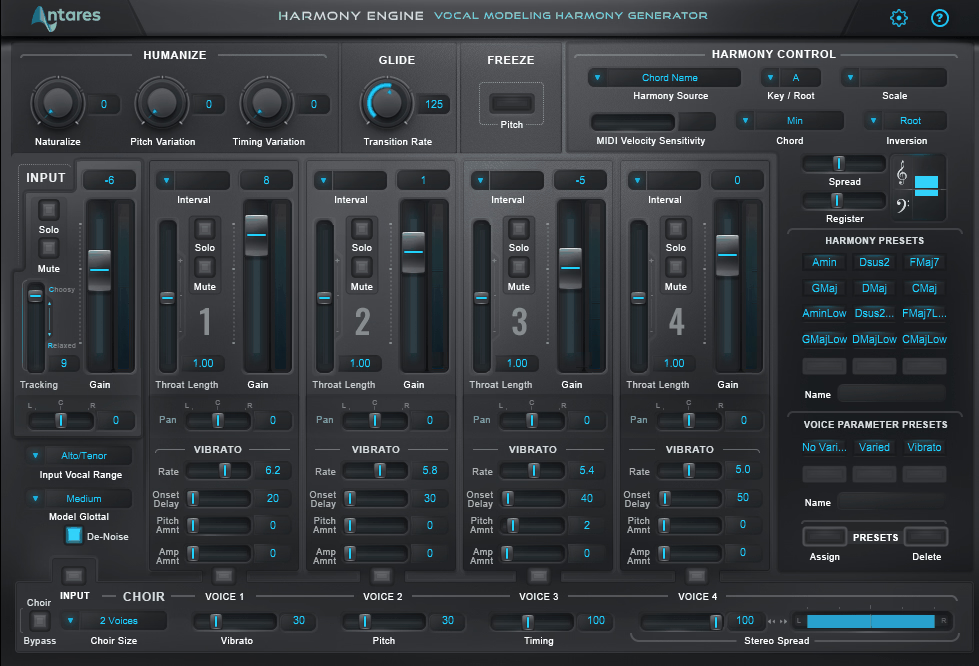
Antares Harmony Engine is the producer’s harmonizer when you want tight, controllable vocal stacks that can go from realistic backing vocals to obvious vocal-synth chords without changing tools. The core promise is straightforward and still relevant in 2026 workflows where you feed it one vocal, and it generates up to four independent harmony voices that you can shape like separate singers rather than a single pitch-shifted clone.
I found Harmony Engine gives you multiple ways to create harmonies depending on how hands-on you want to be where you can build harmonies using fixed intervals for instant stacks, constrain them to scale-based intervals for more musical results when the melody moves, and you can drive harmonies using chord sequences or real-time MIDI chord control when you want the harmonies to follow specific progressions and voicings.
That MIDI control is the difference between effect harmonies and arranged harmonies, because it lets you treat the vocal like an instrument that can be reharmonized intentionally.
- Throat Modeling for Distinct Voice Character
The plugin’s realism comes from the fact that each of the four voices is more than pitch where you get formant-corrected harmony voices, plus per-voice character, vibrato, and pan controls, letting you create separation between parts so the stack doesn’t collapse into the same singer copied four times sound. A major highlight is Throat Modeling, which is Antares’ vocal modeling layer that changes perceived vocal tract character so harmonies can feel more like distinct performers rather than just transposed audio.
If I take the time to adjust throat and formant per voice, Harmony Engine can sit behind a lead in a surprisingly believable way, and it can also be pushed into very synthetic territory for modern pop and electronic vocal design. In my opinion, this Throat Modeling is what separates Harmony Engine from basic pitch shifters because I’m not just changing pitch, I’m changing the physical character of the vocal tract, which is how you get that illusion of different singers.
- CHOIR Multiplier for Massive Vocal Stacks
Where Harmony Engine gets seriously useful for big chorus moments is CHOIR, a built-in multiplier that can turn each harmony voice into 2, 4, 8, or even 16 unison voices, essentially letting me build huge group-vocal textures from a single performance. This is not subtle double tracking but a purposeful production tool for those wide wall of vocals sections where I want scale fast.
I mean the important practical point is that CHOIR works best when you already have solid voicings, because it multiplies whatever you feed it, including tuning artifacts if you’re careless. I would say it’s essential when doing big pop choruses or cinematic vocal moments where you need that massive choir sound but don’t have access to actual session singers.
- Humanize Controls for Natural Variation
If you want realism, the feature you end up leaning on constantly is Humanize where Harmony Engine includes humanization controls that introduce natural variation so harmonies don’t land perfectly locked to the lead’s timing and pitch behavior. I think used lightly, Humanize is what takes harmonies from plugin obvious to arrangement believable, especially when paired with small per-voice pan differences and moderate formant shaping.
I appreciate how this addresses one of the biggest problems with automatic harmonizers where perfectly locked harmonies sound robotic, and the Humanize feature gives me the slight imperfections and timing variations that make harmonies feel like they were actually sung by different people. From my perspective, this is one of those features that seems minor until you hear the difference, and then you can’t work without it.
- Real-Time MIDI Chord Control
The MIDI chord control is where Harmony Engine becomes more than just an effect because you can drive harmonies using specific chord progressions and voicings instead of just letting the plugin guess based on intervals. User reviews commonly describe it as easy to use, self-explanatory, and a quick way to add that last lift to sections without booking extra singers or spending hours comping stacks.
The main limitation is simply the voice count where four harmony voices covers a lot of pop and common chord work, but if you rely on dense extended voicings or want very large, independent chord structures without multiplying, you’re hit the ceiling faster than with modern 8-12 voice harmonizers. Honestly though, I’ve found that four voices with proper control is often more useful than eight voices with less shaping capability.
5. Eventide Quadravox
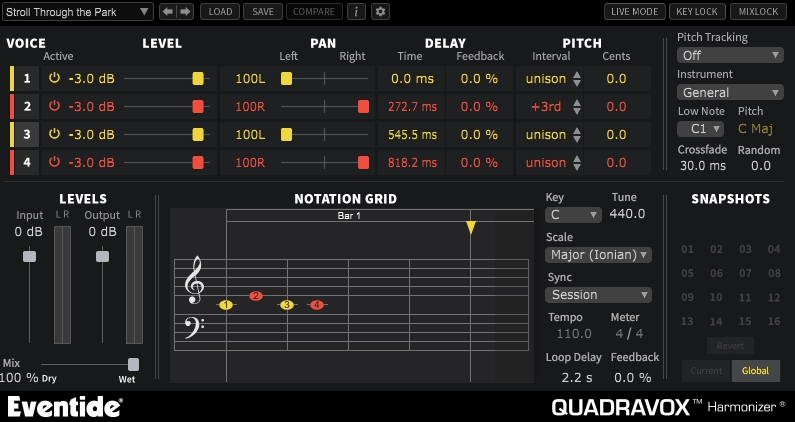
This is a 4-voice diatonic pitch-shifting harmonizer that’s built as much for rhythmic composition and sequencing as it is for traditional harmony. Eventide Quadravox gives you the key idea where every voice is not just a pitch shifter but a time-based voice with delay and feedback, so the plugin naturally behaves like a hybrid of harmonizer, multi-tap delay, and micro-pitch widener depending on how you set it.
I found Quadravox gives you four independent voices of diatonic pitch shifting tied to a song key/scale, and each voice has its own delay, detune, panning, and feedback controls.
This per-voice independence is the whole point because it lets you build stacks that feel like separate parts rather than one blocky harmony effect, and you can do clean stacked thirds style harmonies, but you can just as easily do micro-pitch delay widening by using tiny detunes with short delays, or build groovy, tempo-based sequences by pushing delays into rhythmic subdivisions.
- Notation Grid for Musical Programming
The standout feature is Eventide’s Notation Grid, which is essentially a musical programming surface for harmony and rhythm. Instead of thinking only in interval knobs, you can lay out how each of the four voices behaves across time in a way that encourages writing and arranging, and I would say that’s why Eventide frames Quadravox as a composition tool, not merely a corrective harmonizer.
In practice it really does push you into making patterns, call-and-response lines, and shifting voicings rather than leaving the harmony static.This is what separates Quadravox from more straightforward harmonizers because you’re not just setting static intervals but actually programming musical movement and rhythm into the harmony structure itself.
- Diatonic Behavior with Source Flexibility
Quadravox is designed around diatonic behavior, meaning it expects you to define a key/scale so harmonies stay musical. It can generate harmonies from incoming tones, and Eventide explicitly positions it as usable even on drums, because the delay-and-feedback structure lets it create pitched rhythmic textures even when the input isn’t a clean monophonic melody.
I mean for realism on vocals and lead instruments, the strongest results come when you stay within believable ranges, keep feedback controlled, and use the voice separation tools like delay offsets, panning, small detunes to avoid the copy pasted harmony sound. From my perspective, the ability to use it on drums and percussive sources is actually one of the most creative applications because you can turn rhythmic material into pitched, melodic textures.
- Freeze and Feedback for Evolving Textures
Quadravox can be driven into long evolving tails using feedback, and it also has Freeze behavior that people use for sustained chords and drone-like layers. One practical detail is that setting a feedback knob to FREEZE alone may not fully lock the audio because other parameters can still introduce decay, and using the dedicated Freeze button is what forces non-decaying behavior.
This matters if you’re trying to do hold a harmony pad forever moves in sound design or transitions that go way beyond traditional vocal harmony applications. The interface is fast once you understand the layout where reviews highlight that it’s clearly laid out with color-coded voices that make it easy to see what each voice is doing.
6. KUASSA Efektor Harmonitron
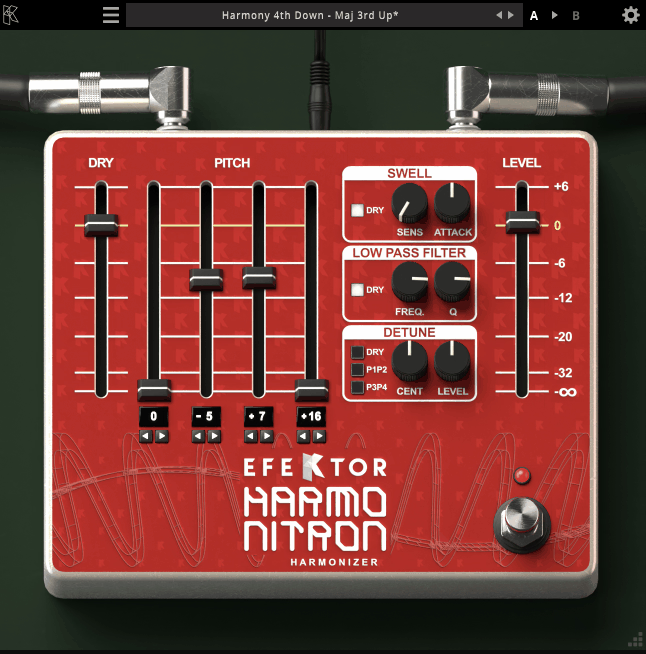
KUASSA Efektor Harmonitron is a harmonizer vst plugin built around the idea of instant, playable thickness rather than perfect studio choir realism, and it shines when you want big harmonized guitars, wide detuned layers, and bold pitch effects that feel more like a creative pedal than a surgical pitch tool. The core design is straightforward and effective where you get four independent pitch-shifting engines running in parallel, each able to shift from -24 to +24 semitones so you can build anything from subtle octave reinforcement to aggressive multi-interval stacks.
I found the heart of Harmonitron is its quad-engine polyphonic pitch shifting, which is exactly what makes it such a practical vst harmonizer for guitar and chords because it’s not limited to clean single-note lines. You can set up to four different pitch settings at once and blend them with the dry signal using individual volume and pan controls per voice, which is how you can go from tight double to wide multi-voice wall without needing multiple tracks or extra plugins.
- Detune, Swell, and Filtering for Texture Shaping
Harmonitron isn’t just pitch shifting but also built for shaping the feel of those added voices where you get a global detune option intended to create wider and richer results, a Swell (slow attack) control that can turn harmonized layers into pad-like, organ-ish textures, and a low-pass filter for smoothing out brightness and pushing the effect behind the source when you want thickness without harshness.
I like how this combo is why it works as both a straight harmonizer plugin and a tone-design tool for ambient, shoegaze, modern metal layers, or synthy guitar parts. In my opinion, the Swell control is particularly useful because it transforms the plugin from a straightforward harmonizer into something that can create atmospheric, evolving textures that feel more like a synth pad than a pitch effect.
- Best Use Cases
This plugin consistently lands best as a make it bigger tool where it’s a natural fit for electric guitar widening, octave reinforcement, and riff thickening, but I’ve also had fun using it on bass, keys/organ tones, ambient sources, and even as a subtle send effect to tuck harmonized texture under a bus for extra weight and movement.
I mean the important expectation is that it’s not meant to be invisible all the time where it’s often a use it when you want character processor rather than something you leave on every track. Efektor Harmonitron leans into a pedal-style workflow with a straightforward interface, aiming for fast results and hands-on tweaking instead of deep harmony programming, and that simplicity is a real advantage when you want to treat it like a performance effect.
User impressions tend to emphasize ease of use, great sound, and how quickly it sparks new parts and ideas. Kuassa ships Harmonitron across major plugin formats including VST, VST3, AU, and AAX, and it’s commonly positioned as an affordable option in the Efektor lineup with a demo available from the developer.
Freebies:
1. Aegean Music Pitchproof
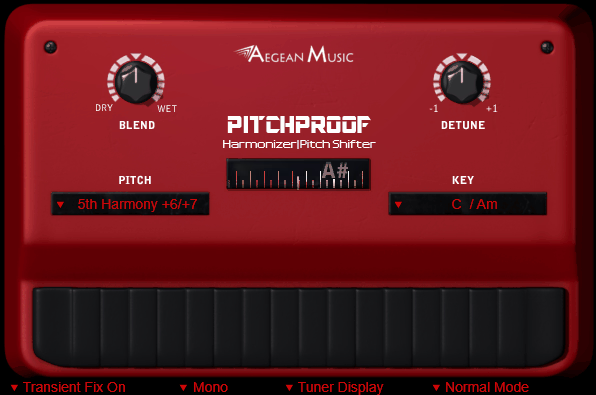
I think this one is the best free available harmonizer plugin avaiblable atm. It delivers the core guitar harmonizer pedal behavior in plugin form with a clean, fast workflow, and it costs nothing. If you’re hunting for the best free harmonizer plugin, Aegean Music Pitchproof is a strong candidate because it focuses on the stuff people actually use day-to-day, meaning simple harmony intervals, blend control, detune, key/scale guidance, and a built-in tuner.
It’s designed to emulate the character and workflow of classic pitch hardware and pedal-style harmonizers, and it works best when you treat it the same way you would treat those units. That means it shines on monophonic sources, especially guitar leads and single-note lines, and it can absolutely do harmonies, but it isn’t trying to be a perfect polyphonic choir generator where Aegean Music explicitly notes it behaves best with monophonic signals.
- Harmony Controls and Musical Behavior
Pitchproof gives you a Pitch control for setting harmonies by semitones, plus a Blend control to balance dry vs wet, which is the core of how I build lead + harmony quickly without building extra tracks. It also includes key selection to keep harmonies feeling musical, but the plugin itself warns that if you’re playing outside the selected scale, results can get weird, which is exactly the expected behavior for this class of harmonizer.
The usable pitch range is around one octave up or down with a bit more possible via detune behavior, which is enough for the common real-world stuff like octaves, thirds, fifths, and thickening detunes. I like how this keeps the plugin focused on practical harmony intervals rather than trying to do everything.
- Detune for Instant Width
You get instant width zone where a tiny pitch offset combined with some wet blend can create that classic doubled thickness that’s often better than chorus when you want the source to stay forward. This is also why it’s often mentioned as a go-to free harmonizer vst for guitarists because it does the pedal harmonizer thing quickly, with minimal setup, and it feels playable rather than clinical.
- Built-In Tuner
Pitchproof includes a guitar tuner and Aegean Music calls out that it exists because the plugin is detecting pitch anyway, so they expose it as a tuner display. I admit, this is a small feature that ends up being genuinely practical if I’m doing guitar takes and want a quick sanity check without loading another plugin.
2. Martin Eastwood Duet
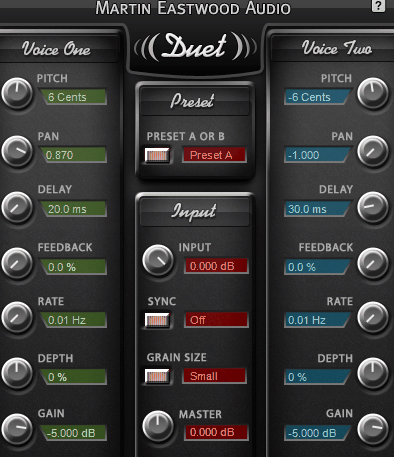
When it comes to Martin Eastwood Duet, it’s another free double-tracking / harmonizer VST that’s built for one very specific outcome where it makes a single vocal or instrument sound like multiple takes, fast, with width, depth, and that glossy produced thickness you normally get by recording layers.
It does this by taking a stereo input and independently pitch-shifting the left and right channels, then using delay and panning to sell the illusion of multiple performers rather than a single pitch-shifted clone.
I found Duet is strongest as a doubler-style harmonizer rather than a playable chord one where on vocals it’s great for widening a lead, adding a subtle second presence layer, or building a thicker chorus bed without recording stacks. On instruments, it’s good on guitars because slight pitch offsets plus time offsets instantly create a bigger stereo image without needing a chorus plugin that smears the transients, and this is why it’s frequently described as a tool for thickening and adding a rich, glossy sheen.
- Processing Chain and Controlled Variation
The core technique matters because it explains why it works where Duet uses a pitch-shift approach that keeps time duration consistent while you change pitch, then adds delayed re-pitched audio and changes its pan position to create separation between the voices. This is essentially the recipe for convincing double-tracking in a plugin where tiny pitch differences create different takes, small delays create timing divergence, and panning gives the brain clear stereo cues.
Lastly, while the plugin is simple conceptually, it’s not a one-knob toy where the manual calls out per-voice style control over parameters like pitch, pan, delay, feedback, and vibrato rate/depth, which is exactly what I want for believable doubling because realism comes from controlled variation. In addition, Duet is also capable of a silky chorus-style effect when you modulate the pitch shift amount, which makes it useful for synths and pads too.

Hello, I’m Viliam, I started this audio plugin focused blog to keep you updated on the latest trends, news and everything plugin related. I’ll put the most emphasis on the topics covering best VST, AU and AAX plugins. If you find some great plugin suggestions for us to include on our site, feel free to let me know, so I can take a look!