
If you work with modern metal, prog rock, or experimental ambient sounds, Neural DSP plugins offer more than just basic amp simulation. In this guide, I’ll look at plugins like Mantra, Archetype: Rabea X, Soldano SLO-100 X, Archetype: Tim Henson X, and Darkglass Ultra, plus others that help solve real production problems instead of just adding another vintage amp model.
I’m not here to promote every plugin, but to show what makes each one unique so you can find the right fit for your workflow and sound. Some focus on signature artist tones, others on effects like pitch shifting or multiband distortion, and a few are made for bass players who want clarity and punch in heavy mixes.
Here I made a detailed table showing features of each plugin, you can scroll to each plugin by clicking on its name:
| Plugin Name | Best For | Engine Type | Key Strength | My Verdict | Pros | Cons |
|---|---|---|---|---|---|---|
| 1. Mantra | Ambient textures | Polyphonic pitch FX | Multi-voice harmonies | Creative sound design tool | 4 voices, clean tracking | No amp simulation |
| 2. Archetype: Rabea X | Versatile guitar tones | Amp + FX modeling | Wide tonal range | All-round guitar rig | 3 amps, full pedalboard | Not metal-focused |
| 3. Soldano SLO-100 X | Classic high-gain | Amp modeling | Authentic saturation | Legendary lead tone | Natural compression | Limited clean variety |
| 4. Archetype: Petrucci X | Prog & shred | Multi-amp modeling | Tight high-gain clarity | Precision-focused rig | 5 amps, signature pedals | Dense interface |
| 5. Archetype: Tim Henson X | Modern guitar sounds | Amp + poly FX | Hi-fi articulation | Experimental tone machine | Pitch FX, shimmer reverb | Not vintage-styled |
| 6. Archetype: Nolly X | Modern metal | Amp + studio FX | Tight low end | Mix-ready metal tones | Gate, transient shaper | Aggressive voicing |
| 7. Fortin Nameless Suite X | Extreme metal | Multi-amp modeling | Brutal gain control | Pure high-gain focus | 3 amps, Fortin pedals | No clean emphasis |
| 8. Archetype: Tom Morello | Creative FX guitar | Amp + experimental FX | Signature pitch effects | Effects-driven rig | Whammy, talk box | Style-specific |
| 9. Archetype: Gojira X | Extreme metal riffs | Amp + pitch FX | Massive low end | Crushing modern tone | Octaver, tight gate | Heavy genre bias |
| 10. Darkglass Ultra | Aggressive Bass Tones | Emulation of Vintage & B7K | Vintage/B7K Algorithms | Modern bass weapon | Microtubes algos | No guitar support |
| 11. Parallax X | Prog metal bass | Multiband amp engine | Mix-ready bass | Studio bass solution | Compression, routing | Learning curve |
1. Mantra – Best sound design tool
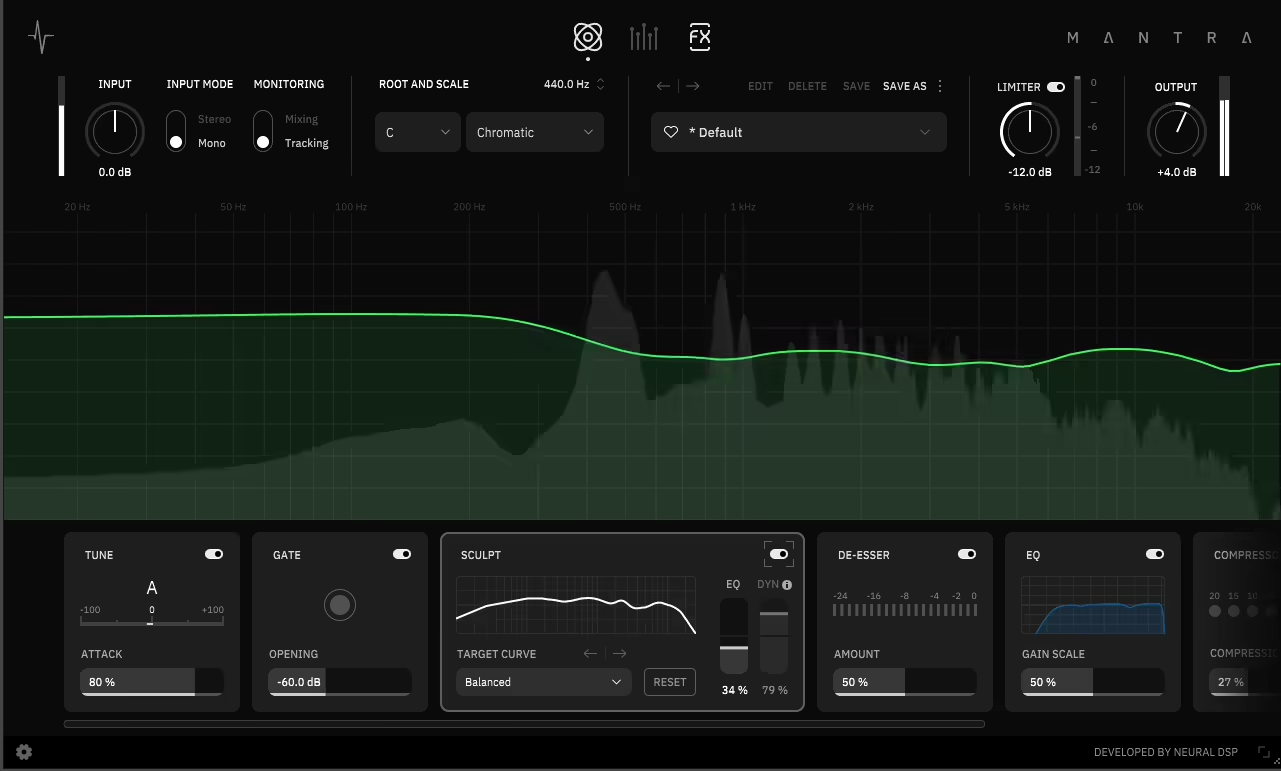
Mantra is multi-voice harmonizer and effects processor, and that’s exactly what makes it stand out. Its polyphonic pitch engine generates up to four independent voices from a single input, each with its own pitch (in semitones and cents), level, pan, and delay controls. You can stack thirds, fifths, octaves, or unusual intervals that regular harmony pedals can’t touch, and the tracking holds up clean even on complex chords. No warbling, no artifacts, even with large interval shifts.
Beyond pitch, the built-in effects cover everything you need:
- Modulation: chorus, flanger, and phaser, usable on individual voices or the full mix
- Delay: tempo-syncable, works per-voice or globally
- Reverb: spacious and smooth, with pre-delay, size, and damping controls
Each voice can be routed independently through the effects chain. Keep one dry, send others through heavy reverb, and you get real contrast and depth without complicated DAW routing. Everything you need for full soundscapes lives inside the plugin.
Mantra is best when you want to go beyond standard guitar tones. It’s a go-to for ambient pads, octave-stacked leads, and experimental textures that still sound musical and controlled. There’s no amp simulation at all, so you’ll pair it with something else when you need that. But for layered, atmospheric sound design, nothing else in Neural DSP’s lineup comes close.
2. Archetype: Rabea X – All-round guitar rig
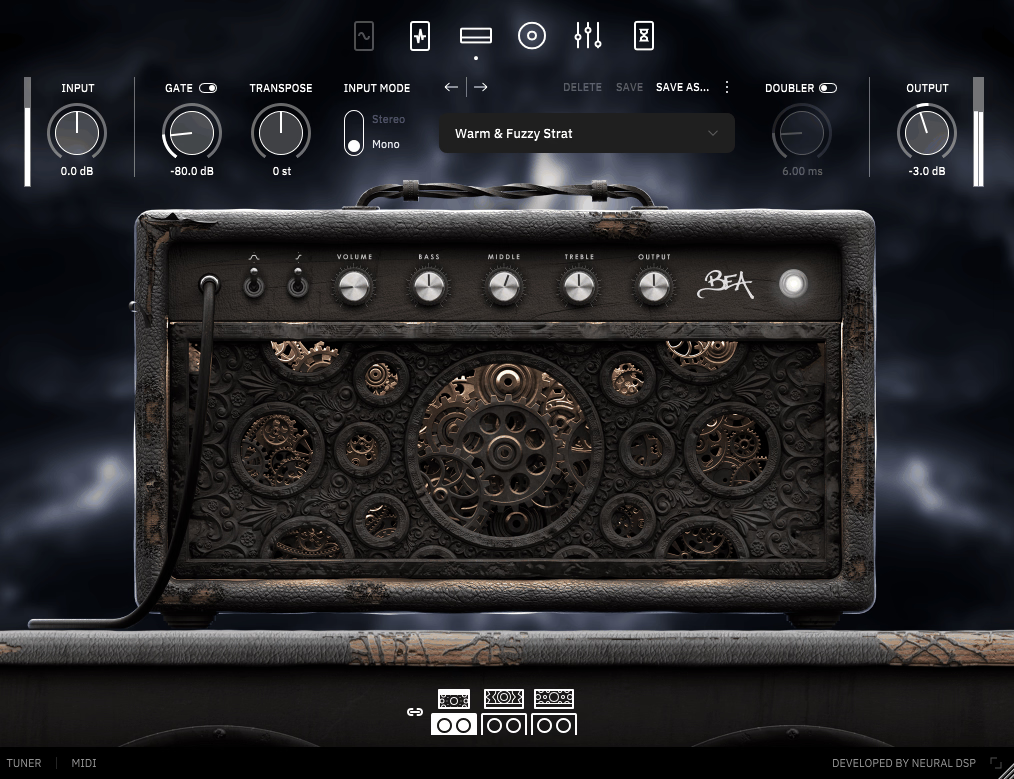
Most high-gain amp sims are really only built for metal. Archetype: Rabea X breaks that pattern by offering genuine tonal range across three amp channels, a full pedalboard, and a complete effects rack. Developed with guitarist Rabea Massaad, it covers British-inspired rock tones and aggressive modern distortion in one place, so you can track an entire song without switching plugins.
The three amp channels each have a distinct character:
- Clean: bright and open, with enough headroom for chords and ambient parts
- Crunch: sits right in that classic rock and blues sweet spot, between clean and fully saturated
- Lead: modern high-gain with a tight low end and strong midrange that cuts through a mix
All three respond dynamically to your pick attack and guitar volume, just like a real amp. Each has its own bass, mid, and treble controls for precise shaping.
The pedalboard puts overdrive, boost, and noise gate before the amp in the signal chain. The Horizon Drive adds focused midrange without muddying the low end, and the boost pushes the amp’s front end for a different kind of saturation than just cranking the gain knob. The gate handles high-gain noise cleanly without choking your sustain.
Post-amp, you get:
- Effects rack with delay (tempo-sync), reverb (room to hall), chorus, and phaser
- Cab sim with dual mic blending, adjustable mic placement, and full third-party IR support
The cab sim alone is a big reason this plugin sounds professional immediately. A 14-day free trial is available if you want to test it in your own sessions first.
3. Soldano SLO-100 X – Best Classic high-gain
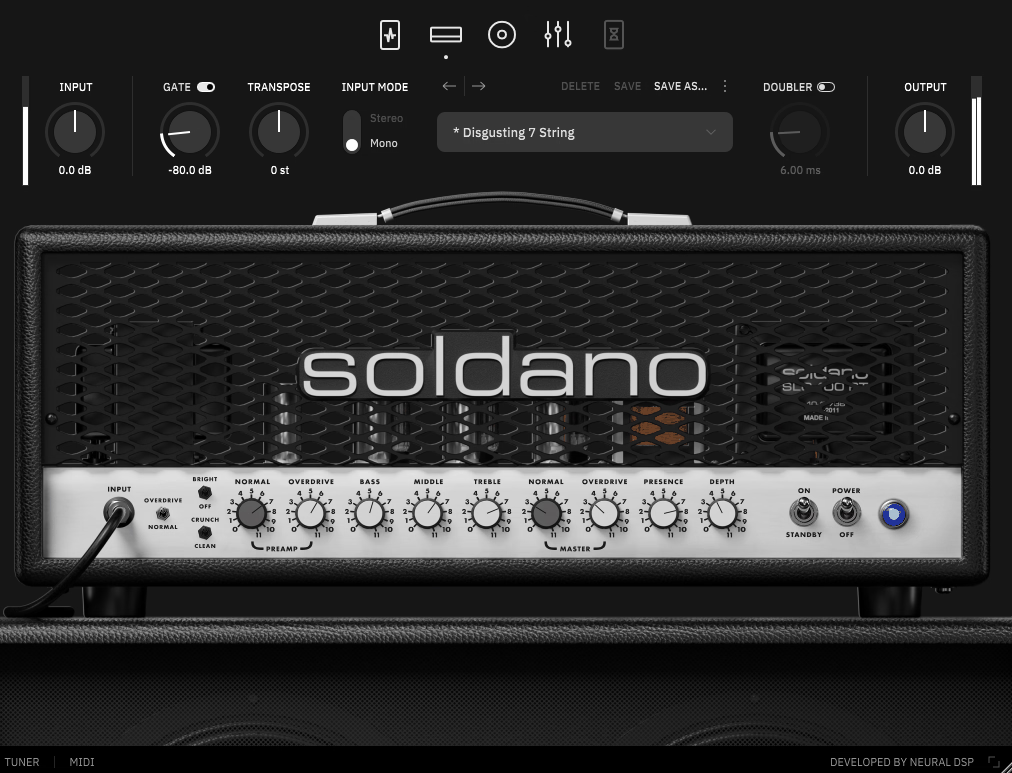
The Soldano SLO-100 X is a faithful recreation of one of the most influential high-gain amps ever built. The original shaped rock and metal tones throughout the late ’80s and ’90s, and real units are expensive, rare, and a hassle to maintain. This plugin captures what made the hardware famous without the usual digital modeling compromises.
Both original channels are here. The Normal channel covers clean to mid-gain with clarity and punch, solid for rhythm and edge-of-breakup playing. The Overdrive channel is the real draw, with thick, sustaining saturation that stays clear enough for complex chords. The midrange has that focused, vocal quality the SLO-100 is known for in lead playing, and the amp responds naturally to your pick attack and guitar volume.
The X version adds a full effects rack on top of the amp itself:
- Pre-amp boost for tighter palm mutes and more aggressive front-end saturation, noise gate that kills hiss without choking sustain, and delay and reverb good enough for professional recordings
The cab sim uses Neural DSP’s IR technology with multiple Soldano cabinet options, dual mic placement, and adjustable mic positioning from cone center to edge. That range alone takes you from bright and aggressive to warm and smooth. Third-party IR loading is supported if you want to go further.
4. Archetype: Petrucci X – Best Precision-focused
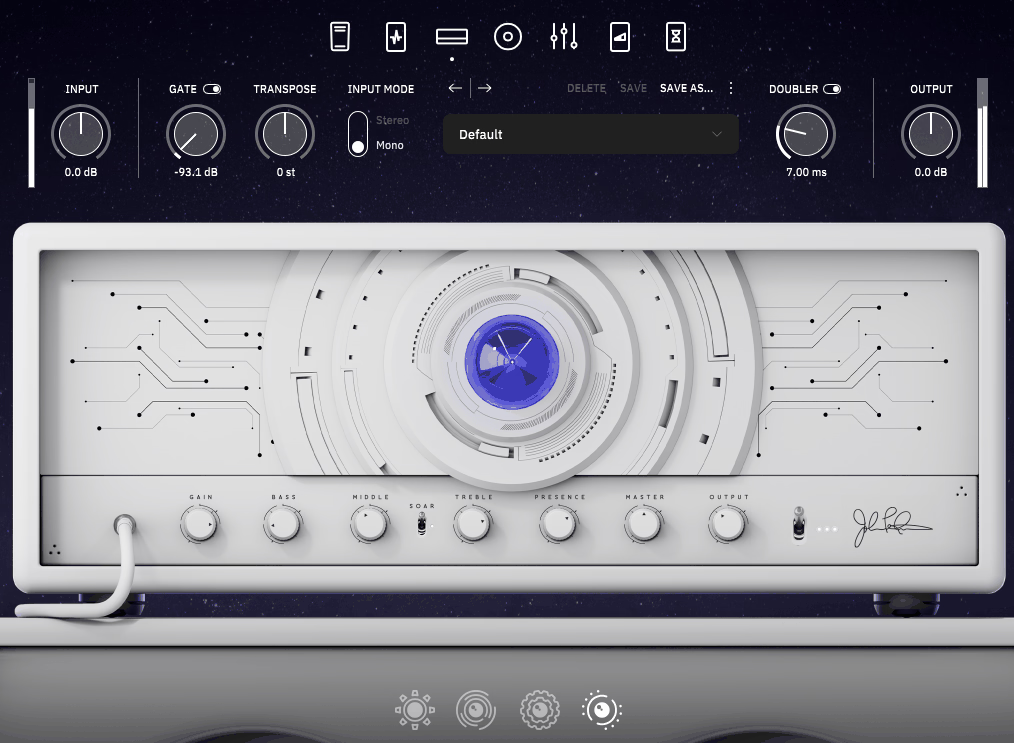
Archetype: Petrucci X recreates John Petrucci’s full rig with the kind of articulate, high-gain clarity that technical playing demands. Every note stays defined even with complex chords, fast seven-string rhythms, or heavily saturated lead lines. If you’ve ever wanted that Dream Theater precision in a plugin, this is the closest you’ll get.
The five amp channels give you more range than most amp sims in this category:
- Clean and Crunch handle everything from pristine headroom to classic rock breakup
- Gain 1 is tight and focused for rhythm work
- Gain 2 adds sustain and compression for leads
- Gain 3 goes full saturation for the heaviest riffs
Every channel has its own three-band EQ plus presence and depth controls. The low end stays controlled across all gain levels, which is rare in high-gain sims.
The pre-amp section includes Petrucci’s signature overdrive and boost pedals. The overdrive adds focused midrange punch for leads, and the boost pushes the amp’s front end harder for tighter palm mutes. Stacking both together is how you get his most aggressive rhythm tones, and the interaction between pedals and amp feels natural throughout.
Post-amp, the effects rack covers delay (tempo sync and tap tempo), reverb (room, hall, plate), chorus, flanger, and phaser. All effects are independently bypassable and repositionable in the signal chain. The cab sim supports dual mic blending with adjustable placement and full third-party IR loading.
5. Archetype: Tim Henson X – Best Experimental
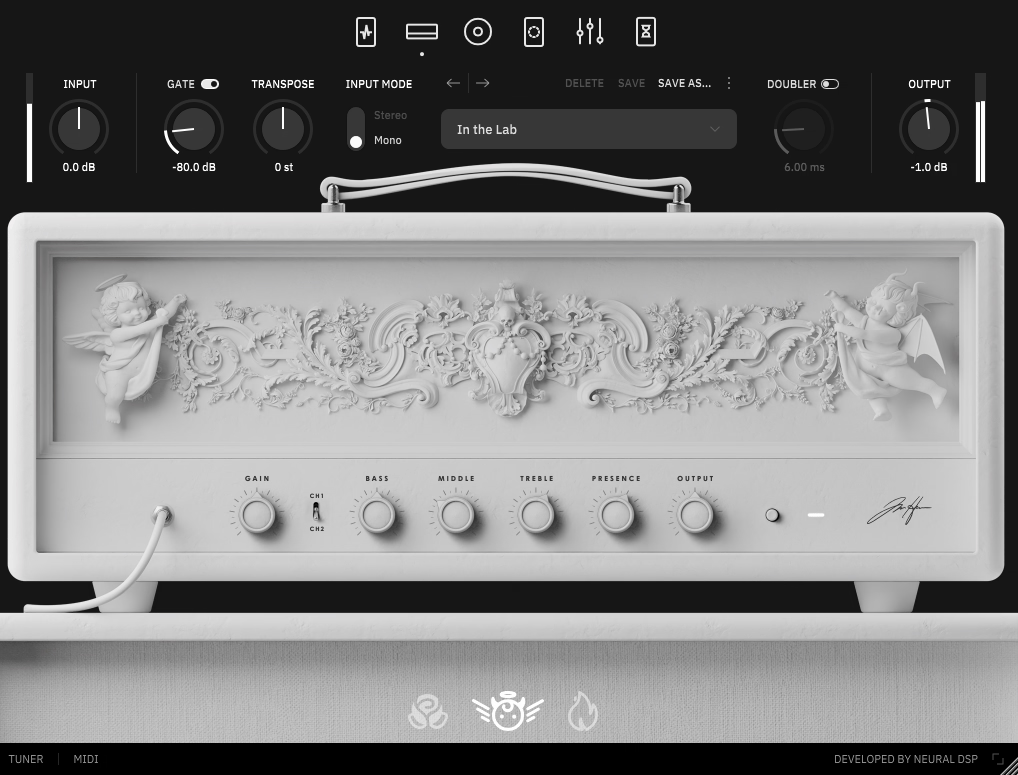
Archetype: Tim Henson X packages Henson’s full signal chain into one plugin, covering everything from clean glassy chords to heavily layered soundscapes that blur the line between guitar and synthesizer. Getting those tones normally means stacking several plugins in complicated setups. This keeps it all in one place.
The three amp channels are voiced for Henson’s modern, hi-fi style rather than vintage amp sounds:
- Clean: tight bass, bright highs, built for fingerstyle and tapping
- Crunch: light to medium gain that stays clear even through fast playing and complex chords
- Lead: smooth, compressed saturation with long sustain, never harsh or brittle
All three stay defined through big interval jumps and chord extensions, which is essential for Henson’s style.
The polyphonic pitch shifter is one of the plugin’s best features. It creates multiple harmonized voices from your playing, set in semitones, with accurate tracking even on chords and fast passages. Cheaper pitch shifters fall apart here. This one holds up.
The modulation section covers chorus, flanger, and phaser, each with rate, depth, and feedback controls. The chorus is lush and shimmering for clean parts, the flanger goes from subtle sweeps to metallic intensity, and the phaser adds that swirling quality Henson uses on certain tracks.
For atmosphere, the delay and reverb are the highlights:
- Delay syncs to tempo, stays clean even at high feedback settings
- Reverb includes plate, hall, and shimmer modes, with the shimmer adding octave overtones that turn simple chords into pad-like sustain
Both have pre-delay, damping, and mix controls so you can dial in anything from subtle polish to full experimental wash.
6. Archetype: Nolly X – Best for Modern metal
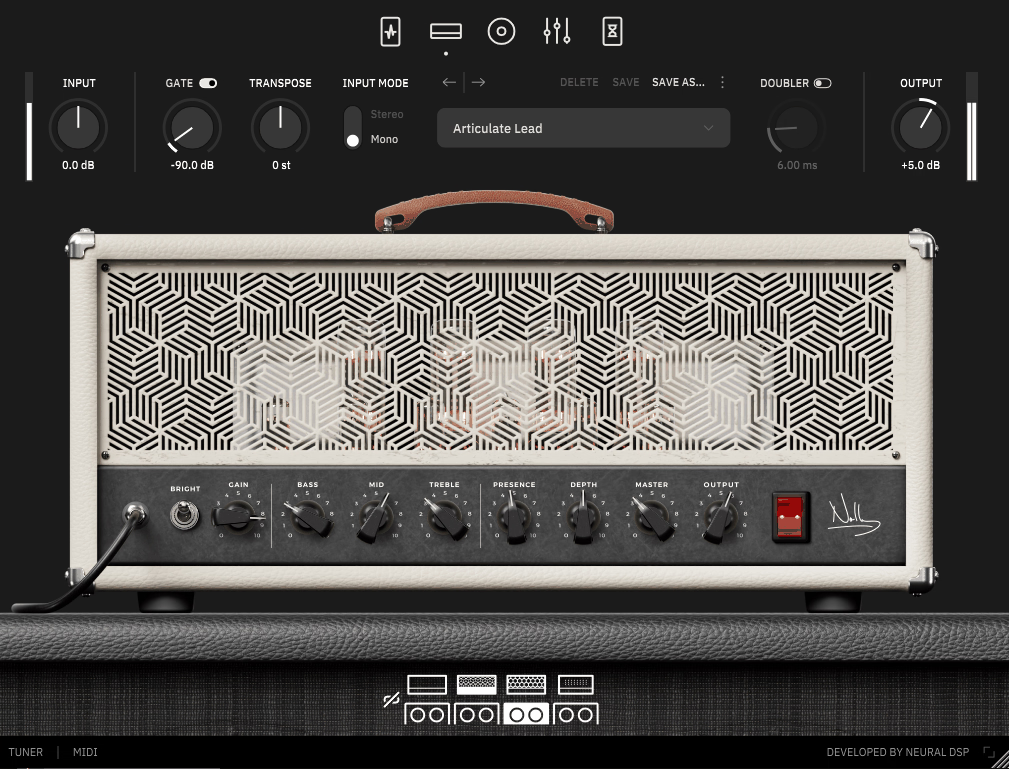
Archetype: Nolly X recreates Getgood’s full studio setup with a clear focus on modern metal and progressive music. Notes stay tight and defined even on seven and eight-string guitars in drop tunings, covering everything from djent-style palm mutes to clean ambient passages without any low-end bloom.
The amp section has two high-gain channels and a clean channel:
- Channel 1: tight, focused saturation with a controlled low end built for fast palm-muting in drop tunings
- Channel 2: looser, more aggressive distortion with more sustain, better suited for leads
The noise gate and transient shaper are where this plugin separates itself from standard amp sims. The gate is one of the most responsive available, cutting noise cleanly without choking sustain. The transient shaper lets you boost or soften note attack, which is genuinely useful for making rhythm guitars cut through a busy mix without just raising volume.
The effects rack punches above its weight. Delay syncs to tempo with dotted and triplet divisions, staying clear even at high feedback. Reverb covers room, plate, and hall without blurring notes even at long decay times. Chorus and flanger round out the modulation, usable subtly or more aggressively depending on what the track needs.
Beyond guitar, the plugin includes dedicated bass amp models with tight low end and clear mids, reflecting Nolly’s production background. Full MIDI support covers channel switching, effect toggling, and preset recall. The preset browser is actually useful as a starting point, and the plugin runs standalone for practice and pre-production without loading a full DAW session.
7. Fortin Nameless Suite X – Pure high-gain focus
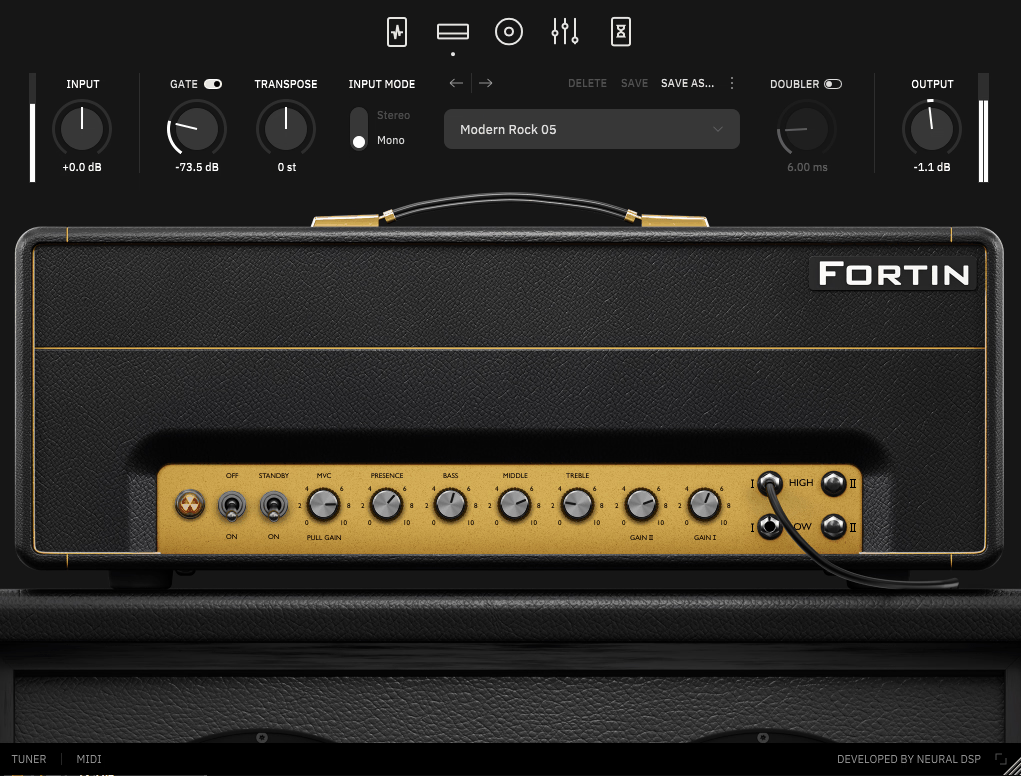
Every amp has its own gain, three-band EQ, and presence controls, and all three respond naturally to your playing style instead of sounding flat and compressed. Fortin Nameless Suite X gives you three distinct Fortin amp models in one plugin, each with its own character rather than minor variations on the same tone:
- Nameless: the core Fortin sound, aggressive and tight
- NTS: looser, rawer saturation built for death metal and thrash
- Cali: scooped mids and bright highs, fits metalcore and melodic death metal
The pedalboard puts the Fortin Grind boost and 33 Drive overdrive before the amp. The Grind adds focused midrange push without muddying the low end. The 33 Drive tightens rhythm parts and adds sustain to leads. Stacking both keeps things aggressive without losing definition. The noise gate is precise and musical, no awkward cutoffs or sustain loss.
Post-amp, the effects rack covers delay (tempo-sync), reverb (room, hall, plate), chorus, and flanger, all at pro quality. The X version lets you reorder everything in the signal chain freely, so you can place the gate before or after the boost, run modulation before the delay, or experiment with unconventional routings that hardware rigs simply can’t do.
8. Archetype: Tom Morello – Best for Creative FX Guitar
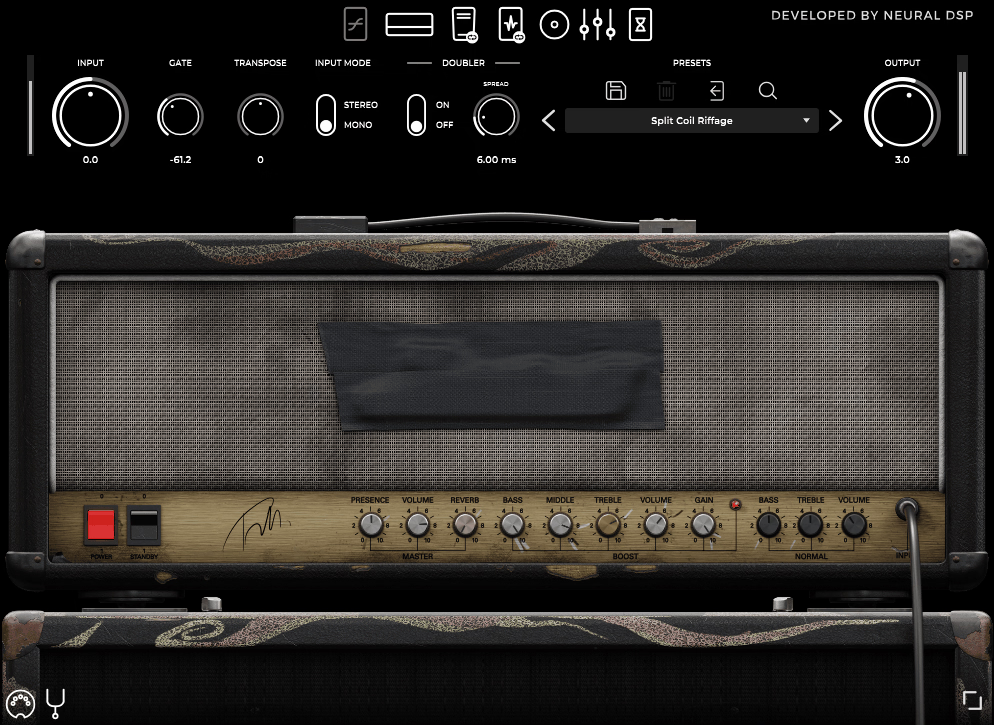
Archetype: Tom Morello is less about amp tone and more about the effects chain that defined RATM’s sound. Scratch solos, harmonic squeals, dive bombs, talk box vowels — it’s all here in one plugin instead of a complicated pedalboard stack.
The three amp channels cover Morello’s full range:
- Clean: bright and tight, built for funky rhythms and the cleaner RATM moments
- Crunch: mid-gain saturation that stays clear through complex, syncopated playing
- Lead: high-gain distortion with enough sustain for feedback and wild sounds
The whammy pedal is the centerpiece. It shifts pitch up or down by multiple octaves, tracks accurately through fast playing and big interval jumps, and covers everything from subtle doubling to the kind of wild pitch sweeps Morello built his reputation on.
Beyond that, the effects arsenal includes:
- Talk box emulation for vowel-like vocal sounds using speech-filter technology
- Delay with tempo sync, dotted and triplet divisions for rhythmic patterns
- Phaser, flanger, and wah covering the full range of Morello’s modulation sounds
The noise gate is precise enough to handle feedback techniques without needing volume automation, and it’s repositionable in the signal chain depending on how you want it to interact with your effects. The preset browser is sorted by song and career period, which makes it genuinely easy to find a useful starting point.
9. Archetype: Gojira X – Best Crushing modern tone
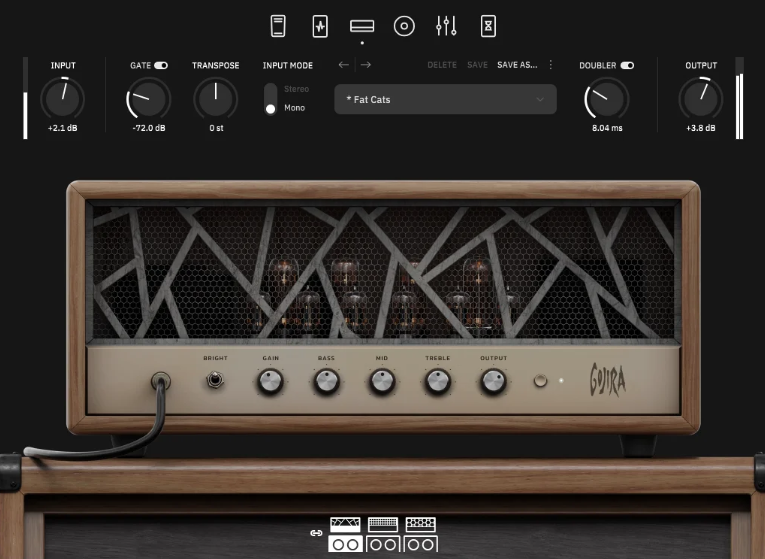
Archetype: Gojira X captures Duplantier’s complete studio rig with a focus on massive, articulate high-gain tones that stay tight even with down-tuned guitars and blast beat sections. This is extreme metal territory, built for technical playing where every note needs to cut through cleanly.
The three amp channels are purpose-built for that Gojira sound:
- Channel 1: heavy saturation with a tight, clear low end, stays defined even on the lowest seven-string notes
- Channel 2: more aggressive midrange for leads and parts that need to stand out
- Clean: enough headroom for complex chords and dynamic playing, even in low tunings
The pre-amp section includes Gojira’s real overdrive and noise gate pedals. The overdrive tightens the low end and adds midrange presence for punchy palm muting without sounding harsh. The gate handles the noise that comes with extreme gain settings cleanly.
The polyphonic pitch shifter adds octave-down effects for serious sub-bass weight and harmony options for layered leads. Tracking stays accurate even through heavy distortion and fast playing, which cheaper pitch shifters consistently fail at.
Post-amp, delay syncs to tempo with dotted and triplet divisions, reverb covers room, hall, and plate, and chorus and phaser round out the effects rack at professional quality throughout.
The cab sim supports dual mic blending with adjustable positioning, third-party IR loading, and high-pass and low-pass filters for carving out frequency space in the mix without thinning out the core tone.
10. Darkglass Ultra – Best Aggressive Bass Tones
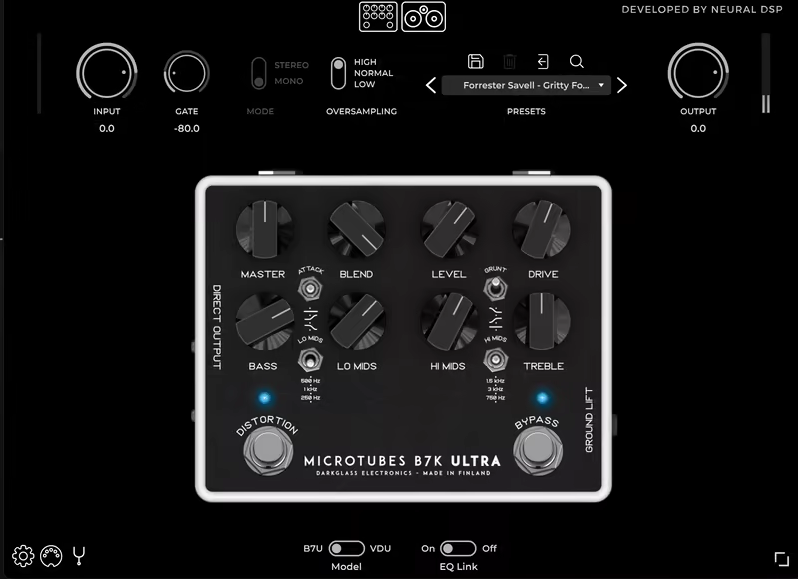
This one brings the full Darkglass Electronics signal chain into a plugin, built specifically for modern metal and rock bass. The core problem Darkglass Ultra solves is keeping low-end weight and clarity intact while adding real aggression, which most bass distortion plugins handle poorly.
The multiband distortion engine is what makes it work. It splits your signal into frequency bands so you can add heavy saturation to the mids and highs while keeping the low end clean and punchy. You control the crossover frequency to set exactly where the split happens, and the blend control mixes clean and distorted signals in parallel without any complicated DAW routing.
The Microtubes algorithms are based on Darkglass’s hardware pedals, each with its own character:
- B3K: strong mids and aggression, built for rock and punk
- Vintage: smoother, more musical saturation for melodic playing
Both respond dynamically to how hard you play, so you get more distortion with a harder attack without touching any settings.
The two-stage EQ lets you shape tone before and after distortion. Pre-distortion EQ controls what goes into the saturation. Post-distortion EQ helps the bass sit in the mix. Combined with the studio-quality compressor tuned specifically for bass frequencies, you can get a finished, mix-ready sound without reaching for additional plugins. A free trial is available.
11. Parallax X – Best Multiband distortion for bass
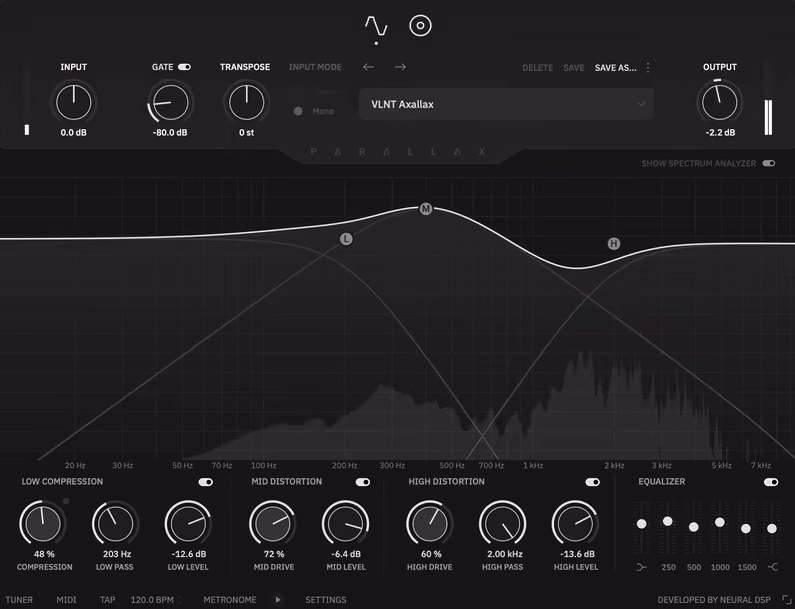
Parallax X is Neural DSP’s full bass processing suite built for progressive metal and djent, where clarity and low-end power have to coexist in dense, busy mixes.
The three amp models each serve a different purpose:
- Clean amp: clear and punchy, holds up even with extended-range basses in drop tunings
- Gain amps: add harmonics and edge for heavy pick playing while keeping the low end strong
All three respond dynamically to your playing intensity and have their own EQ controls for precise tone shaping.
The multiband distortion engine splits your signal into bands so you can add grit to the mids and highs while keeping the low end clean. The adjustable crossover frequency lets you decide exactly where the distortion kicks in based on your tuning and style. The blend control handles parallel processing without any extra DAW routing.
The compressor is calibrated specifically for bass with threshold, ratio, attack, and release controls. It’s dialed in well from the start, so you’re not spending time tweaking it before it becomes useful.
Post-amp, the effects rack covers chorus, flanger, delay, and reverb at pro quality. Delay syncs to tempo with dotted and triplet divisions. Reverb stays clear without muddying the low end. The X version lets you reorder effects in the signal chain freely. Full MIDI support covers preset switching, effect toggling, and real-time parameter control for both live and studio use.
Frequently Asked Questions (FAQs):
Do Neural DSP plugins work on Linux?
No, Neural DSP plugins do not officially support Linux. They are only available for Windows and macOS in VST3, AU, and AAX formats. Some users have reported running them through Wine or similar compatibility layers but this is not supported by Neural DSP and may cause stability or iLok activation issues.
Do Neural DSP plugins work on Nano Cortex?
No, Neural DSP plugins do not run on the Nano Cortex. It uses Neural Captures and its own built-in effects instead of the full plugin architecture found on the Quad Cortex. You can however use the Nano Cortex as a USB-C audio interface and run Neural DSP plugins on your computer through your DAW.
Do Neural DSP plugins work on GarageBand?
Yes, Neural DSP plugins work in GarageBand on Mac since they support the AU plugin format that GarageBand uses. Install the plugin, open GarageBand, and load it as an Audio Units effect on your guitar track. Note that GarageBand on iPad and iPhone does not support third-party plugins like Neural DSP.
Do Neural DSP plugins go on sale?
Neural DSP rarely discounts their plugins directly but they do run promotions like bundling a free plugin with a Quad Cortex or Nano Cortex purchase. Every plugin has a free 14-day trial so you can test before buying. Your best bet for a deal is watching for holiday bundles or product launch promotions.
What's the most versatile Neural DSP plugin?
Archetype: Nolly X is widely considered the most versatile Neural DSP plugin. It covers pristine cleans, mid-gain crunch, and crushing high-gain metal all in one package. If you only buy one Neural DSP plugin and play across multiple genres, Nolly X gives you the widest range of usable tones available.

Hello, I’m Viliam, I started this audio plugin focused blog to keep you updated on the latest trends, news and everything plugin related. I’ll put the most emphasis on the topics covering best VST, AU and AAX plugins. If you find some great plugin suggestions for us to include on our site, feel free to let me know, so I can take a look!