What separates amateur trap beats from chart-ready productions isn’t talent or expensive gear – it’s having the right specialized tools that handle the genre’s specific sonic demands.
With that said, these are the best trap production plugins I found for producers who need chest-hitting 808s, rapid-fire hi-hat programming, and that dark atmospheric character without spending hours fighting generic tools that weren’t designed for trap’s heavy low end and aggressive drums.
Trap production demands precision that general-purpose plugins can’t deliver. You’re not just making beats – you’re synthesizing melodic 808 basslines that stay punchy across every note, programming complex hi-hat rolls with proper velocity curves, layering analog warmth over digital precision, and creating space that doesn’t muddy your sub frequencies.
Standard synths, drum machines, and effects force compromises because they weren’t built around trap’s specific workflow of synthesis-based kicks, pitch-tuned bass, lo-fi texture layering, and aggressive transient shaping.
This guide covers plugins designed specifically for trap production workflows, from dedicated 808 synthesizers to trap-focused drum machines, lo-fi processors, and the mixing tools that make everything hit harder.
1. G-Sonique Swede (Bass #1)
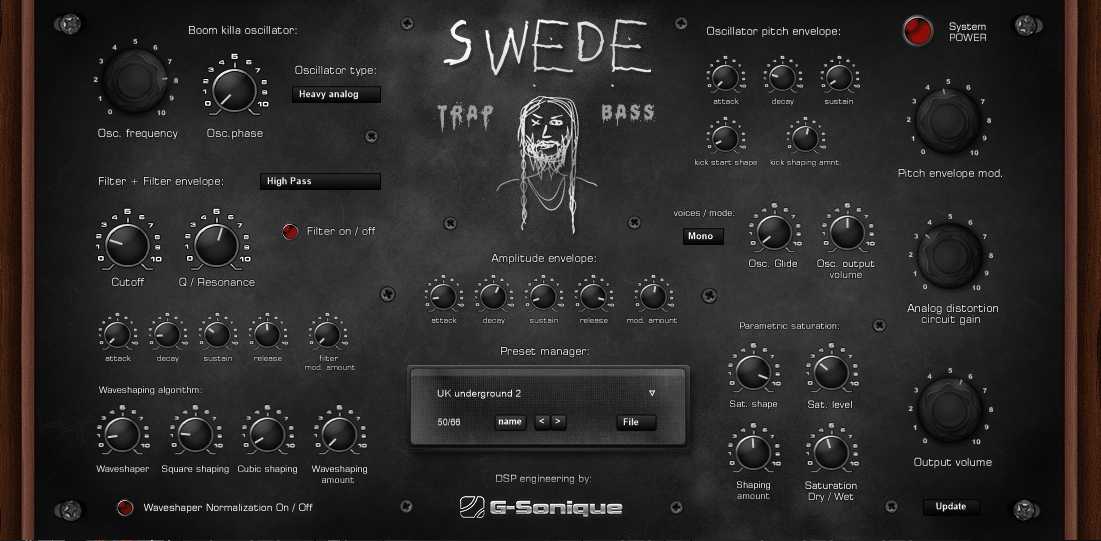
G-Sonique Swede Trap Bass synthesizes kicks and basslines specifically for trap and hip hop production through 20 kick oscillators, 8 analog modeled filters, wave shaping algorithms, and vintage style exponential envelopes coded after real hardware drum boxes.
I see the plugin was developed in cooperation with platinum producer Swede who works with Lil Wayne, DJ Khaled, and Gucci Mane, bringing actual chart level trap production knowledge into the design.
It seems like what separates Swede from basic kick samplers is synthesis rather than sample playback. When you play kick samples across different notes the punch and energy disappears, but Swede generates each note from scratch maintaining full impact across your entire melodic bassline. I love how the analog distortion circuit recreated from famous guitar pedals plus parametric saturation with shape control gives you that heavy in your face character without harsh digital artifacts.
- Designed specifically for Trap
The oscillator section includes 20 precisely designed waveforms covering basic sine waves plus modern shapes like Brutal Overdriven, Tube Processed, Vintage Sinus, Computer Sin, Detroit Analog, and Clipped Sinus. I feel that each oscillator maintains different harmonic content and saturation characteristics giving you tonal variety before any processing.
You get independent control over oscillator tone, pitch, and phase which affects how your kick attack develops. In addition, the oscillator output includes analog drum machine style nonlinear behavior where louder output generates more saturation and harmonics making your kicks fatter as you push levels harder.
- Wave Shaping Before Filtering
The wave shaping algorithm sits before the filter section creating totally different effects than external saturation. That being said, this placement lets you shape harmonics that then get filtered rather than filtering first and saturating after which produces cleaner but less characterful results.
You can set shape type and wave shape amount plus cubic or square shaping intensity creating hundreds of sound combinations from subtle analog saturation to aggressive digital shaping. I like that the normalization toggle maintains consistent volume levels after processing so you can tweak shaping without constant gain adjustments.
- Exponential Pitch Envelope
Unlike standard ADSR envelopes, the pitch envelope uses exponential curves inspired by vintage 80s drum machines that created legendary hip hop kicks. You get Start Shape and Shape Amount parameters plus a large precise pitch envelope modulation knob for controlling how your kick pitch drops over time.
I would say this exponential behavior mimics how real analog circuits discharge capacitors creating the classic 808 pitch sweep that defines trap bass. The amplitude envelope also follows vintage drum box behavior with a modulation knob controlling peak output volume that drives saturation and overall color.
- Poly Mode with Glide
The voice section switches between poly and mono with glide control between different notes which becomes essential for trap basslines that slide between pitches. As a result, this capability cannot work properly with kick samples since samples are fixed recordings rather than synthesized tones that can smoothly glide.
This trap plugin includes 66 hand crafted presets by trap producers, Brezekhiel, and Swede himself covering everything from classic trap kicks to progressive modern basslines. I love how all processing sits inside one plugin so you create massive kicks and bass in seconds without needing difficult post production or stacking multiple effects afterward.
2. FAW SubLab (808, Bass & Sub)
When you’re producing trap or bass heavy material, getting the 808 right makes or breaks the entire track.
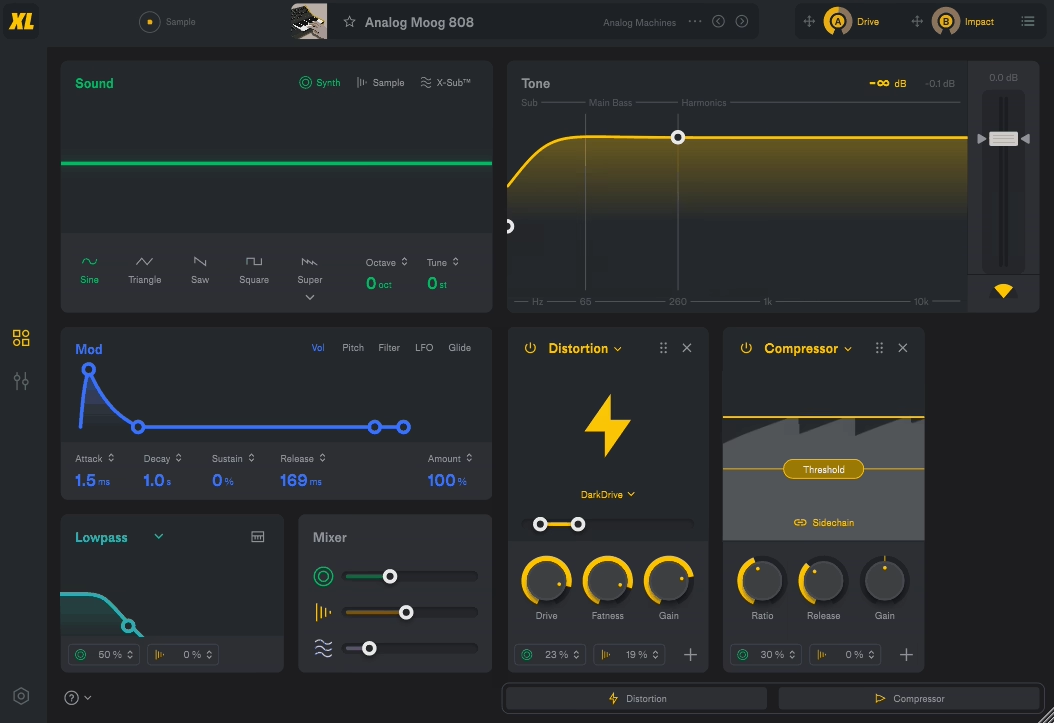
I loves that SubLab solves this by combining three distinct sound layers into one cohesive engine where each layer handles a specific job. You get an analog style synth for tonal character, a sample player loaded with 250 kicks recorded from Roland TR-808, Jomox MBase 11, Waldorf Blofeld and other classic machines, plus their proprietary X-Sub oscillator that guarantees your low end stays consistent.
The workflow stays simple where you can drag your own samples directly into the interface and it automatically detects pitch. The three independent ADSR envelopes control volume, filter cutoff, and pitch independently giving you precise control over how your 808 evolves.
- Why it’s perfect for Trap
SubLab ships with preset collections that sound finished. Richie Souf Signature pack contains sounds from the Atlanta producer who works with Future, Young Thug, and Gunna giving you instant access to that modern trap aesthetic.
Hits DNA Vol.1 recreates iconic 808s from tracks by ScHoolboy Q and 21 Savage. Divine Bass offers smoother darker subs while Crushed delivers heavily distorted 808s that sit aggressively forward, and Analog Machines recreates warm vintage tones while Pure Subs provides clean fundamental layers you can blend under existing kicks.
- X-Sub Psychoacoustic Oscillator
I would say this is where SubLab separates itself from basic 808 samplers. X-Sub is a psychoacoustic sub-bass oscillator that intelligently keeps your fundamental note locked between 30-65Hz regardless of what MIDI note you’re playing.
It synthesizes a clean fundamental plus harmonics you control with a two dimensional slider where moving horizontally balances odd versus even harmonics while vertical movement adjusts volume. This means you can play higher melodic basslines while maintaining chest thumping sub presence.
When it comes to X-Sub, it bypasses all filtering, envelopes, and processing to maintain consistent sub-bass integrity. Your synth and sample layers can get wild with distortion but the sub foundation stays rock solid, and the spectrogram shows you exactly what’s happening across all three layers.
- Four Distinct Saturation Algorithms
SubLab includes Darkdrive with Fatness control, Overdrive with Tone shaping, Grunge with Fizz adjustment, and Tube with Heat parameter where each one colors your sound differently. I like that these work on the synth and sample layers independently from X-Sub so you can add aggression without compromising low end.
Darkdrive adds weight without destroying transients. Grunge delivers that blown out Memphis style 808, and Tube gives warmer saturation when you need something less aggressive.
The distortion section includes dedicated low-cut and high-cut filters specifically for post-distortion shaping which lets you dirty up mids and highs while keeping sub frequencies clean.
- Auto-Sidechain Compression with Parallel Processing
The compressor gives you ratios up to 16:1 with release times ranging from 10-500ms and the threshold control displays your waveform underneath. What really sold me is the auto-sidechain function that ducks your synth layer against your sample layer automatically.
This means your kick transient punches through clean while your sustained 808 tail fills the space. You can apply compression to synth and sample layers independently with separate mix controls for parallel processing.
- Advanced Sample Loop Control
Beyond the factory library the sample player offers more control than expected. You can set precise loop points that automatically snap to zero crossings with polarity indicators showing wave phase at boundaries.
I like that this makes creating sustained single cycle oscillations remarkably clean. The delayed sample start feature lets you offset your 808 attack by up to 300ms perfect for creating delayed sub hits, and you get internal limiting plus sharp filters and up to ±100 cents of detuning.
3. UJAM Beatmaker GLORY (Drums designed for Trap #1)
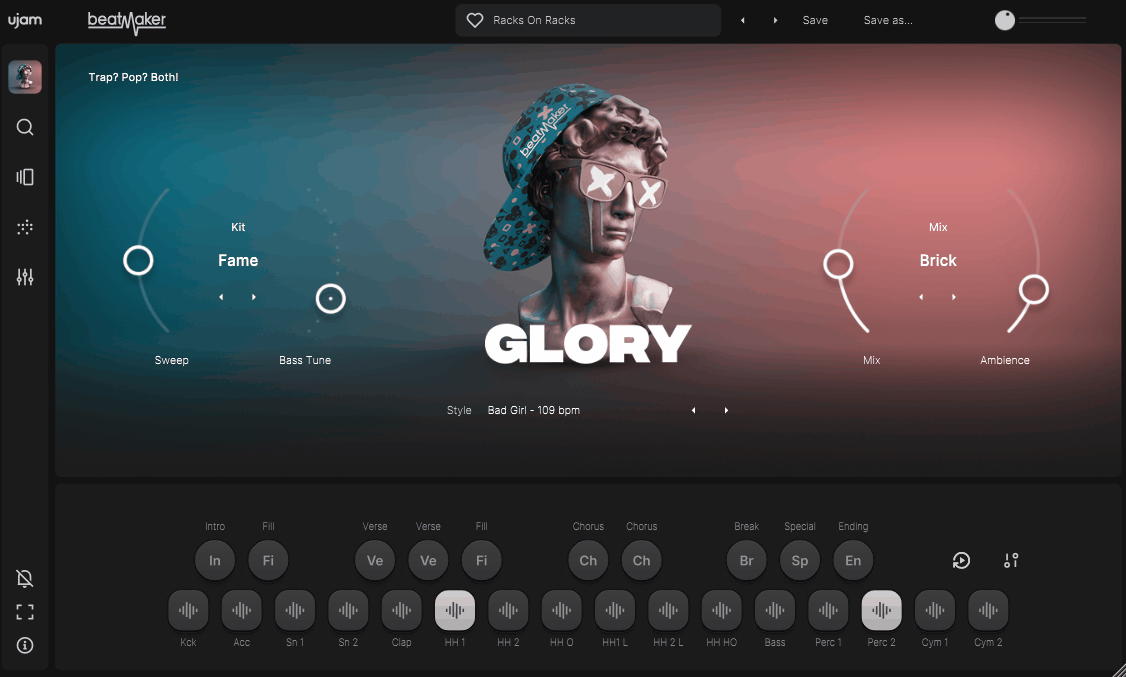
Programming trap drums from scratch eats up production time you could spend on melodies and arrangement. You can wste hours tweaking hi hat rolls and velocity curves when you should have been focusing on the actual music.
I think UJAM Beatmaker GLORY handles the tedious work by delivering 10 trap and drill focused drum kits with 460 pre-programmed patterns across 20 styles that cover everything from southern hip hop to modern drill. The plugin focuses on what trap actually needs which is hard hitting 808 kicks with pitch control, rapid fire hi hat programming, and tight snares that cut through dense mixes.
You get instant access to chart ready rhythms without spending hours tweaking velocity curves or programming triplet rolls. I like that the Bass Tune control lets you match your 808 pitch to your bassline which keeps low end from clashing.
Some people say it’s just expensive plugin with bunch of samples and neat GUI, but if you are just starting out? I would definitely recommend you at least to try a trial version.
- Ten Trap and Drill Drum Kits
GLORY ships with kits recorded and processed specifically for trap productions where each kit includes booming 808 style kicks, crisp snares with snap, and hi hats designed for complex programming covering closed hats, open hats, and rolls.
When it comes to processing, the sounds are already mixed so they sit properly in busy arrangements without needing heavy EQ or compression. You can layer kits or swap individual drum elements between kits when you need specific characteristics, and the kits cover different trap subgenres from Atlanta style production to UK drill aesthetics.
- 460 Patterns Across 20 Styles
The pattern library includes full arrangements with intro, verse, chorus, and breakdown sections so you can build complete drum tracks by selecting different patterns. Here, each style offers multiple variations giving you enough options to keep beats interesting across entire songs.
Patterns handle the complex hi hat programming trap demands including triplet rolls, stutters, and velocity changes that would take significant time to program manually. The rhythms stay locked to tempo and you can adjust swing and feel without re programming individual hits.
- MIDI Drag and Drop Workflow
You can drag any pattern directly into your DAW as MIDI which lets you customize the programming while keeping the original groove as foundation. This means you’re not locked into the patterns but can use them as starting points for your own variations.
Once patterns are in your DAW you can adjust individual hit velocities, shift timing for human feel, or reprogram sections that need changes. I would say the MIDI export makes GLORY useful even when you want heavily customized drums because you’re starting from professionally programmed grooves rather than blank grids.
- Bass Tune Control for 808 Pitch Matching
The Bass Tune parameter adjusts 808 kick pitch so you can match it to your bassline key without fighting phase cancellation or muddy low end. This control handles what normally requires bouncing kicks to audio and pitch shifting which breaks your workflow.
You get direct control over how your 808 resonates which matters when you’re building tracks around specific bass notes. The pitch adjustment maintains punch and clarity rather than creating that thin sound you get from extreme pitch shifting, and you can automate the parameter for melodic 808 basslines that change notes throughout sections.
4. XLN Audio RC-20 Retro Color (For warmth and color)
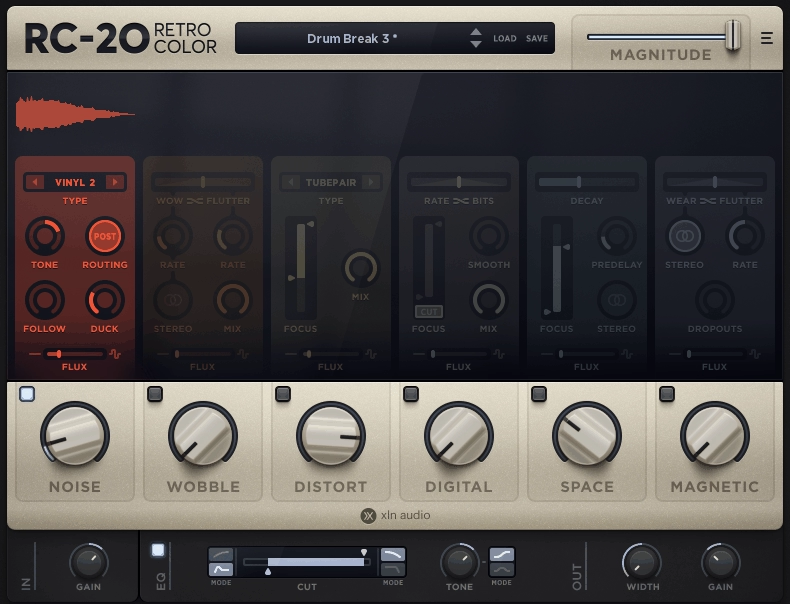
XLN Audio RC-20 Retro Color is a great plugin for trap as it recreates analog warmth through six parallel effect modules that handle noise generation, pitch modulation, saturation, bit crushing, reverb, and magnetic tape degradation. The plugin works equally well on individual tracks or full mixes when you need that vintage character modern digital production often lacks.
At a first glance, what separates RC-20 from basic lo fi processors is how its modules interact. You’re not just adding vinyl crackle or tape wobble, you’re combining 16 types of seamlessly looped noise samples, two speed LFO pitch modulation, six saturation algorithms from Addictive Drums 2, sample rate reduction with smooth control, and magnetic tape wear simulation all shaped by a single Magnitude slider that scales every parameter simultaneously.
- Six Parallel Processing Modules perfect for Trap Music
The Noise module generates 16 looped mechanical and electronic noise types including vinyl crackle at two speeds, tape hiss, VHS degradation, 8 bit computer artifacts, studio ambience, and even Apollo Lunar Lander sounds. I like how the Tone knob shifts frequency balance while Follow makes noise rise with your input signal and Duck does the opposite creating dynamic noise response.
The Wobble module combines separate Wow and Flutter LFOs ranging from 0.1Hz to 4Hz for Wow and 6-20Hz for Flutter with a horizontal slider blending them into complex pitch modulation. In addition, Stereo mode converts Wobble into a chorus effect rather than tape style wobble giving you two distinct uses from one module.
- Distortion with Frequency Targeting
The Distort module includes six saturation algorithms covering valve, transformer, broken speaker, and three waveshapers pulled directly from XLN’s Addictive instruments. I like that the Focus Filter targets saturation to specific frequency ranges using two boundary sliders so you can dirty up mids without destroying low end clarity or add grit to highs while keeping bass clean.
In other words, unlike typical distortion that affects the entire frequency spectrum equally, this targeted approach lets you add aggression exactly where tracks need it. The Digital module applies sample rate and bit depth reduction with independent blend control and Smooth parameter for rounding harsh edges when degradation gets extreme.
- Magnetic Tape Volume Modulation
The Magnetic module simulates tape degradation through two mixed LFOs controlling volume rather than pitch. The slow Wear modulation combines with faster Flutter adjustable from 6-30Hz, both including random elements for chaotic irregularity that mimics real tape behavior.
When it comes to extreme effects, the Dropouts knob controls intensity of extreme volume drops occurring at random timings and durations while Wear modulation and Dropouts can generate in mono or independently for left and right channels. This creates that classic tape machine instability where volume fluctuates unpredictably during playback.
- Master Section with Magnitude Control
Now, some basic stuff.. I can only say the Magnitude slider scales all six module amount knobs plus every master section parameter from 0% to 100% making it far more than a simple mix control. You can set each module to your desired intensity then use Magnitude as a master depth control or automation target for sweeping all processing simultaneously.
In addition to that. the master section includes input and output gain, stereo width from mono through normal to sides only, plus Cut Filter with adjustable top and bottom frequencies at two rolloff slopes. The Tone EQ operates in Tilt mode biasing toward low or high frequencies, or Mid mode raising and lowering midrange all scaled by Magnitude for dynamic tonal shaping.
- Flux Randomization Per Module
Each module includes a Flux slider introducing random variation over time with behavior specific to that module. That said, Distort’s Flux adds random overdrive modulation, Space randomly modulates pre delay, and other modules apply their own variations creating organic movement that prevents static processing.
I like how the animated displays at the top of each module visualize exactly what’s happening to your signal in real time. Wobble shows combined LFO waveforms, Digital displays sample rate effect on waveform, and Magnetic reflects Wear modulation and Dropout behavior making the processing completely transparent.
5. Thenatan Audio Tape Piano 2 (Piano & Keys)
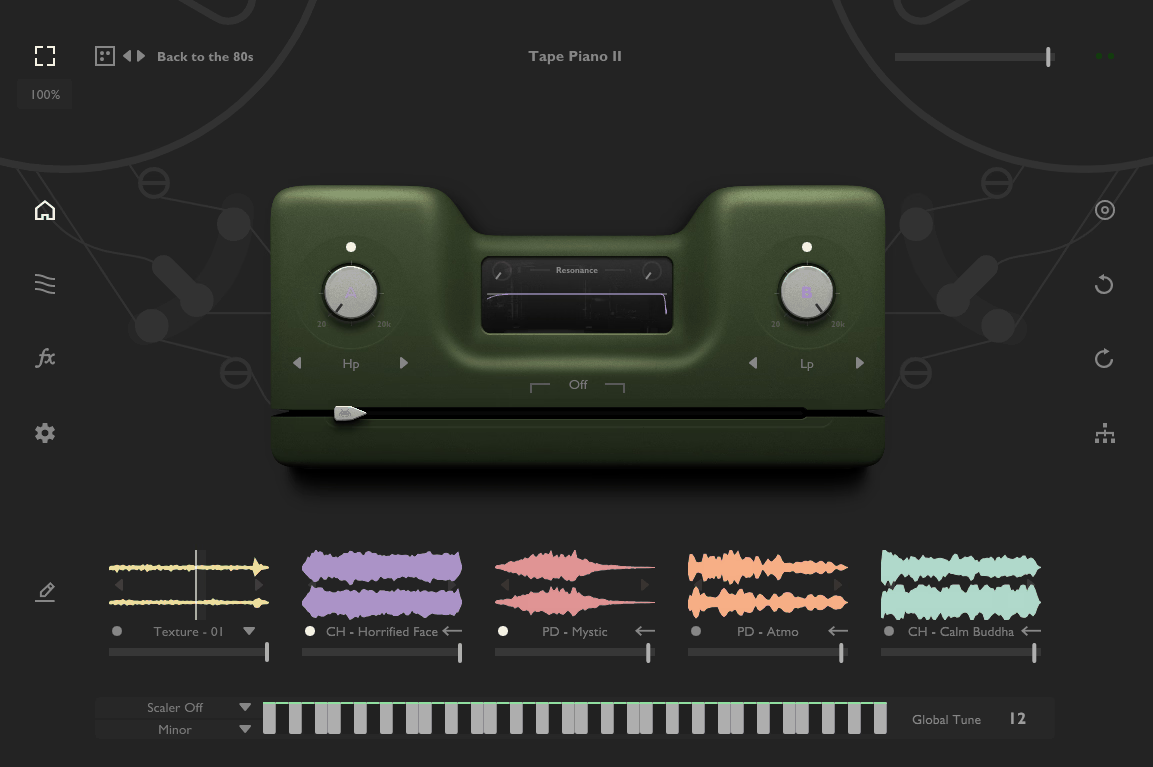
Lo fi piano production requires more than adding vinyl crackle over clean samples. You need degraded tones that already sound aged, proper texture layering, and flexible modulation without endless automation lanes. Here, Thenatan Audio Tape Piano 2 delivers this through four independent samplers plus a dedicated texture layer, macro controlled modulation, and built in scaler that keeps everything musically coherent.
This trap plugin runs surprisingly light at only 300MB on disk despite including over 200 categorized presets covering everything from heavily degraded lo fi to cleaner vintage keys. I can see the multilayer architecture lets you blend sounds that would normally require multiple plugin instances, and the scratch designer generates realistic vinyl scratches by adding random points to a pitch table rather than forcing you to program complex automation curves.
- Four Layer Sampler Architecture
Each of the four independent samplers includes filters, ADSR envelopes, reverse playback, pan, stereo width, and tuning controls giving you complete sound shaping per layer. You can load different piano samples across layers and blend them for hybrid tones, or use layers for velocity switching and dynamic response.
I found that the texture layer loads additional samples via drag and drop or from the included bonus pack specifically for adding vinyl crackle, tape hiss, room ambience, and other lo fi artifacts.
This separation means your texture stays independent from your melodic content, and you can modulate texture level without affecting piano dynamics.
- Macro System Eliminates Automation
The flexible macro system uses color coded mappings with animated visual feedback showing exactly which parameters connect to which macros. In addition, you can assign multiple destinations to single macros and create effects that fade in and out with quantized precision or voice elements that appear at random intervals without touching your DAW automation.
I would recommend this approach because it speeds up sound design dramatically since you’re controlling complex parameter changes from a few knobs rather than drawing automation for every individual control. The visual feedback makes it easy to understand your routing at a glance even in complex patches.
- Ten Effect Modules with Modulation
The effects section includes algorithmic reverb, convolution reverb with custom impulse response loading, stereo delay with filter controls, soft and hard distortion, 8 bit degrader, two band phaser, compressor, gate, and surgical EQ. In fact, all effects work as modulation targets meaning you can automate effect parameters through the macro system or LFO and envelope modulation.
The convolution reverb accepts custom impulse responses which lets you load your own spaces or vintage hardware reverb captures. The bit crusher handles digital degradation while the distortion modules add analog style saturation, and the two master filters provide 10 filter models each for additional tonal shaping.
- Built In Scaler with 17 Scales
The scaler locks your playing to 17 popular scales including major, minor, pentatonic variations, blues, harmonic minor, melodic minor, and all seven modes plus whole tone and diminished options. Personally, I think this means you never play wrong notes which becomes particularly valuable when improvising or when music theory isn’t your strong point.
The scaler works transparently in the background so you can focus on musical ideas rather than worrying about hitting correct notes. You can switch scales on the fly as your chord progressions change, and the four octave piano keyboard with ±24 semitone transpose control gives you full range access regardless of your MIDI controller size.
6. Wavesfactory Quantum (For punchy drums)
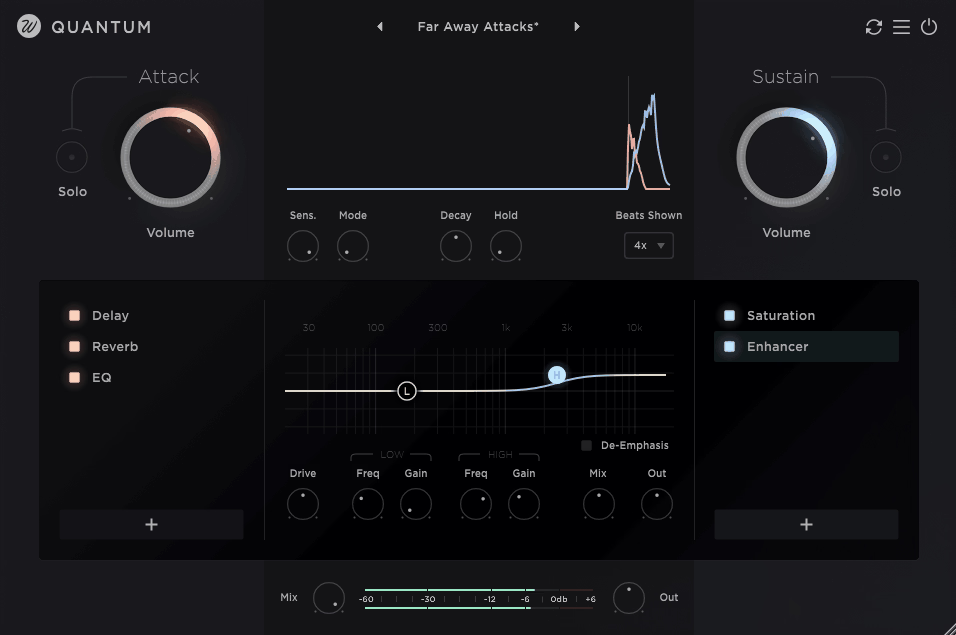
Getting drums to punch through dense trap mixes without sounding overprocessed requires more than basic transient shaping. Wavesfactory Quantum separates audio into attack transients and sustain components then lets you apply 16 independent effects to each path before recombining them. I’d say this goes far beyond typical transient shapers that only adjust levels, giving you EQ, pitch shifting, reverb, saturation, compression, and modulation effects assignable separately to attacks or sustains.
The transient detection works automatically once you select source type between Drums, General, or Soft which changes the crossfade behavior between attack and sustain portions.
The Sensitivity control fine tunes detection, Decay sets when sustain takes over, and Hold establishes minimum time between detected transients preventing unwanted triggering on complex material.
From my perspective, the waveform display shows transients in orange, sustains in blue, and detection points as vertical grey lines making the separation completely transparent.
- Sixteen Built In Effects Per Path
The effects suite includes Chorus, VCA Compressor with auto gain, Convolution Reverb with custom IR loading, Stereo Delay with tempo sync and feedback filters, two band Enhancer applying saturation to specific frequencies, five band Parametric EQ with seven filter types, Flanger, Brickwall Limiter with lookahead, Lo Fi sample rate and bit reduction, Phaser with 2 to 12 notches, high quality Pitch Shifter, algorithmic Reverb combining room and plate characteristics, Saturation with five types, Mid Side Stereo Tools, Tremolo that can function as ring modulator, and Vibrato that works as frequency shifter.
In fact, each effect opens its own edit panel in the lower section of the interface with all parameters accessible without menu diving. Effects can be easily added, bypassed, removed, and rearranged in any order with simple one click operations allowing fast experimentation without breaking creative flow.
- Creative Applications Beyond Transient Shaping
You can pitch shift drum attacks up an octave while leaving sustains untouched creating completely new timbres from existing samples.
For instance, adding reverb only to attacks produces cleaner results than processing the entire signal because the sustain stays dry and focused. EQ plosives separately from vocal body, reduce room ambience by lowering sustain level, or add vibrato only to piano sustains while keeping attacks sharp and immediate.
The enhancer applies saturation to targeted frequency bands in the attack path sharpening transients without affecting sustain tonality. On the other hand, you can compress sustains independently to control dynamic range while leaving attack punch untouched, or reverse this to tame excessive peaks without squashing body. I’d say the creative possibilities multiply exponentially when combining multiple effects across both paths.
- Automatic Transient Detection Without Threshold
Unlike traditional transient processors requiring threshold adjustment per track, Quantum uses state of the art detection that automatically identifies transients giving you artifact free results. So basically, this removes the need for per track threshold tweaking which speeds up workflow significantly when working across multiple drum tracks or instrument groups.
The three source type modes handle different material characteristics where Drums mode works for percussive content, General covers most other sources, and Soft handles gentle material without aggressive attacks. You can solo attack or sustain components independently to hear exactly what’s happening in each path before processing.
- Flexible Routing and Global Controls
Effects in each path can be reordered by dragging them into different positions giving you control over signal flow and how processors interact. The Mix and Output volume parameters sit at master level providing blend control between processed and dry signal plus final output gain adjustment.
The plugin includes comprehensive preset system with factory presets covering common applications plus save, save as, and delete functionality for your own creations. The interface resizes by dragging the bottom right corner and uses vector graphics that stay crisp at any size with smooth animations throughout.
7. iZotope Neoverb (Reverb for polished vocals, synths & atmospheric textures)
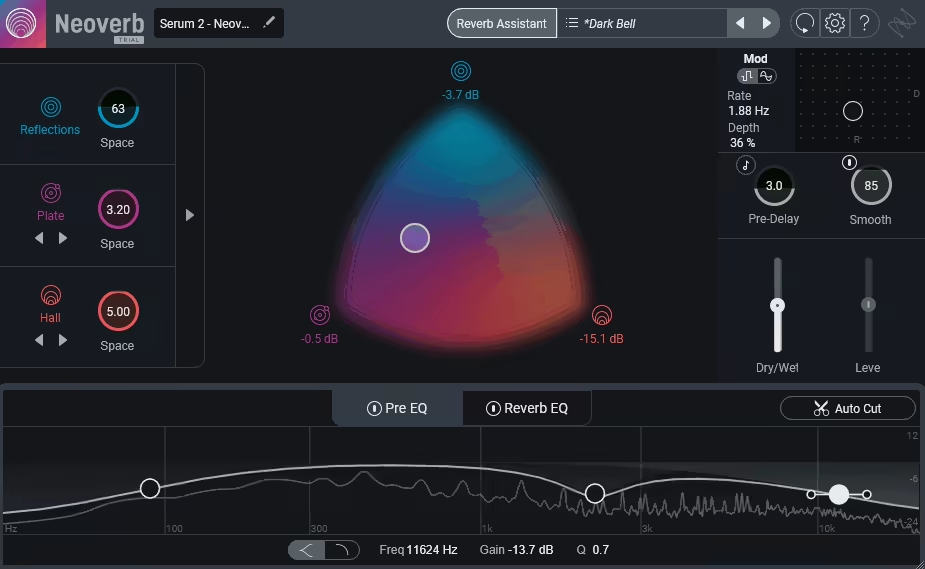
iZotope Neoverb combines three independent reverb engines with AI powered EQ and intelligent Reverb Assistant that analyzes your audio and suggests optimal settings. If you ask me, the plugin uses Exponential Audio technology for reverb algorithms while adding iZotope’s signature workflow intelligence to speed up decision making when you need space and depth without muddying your mix.
The three engines work simultaneously where blue generates early reflections, purple creates Room, Medium Chamber, or Plate tails, and orange produces Large Chamber or Hall reverbs. I found that you blend them using the Blend Pad interface by dragging a puck around a three sided workspace or let Reverb Assistant choose proportions based on your selected style, size, tonality, and input analysis.
The Auto Cut and Unmasking features adjust pre and post reverb EQ automatically to prevent frequency masking either between wet and dry signal or between reverb and other compatible iZotope plugins in your session.
- Reverb Assistant with Four Stage Setup
The Assistant starts by asking you to select Style using a horizontal slider ranging from early reflection ambience on the left to tail heavy sound on the right. Below this you choose reverb Size, set Dry Wet mix, and pick from four tonalities: Clean, Dark, Bright, or Airy.
Actually, after clicking Next you play your audio track for a few seconds while the plugin analyzes it then receive confirmation that both pre and post EQ have been set to minimize masking. The resulting EQ curves display overlaid on a frequency analyzer and a horizontal percentage slider lets you increase or decrease the depth of these curves if the Assistant’s suggestions feel too aggressive or subtle.
- Three Engine Advanced Controls
Here, each engine includes four rotary controls in Advanced view keeping the interface manageable rather than overwhelming. At least all three engines have Time, Size, and Diffusion parameters while the two reverb tail engines add Attack controls designed to soften reverb onset.
I would say higher diffusion values work well for percussive sounds making reverb more dense and less grainy while lower settings bring old school coarseness that flatters vocals and non percussive sources. The Reflections section includes Angle control adjusting tonal character and intensity plus each row ends with slider controls for reverb tail crossover frequency and damping values. The damping emulates how high frequencies decay more rapidly than lows in natural reverb.
- Adaptive EQ with Masking Detection
In Pre EQ view you can click Auto Cut button to have masking EQ recalculated during audio playback where foggy patches appear showing where masking occurs before EQ adjusts automatically.
In addition to that, in Reverb EQ mode the Unmask button does the same but the Masking selector lets you choose between Wet Dry or a plugin on another track to calculate EQ that prevents reverb from masking the selected source.
The system accepts audio from other Neoverb instances or from iZotope Neutron 3, Nectar 3, VocalSynth 2, or Relay creating inter plugin communication for intelligent mixing decisions. EQ settings can be modified manually by dragging three points on the curve with handles adjusting Q of each filter and high and low sections switchable between cut or shelving with slope options of 6, 12, 24, and 48 dB per octave.
- Modulation and Pre Delay
The Mod control uses an X Y Rate Depth interface adding movement and texture within the reverb tail running from either sine wave or random generator. Variable pre delay can be tempo synced allowing you to lock reverb timing to your project grid for rhythmic effects.
That being said, the Smoothing control brings transient shaper into play affecting the signal feeding into reverb engines which becomes useful when you need to tame harsh transients before they hit the reverb. This keeps percussive attacks from creating excessive reverb build up while maintaining natural decay characteristics.
- Blend Pad Workflow
Even after using Reverb Assistant you can drag the puck around the Blend Pad to adjust proportions between the three engines creating hybrid reverbs that combine early reflections with plate character and hall depth. Overall, individual engine buttons toggle each reverb on or off letting you hear exactly how each contributes to the overall space.
The Blend Pad can be automated in your DAW to create movement where you might start with tight early reflections during verses then sweep toward massive hall reverb for choruses. I found that this dynamic approach keeps reverb feeling musical rather than static throughout arrangements and the visual interface makes automation curves easy to understand when returning to projects later.
8. Baby Audio Atoms (All-round Synth)
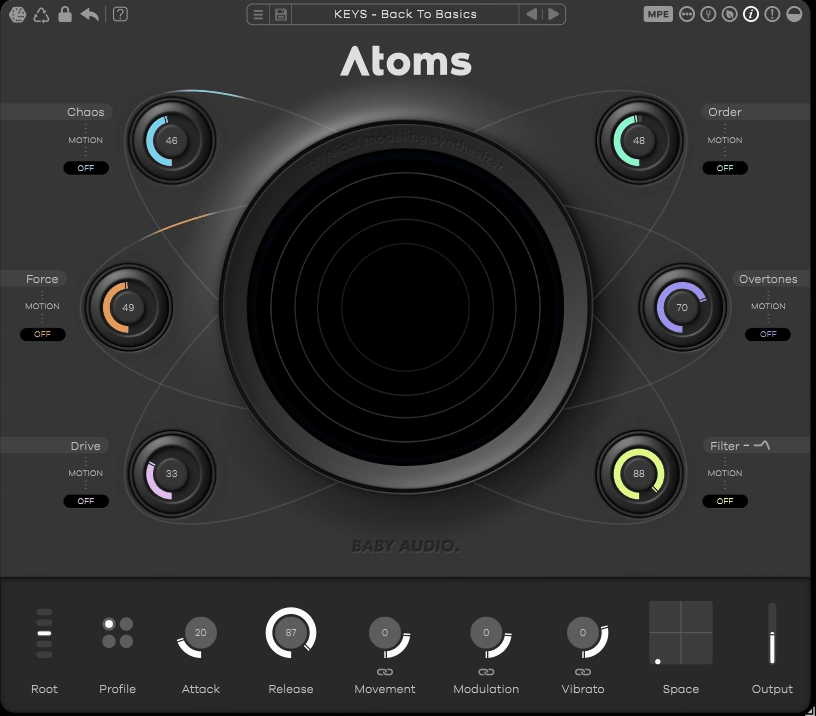
Creating unique synth sounds that evolve organically without sounding static or mechanical separates professional productions from amateur ones. Baby Audio Atoms generates sound through physical modeling of interconnected masses and springs excited by virtual bowing action rather than traditional oscillators or samples.
The synth creates organic yet otherworldly textures that naturally shift and evolve because the physical model behaves like real world instruments where no two played notes sound identical.
The interface stays simple with six main parameters modulated by powerful motion options but the synthesis engine runs complex physics simulation underneath. I found that you get 250 factory presets plus expansion packs and a sophisticated randomization algorithm that creates musically usable patches on demand by selectively adjusting parameters based on their relationships rather than randomizing blindly.
- Physical Modeling Synthesis Engine
The core uses simulation of masses connected by springs that get triggered by bowing action creating sounds impossible with subtractive or FM synthesis. When it comes to sonic possibilities, think of it as a futuristic string instrument made in a science lab where the physics generate harmonically rich tones that shift organically over time.
I have to say the sound stays alive and constantly changing because physical models naturally incorporate the micro variations found in acoustic instruments. You can push this further by modulating the six main parameters with motion options creating soundscapes that regenerate and never sound static across extended playing.
- Intelligent Randomization System
The musically calibrated random algorithm adjusts each parameter based on its relationship to others rather than just throwing dice at every control. In my opinion, this produces usable new patches with every randomize instead of the chaotic unusable results typical randomizers generate.
For instance, you can narrow randomization behavior by limiting possible ranges for any knob or locking specific parameters that you want preserved. Plus, the Recycle button creates new patches similar to the current one which becomes useful when you find a direction you like but want variations without starting from scratch.
- Physically Modeled Effects
The bottom panel effects get created inside the physical model itself rather than as post processing except for the Space reverb. I’d recommend exploring this because the integration gives you unique modulation options inherent to the physical system that produce sounds impossible with traditional effect chains.
Pushing these effects hard creates otherworldly and alien sounds because you’re manipulating the physics simulation rather than just filtering audio. In the end, the effects stay musically connected to your playing dynamics and respond organically to input variations.
- MPE Support and Expression
Atoms includes full MPE controller support letting you control multiple parameters simultaneously through pressure, slide, and tilt gestures. This transforms the synth into an expressive performance instrument rather than just a sound generator triggered by basic MIDI notes.
The physical modeling responds naturally to continuous controller data making subtle playing technique translate into sonic variation. You get six main modulation sources assignable to virtually any parameter creating complex evolving patches that respond to your performance nuances.
9. UAD Empirical Labs EL8 Distressor (To compress drums, 808s)
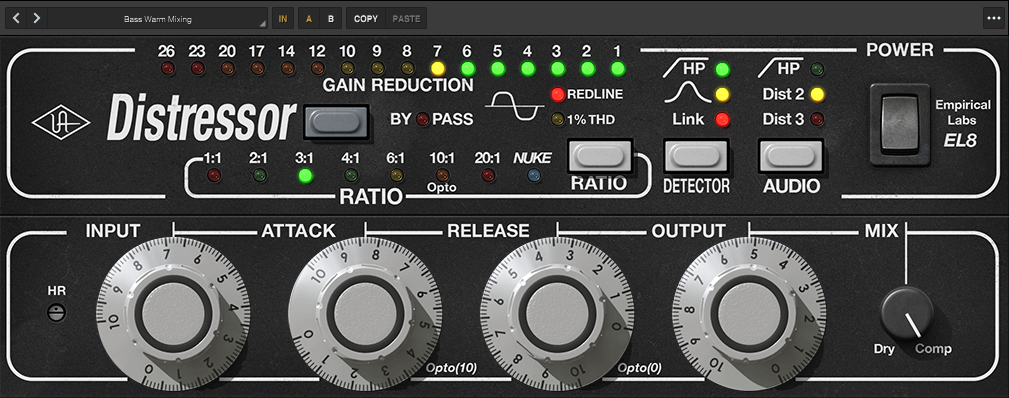
EL8 Distressor plugin recreates Dave Derr’s legendary 1993 hardware unit featuring eight compression ratios, four distortion modes, and flexible sidechain filtering all endorsed by the original inventor as indistinguishable from the hardware.
The plugin delivers compression thresholds and knee shapes that automatically switch based on selected ratio plus the top three ratios shift to entirely separate detection circuits where 10:1 emulates opto curve behavior while 20:1 and Nuke settings serve up ultra heavy compression and full on limiting. I can only say you get gentle lower ratios for transparency, versatile middle settings for general use, plus characterful Opto and crushing Nuke modes making this equally effective on delicate vocals or aggressive trap 808s.
- Eight Compression Ratios with Automatic Threshold
The ratio selector offers 2:1, 3:1, 4:1, 6:1, 8:1, 10:1 Opto, 20:1, and Nuke settings where each ratio automatically engages corresponding compression threshold and knee shape. In fact, the lower ratios provide subtle level control perfect for bus compression while middle ratios handle general tracking duties on drums, bass, and vocals.
The 10:1 Opto mode switches to optical circuit emulation delivering program dependent compression that reacts to signal density rather than just peak amplitude. So basically, the 20:1 and Nuke settings provide limiting action where Nuke becomes the go to for maximum aggression on trap drums and distorted 808s that need to dominate the mix.
- Four Audio Distortion Modes
Beyond clean compression the EL8 includes four distinct distortion algorithms adding harmonic richness and character. For instance, these modes range from subtle harmonic enhancement to full saturation letting you dial in everything from transparent glue to obvious colored tone.
- Detector and Sidechain Filtering
The Detector mode selection adjusts how the compressor responds to incoming signal with options that change compression character dramatically. The sidechain filtering prevents low frequencies from dominating gain reduction which stops kick drums and 808s from causing excessive pumping on full mixes.
On the other hand, this becomes crucial when compressing material with heavy low end because without filtering the bass content triggers the compressor too aggressively causing the entire mix to duck unnaturally. The filter keeps compression reacting to midrange and high frequency content while letting low end pass more naturally.
- Mix Control and Headroom Calibration
Universal Audio added a wet dry Mix knob enabling parallel compression without needing to set up auxiliary sends in your DAW. In the long run, this speeds up workflow dramatically when you want New York style parallel compression on drums or vocals.
- Attack and Release Precision
The Attack and Release dials provide precise timing control with the attack speed particularly impressive at low ratios where transient response matters most. The fast attack settings catch transients immediately perfect for controlling drum peaks while slower settings let transients through for more natural punch.
Freebies:
1. Audiolatry Drumtastic (Free Trap Drums)
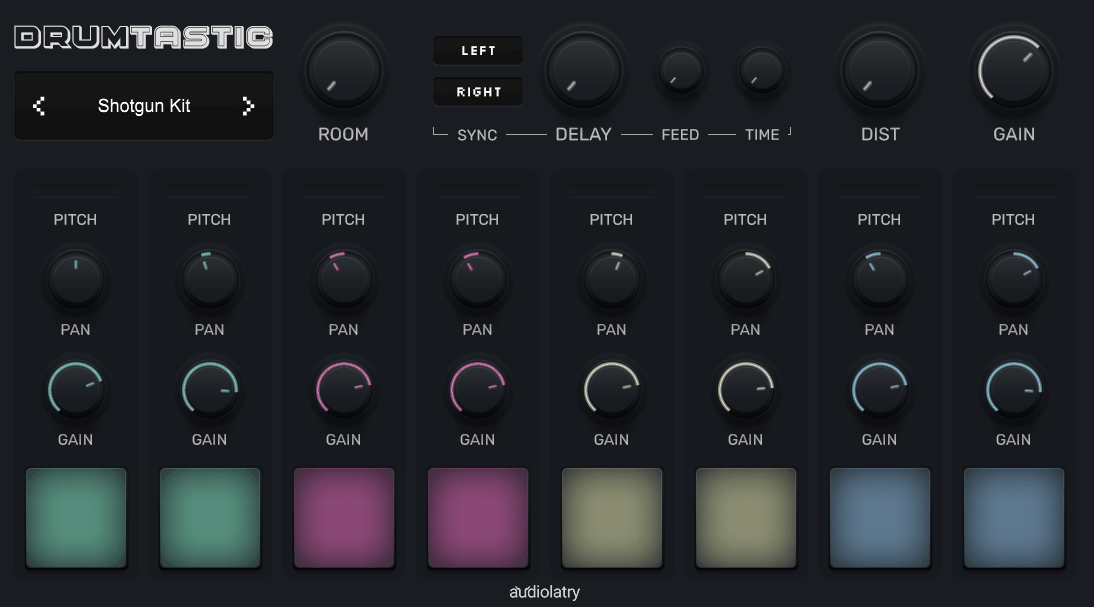
Audiolatry Drumtastic trap plugin delivers 50 complete drum kits with 8 customizable pads per preset plus built in room reverb, delay, and distortion all packaged in a straightforward interface that gets out of your way. I think when building trap beats you need drum sounds that hit hard without extensive processing but most free drum plugins either sound thin and lifeless or bury useful features under complicated interfaces.
In my opinion, the plugin is perfect for Hip Hop, Trap, EDM producers, and beatmakers who value speed over endless options providing immediately usable kits that work in mixes without requiring compression or EQ. Honestly, each kit contains 8 sounds mapped to individual pads with dedicated gain, pan, and pitch controls letting you balance levels and create stereo width without routing to separate mixer channels.
- Fifty Ready to Use Drum Kits
Drumtastic ships with 50 drum kit presets spanning Hip Hop, Trap, EDM, and electronic production styles where each preset delivers a complete set of sounds designed to work together musically. When it comes to sound selection, the kits include punchy kicks, snappy snares, crisp hi hats, and percussion giving you everything needed to build complete drum arrangements without loading multiple instances.
- Eight Pads with Individual Processing
Each kit provides 8 assignable drum pads featuring independent gain, pan, and pitch parameters for precise control over individual sounds. For instance, the gain controls balance drum levels within the kit while pan positioning creates stereo width by placing kicks center and spreading hi hats across the stereo field.
The pitch parameter adjusts ±12 semitones per pad letting you tune kicks to match your bassline key or create tonal variations from single samples. Overall, this eliminates bouncing audio or loading external pitch plugins when you need quick tuning adjustments during creative sessions.
- Three Built In Effects
The plugin includes global room reverb, tempo synced delay, and distortion effects that process the entire kit simultaneously. The room reverb adds natural space to dry samples without overwhelming the punch while delay syncs to your DAW tempo creating rhythmic effects that stay locked to your project grid.
In addition, the distortion effect adds harmonic saturation and grit essential for making trap drums cut through 808 heavy mixes.
2. Electronik Sound Lab 808 Bass Module 4 Lite (Free 808 Bass)
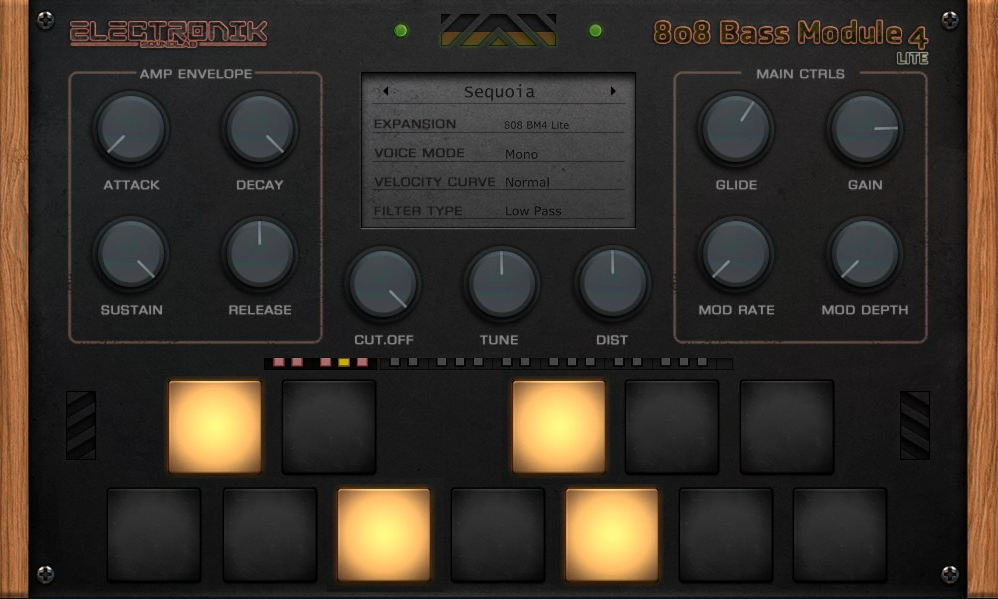
Trap and hip hop production demands deep sub frequencies that translate across all playback systems from club sound systems to earbuds. 808 Bass Module 4 Lite delivers 15 layered 808 bass presets completely free providing the harmonic grit essential for modern productions. I think the plugin functions as a dedicated 808 bass ROMpler with cutoff filter, ADSR envelope, LFO modulation, glide control, and built in distortion making it simple to dial in punchy 808s that sit perfectly in mixes without needing external processing.
All sounds are pre tuned and ready to play in any project key eliminating pitch correction issues common with 808 samples. Overall, the 15 presets range from clean sub focused bass to heavily distorted aggressive tones covering the full spectrum of modern 808 usage from subtle low end reinforcement to dominant melodic bass lines.
- Fifteen Layered 808 Presets
I like that plugin ships with 15 ready to use 808 bass presets designed for electronic music production where each preset combines multiple layers for depth and presence. When it comes to translation, these layered sounds provide both sub bass weight and harmonic content that helps 808s translate across different playback systems from club sound systems to laptop speakers.
The presets are 100% royalty free for commercial and personal projects meaning you can use them in released tracks without sample clearance concerns. I found the plugin valuable for producers monetizing beats who need royalty-free sounds.
- Cutoff Filter and ADSR Envelope
The lowpass cutoff filter shapes harmonic content by removing high frequencies for darker tones or opening up for brighter more aggressive sounds. For instance, combined with the ADSR envelope controlling amplitude over time you can create everything from short punchy kicks to sustained melodic bass notes.
The envelope attack controls how quickly notes fade in while decay and sustain determine body length and release sets tail behavior after key release. Honestly, this precise envelope control lets you match 808 behavior to your specific arrangement needs.
- LFO Modulation and Glide Control
The built in LFO adds rhythmic movement to 808 sounds by modulating parameters over time creating evolving tones that add interest to sustained bass notes. In addition, the glide time control enables portamento between notes essential for creating smooth melodic 808 slides characteristic of trap and hip hop production.
The glide parameter adjusts transition speed between pitches letting you dial in everything from subtle pitch bends to exaggerated slides. I’d say this eliminates needing to automate pitch when you want classic 808 slide effects.
- Distortion Control
The integrated distortion effect adds harmonic saturation pushing 808s forward in mixes by generating overtones that enhance presence without requiring external saturation plugins. The distortion amount adjusts from subtle warmth to heavy clipping giving you flexibility to match different production styles.
3. Sampleson OverHeat (Free Analog Saturation)
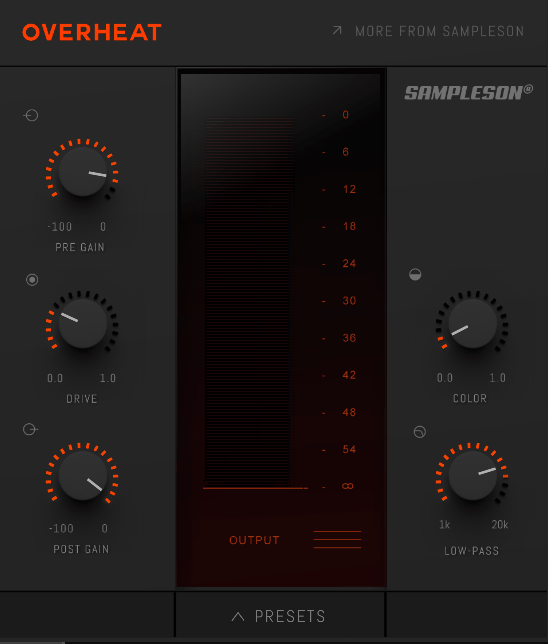
OverHeat VST caught my attention as it emulates tube saturation and analog compression, delivering the warm harmonically rich sound of pushed analog circuits to digital productions. When it comes to modeling authentic tube behavior, OverHeat really stands out because it processes offset before nonlinear processing, which means signals gain harmonic content and natural compression when components hit their limits. I found that this makes it incredibly effective for adding depth and character to individual tracks or complete mixes.
- Tube Saturation Modeling with Offset Processing
Honestly, what impressed me most about OverHeat is how it uses tube saturation principles by adding offset before nonlinear processing, which creates more realistic and natural sounding saturation compared to basic distortion algorithms. For instance, this modeling of harmonic content before nonlinear processing adds harmonics musically, enhancing overall character and tonal quality without sounding artificial or digital.
The saturation effect responds dynamically to input level where louder signals generate more distortion and compression, mimicking how analog gear behaves when pushed.
- Three Gain Stages for Flexible Processing
The pre gain control sets input level, determining how hard the saturation circuit gets hit before processing begins. I’d say the drive parameter is really the heart of the plugin, it adjusts saturation intensity and functions as the main control for harmonic generation and compression amount, while post gain compensates for level changes, maintaining consistent output volume regardless of saturation settings.
This three stage gain structure enables precise control over saturation character where you can drive the effect hard for aggressive coloration then reduce output to avoid clipping. The metering occupies the interface center, providing clear visual feedback on signal levels throughout the saturation process.
- Color and Filter Controls
The color knob shapes midrange frequency response, affecting how the saturation enhances presence and body in different source materials. I found that this parameter works particularly well on clean guitars, electric bass, and synths, adding warmth without muddying low end or making high frequencies harsh.
4. SMI Music Trap E Piano (Free Electric Piano)
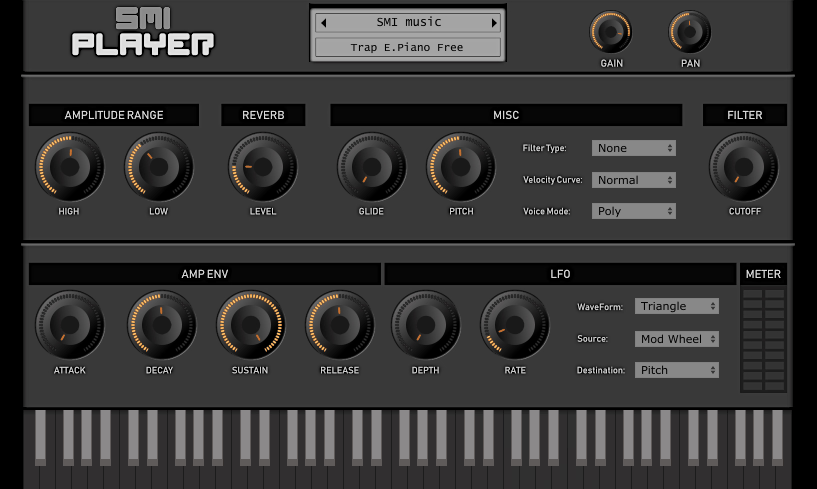
Creating melancholic trap melodies requires electric piano sounds that cut through 808 heavy mixes without sounding too bright or thin. I feel like SMI Music’s Trap E Piano can be considered a great trap plugin as it delivers purpose built electric piano tones optimized specifically for trap production featuring 32 bit samples, three velocity layers, and a 227 MB library designed to sit perfectly between deep sub bass and crisp hi hats without requiring extensive EQ or processing. At the end of the day, this is one of those plugins that just works right out of the box.
The plugin provides dark melancholic character at soft velocities shifting to more aggressive digital timbre when played hard, matching the dynamic range needed for both atmospheric chord progressions and punchy rhythmic stabs. That being said, the three velocity layers respond to MIDI note velocity creating expressive performances that sound natural rather than static or robotic. I noticed that this makes a huge difference when programming melodies. For the most part, you can get away with minimal tweaking. Plus, I would recommend this to anyone working on trap productions. In my opinion, it’s one of the best free electric pianos for the genre.
- Three Velocity Layers
The velocity layering system triggers different samples based on key press strength where gentle playing produces thoughtful contemplative tones while hard strikes deliver bright percussive attacks with more edge and presence. This dynamic response adds realism making programmed MIDI performances sound like actual keyboard playing rather than copy pasted notes.
The three distinct velocity zones cover soft, medium, and hard playing giving you enough dynamic range to create musical phrases with natural crescendos and accents. This prevents the flat lifeless sound common in single layer sample instruments where every note has identical character regardless of playing intensity.
- 32 Bit Samples for Maximum Fidelity
The plugin uses 32 bit sample depth ensuring high accuracy and sound clarity that preserves all nuances from the original electric piano recording. This bit depth provides crystal clear timbre critical in dense trap mixes where each element competes for frequency space and muddy samples get buried under 808s and drums.
The high quality samples minimize need for intensive equalization since the tones already have proper frequency balance and character built in. You can load the instrument and immediately start writing without spending time correcting tone issues or fighting resonances that plague lower quality sample libraries.
- Dark Timbre Calibrated for Trap Production
Unlike versatile electric pianos trying to cover all genres, Trap E Piano’s sound palette is purposefully calibrated for trap aesthetics delivering tones that fit the dark atmospheric or melancholic vibe central to the genre. The timbre has inherent character eliminating the generic clean sound that requires heavy processing to achieve proper mood.
This genre specific calibration means the piano integrates naturally into trap arrangements leaving frequency space for powerful 808 bass and clear drums. You get mix ready sound with minimal effects processing needing only basic reverb and delay to achieve professional results rather than fighting EQ curves and compression to make generic piano samples work.
- Compact Library Size and Fast Loading
The unpacked sample library occupies approximately 227 MB making this a lightweight instrument that loads quickly without taxing system resources. This compact footprint enables use on computers with limited RAM or storage plus allows loading multiple instances when layering sounds or using different velocity curves across arrangement sections.
The small size doesn’t compromise sound quality since the developers focused samples on the specific frequency range and character needed for trap rather than recording every possible articulation and dynamic level across the full keyboard range. This targeted approach delivers essential sounds efficiently.
5. Sonic Anomaly Transpire (Free Transient Shaper)
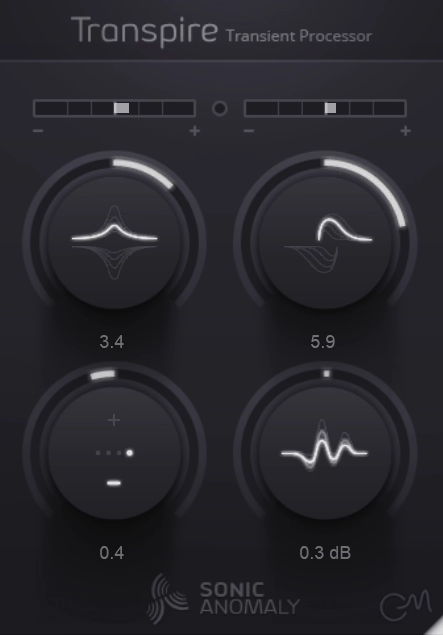
Trap drums need aggressive attack and controlled sustain to punch through dense 808 mixes without muddying low end frequencies. From my perspective, Sonic Anomaly Transpire is a game changer for shaping drum transients. Soft hitting drum samples get buried under bass while overly processed transients sound unnatural and lifeless.
In fact, Transpire shapes attack and sustain independently using nonlinear processing that affects smaller transients more aggressively than louder hits, bringing out subtle details in drum tracks without negatively impacting the hardest strikes. On the other hand, most transient shapers don’t have this level of intelligence.
- Nonlinear Processing for Natural Results
Transpire uses nonlinear signal processing on input where smaller transients receive more aggressive treatment than loud hits. This intelligent approach preserves natural dynamics preventing the pumping artifacts common in linear transient processors that apply identical processing regardless of signal level.
- Independent Attack and Sustain Controls
The attack knob enhances or dampens transient peaks giving you control over the initial strike that defines percussive character. Boosting attack adds punch and clarity making drums sit forward in mixes while reducing attack softens aggressive samples creating more laid back grooves.
The sustain parameter shapes body and decay controlling everything after the initial transient. Reducing sustain tightens drum sounds removing excessive ring and bleed ideal for trap where kicks and snares need to be short and punchy. Increasing sustain adds body and room tone when working with overly dry or dead sounding samples.
- Adjustable Sensitivity for Different Sources
The sensitivity control adjusts transient detection threshold determining what the plugin considers a transient worth processing. This flexibility enables effective use on non percussive material like bass guitar, piano, or synth plucks where transient characteristics differ from typical drum hits.
6. Sixth Sample Deelay (Free Delay & Reverb)
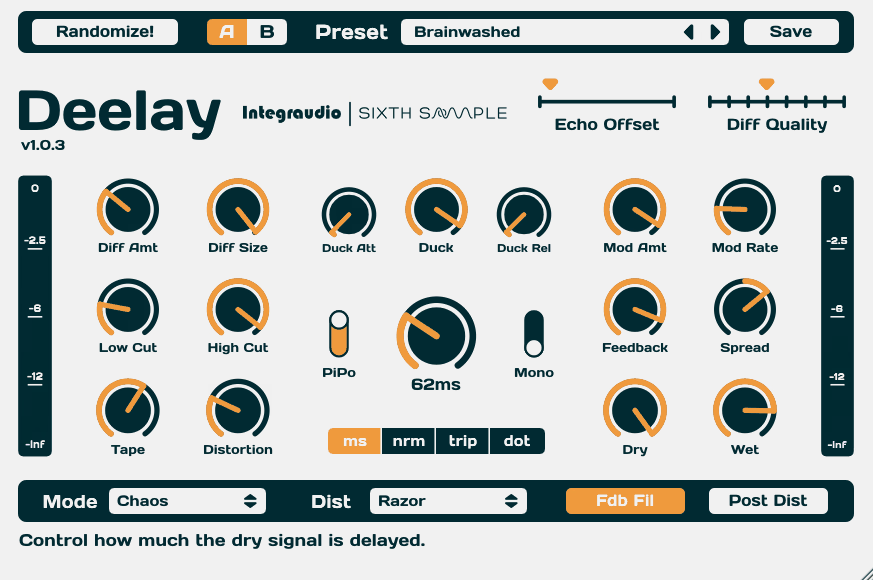
Trap vocal production demands creative delay effects that add space and movement without cluttering frequency ranges occupied by 808s and hi hats. Generic delay plugins offer basic timing controls but lack the character shaping tools needed for modern production workflows.
I feel like I should mention that combining multiple delay plugins to achieve diffusion, distortion, and modulation wastes CPU resources and complicates signal routing. I noticed that Sixth Sample Deelay packs diffusion for creating reverbs, distortion from subtle saturation to aggressive waveshaping, modulation for animating sounds, plus five delay modes in a single streamlined interface that handles both traditional rhythmic delays and experimental ambient textures.
At the core of it, this trap VST plugin is actually a complete delay and reverb solution. For example, you can create everything from tight slapback delays to massive ambient washes. On top of that, the interface is super intuitive. I would recommend this to anyone working on trap vocals. In my opinion, it’s one of the most versatile free delay plugins available.
The plugin provides delay time from 0 to 1000 milliseconds in millisecond mode plus Normal, Triplet, and Dotted modes that sync to project BPM for musical timing that locks to groove. The ping pong and mono switches enable quick stereo field adjustments while A/B comparison lets you evaluate two different settings instantly during mixing sessions.
- Diffusion Creates Reverb from Delay
The diffusion amount and size controls transform delays into lush reverbs similar to how Valhalla Supermassive creates cinematic swells from delayed signals. This eliminates needing separate reverb plugins when you want to blur delay repeats into ambient washes that sit behind vocals without competing for clarity.
The diffusion process works by scattering delay repeats across the stereo field creating density that sounds like natural room reflections rather than discrete echoes. You can create small chamber sounds or huge cinematic spaces depending on size parameter settings.
- Multiple Distortion Modes Add Character
Deelay includes distortion with various characters ranging from saturation to tube to pixelated giving you tonal coloration options beyond clean digital delay. The distortion processes delayed signals adding harmonic content and edge that helps delays cut through dense mixes without requiring excessive volume.
In addition, the tape emulation introduces wow and flutter mimicking analog tape machine imperfections that modulate delay time creating vintage character. This time modulation prevents delays from sounding sterile or mechanical adding movement and unpredictability to repeats.
- Modulation and Spread Controls
The modulation amount modulates delay time creating chorus like movement on repeats while modulation rate adjusts speed of the time modulation effect. The spread parameter controls stereo width of delayed signal from mono center to wide stereo imaging.
The plugin ships with 100 factory presets covering traditional delay sounds plus creative effects and includes resizable interface with helpful hover text explaining each parameter. Available in VST3 and AU formats for Windows 8.1 and above plus macOS 10.9 upwards.
7. Sixth Sample Cramit (Free OTT Multiband Compressor)
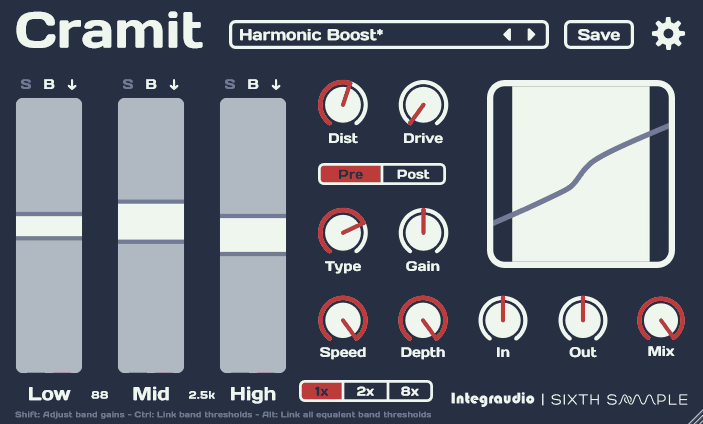
To be honest, Cramit is one of those plugins that completely changed how I approach vocal and synth processing. I think trap vocals and synths need extreme dynamic control and saturation to achieve modern hypercompressed sound without losing clarity or causing pumping artifacts.
In the bigger picture, Sixth Sample & Integraudio Cramit delivers OTT style multiband compression with integrated distortion providing three bands of upwards downwards compression and expansion plus seven distortion types controllable through a single unified interface designed for speed and musical results rather than complex routing and parameter overload. For example, you can dial in aggressive compression without opening multiple plugins.
On top of that, the workflow is incredibly fast. I’d say it’s worth checking out if you’re serious about modern trap production. At first glance, it might seem overwhelming, but once you understand the controls, it’s super intuitive. In my opinion, this is the best free OTT alternative available.
The plugin offers pre or post distortion placement determining whether saturation occurs before or after compression affecting how harmonics interact with dynamic processing. The 10 factory presets provide starting points for common applications while the resizable interface adapts to different screen sizes and workflow preferences.
- Three Band Upwards Downwards Compression
Cramit uses three frequency bands with independent upwards and downwards compression plus expansion where upwards compression boosts quiet signals bringing out details and downwards compression tames peaks controlling dynamics. This dual action creates the characteristic OTT sound where soft and loud signals move toward similar levels producing dense saturated mixes.
The expansion parameter adds gating behavior removing unwanted noise and room tone between vocal phrases or instrument hits. This three way processing per band provides granular control over how each frequency range behaves dynamically enabling surgical shaping that maintains punch while achieving extreme density.
- Integrated Seven Type Distortion
The plugin includes seven distinct distortion algorithms ranging from subtle harmonic enhancement to aggressive waveshaping all accessible through a unified control. This single knob approach simplifies workflow when you want saturation without opening separate plugins or creating complex signal chains.
The pre post distortion switch changes processing order where pre distortion saturates before compression causing the compressor to react to harmonically rich signal while post distortion adds saturation to compressed output creating different tonal characteristics. This routing flexibility enables both transparent dynamic control with added color or heavily processed aggressive textures.

Hello, I’m Viliam, I started this audio plugin focused blog to keep you updated on the latest trends, news and everything plugin related. I’ll put the most emphasis on the topics covering best VST, AU and AAX plugins. If you find some great plugin suggestions for us to include on our site, feel free to let me know, so I can take a look!