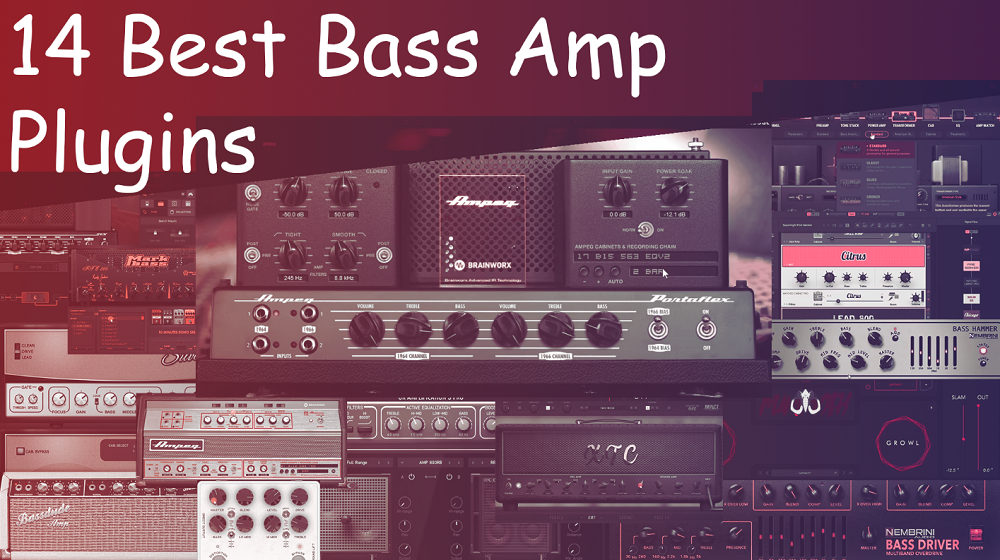
Today I’m sharing some of the best bass amp plugins you can get in 2026 and later. Many of these offer trial or demo versions you can try out directly in your DAW.
Chasing the perfect bass tone in a plugin is surprisingly satisfying. You get that mix of warmth, punch, and presence that feels alive, even without an amp in the room. Each amp sim has its own character, from the smooth Motown sound of Brainworx’s Ampeg B-15N to the aggressive tone of Neural DSP’s Darkglass Ultra.
Some plugins aim to capture every detail of vintage circuits. Others offer modern features like detailed cab sims, impulse loaders, and parallel processing. What they all share is a realistic feel that makes you forget you’re working with software.
Whether you want grit, clarity, or strong low-end, this lineup shows that virtual amps are more than just copies. They have become instruments themselves.
1. Brainworx Ampeg B-15N
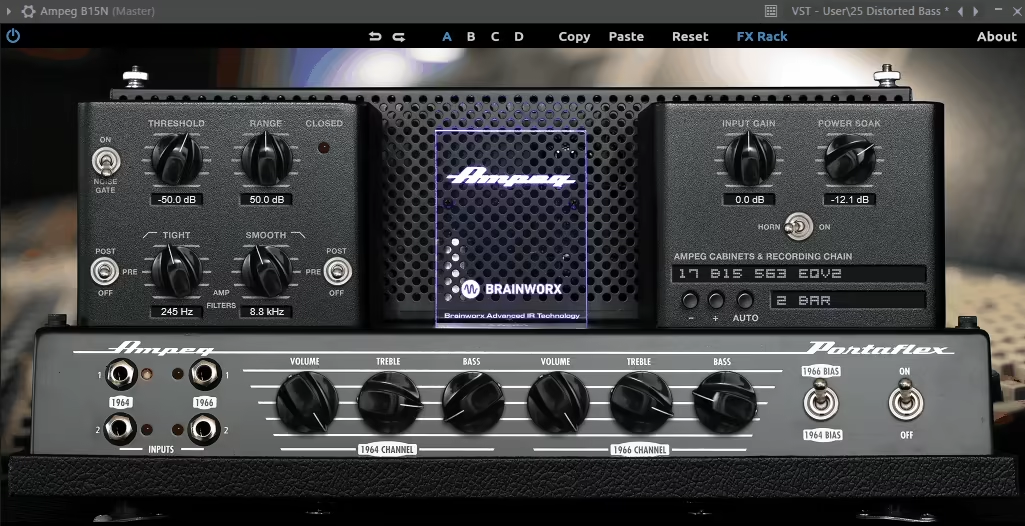
If classic studio bass tone is what you’re after, it’s hard to find anything better than the Ampeg B-15N. It nails the smooth Motown warmth with a full, supportive low-end that never gets muddy, and that’s not a happy accident. It comes from two carefully modeled circuits that each bring something different to the table.
The ’64 mode has a softer, rounder character that works beautifully for anything laid-back and vintage. The ’66 setting adds more punch and midrange bite when you need presence in a dense mix. Push either one harder and the sound starts to snarl in a completely musical way, giving DI bass tracks the kind of life and depth you usually only get from a real amp in a treated room.
Under the hood you get two authentic circuit models capturing the difference between the cathode-biased 25-watt design and the tighter fixed-biased 30-watt circuit. The dual 6L6 power section and Baxandall EQ deliver thick, musical lows and a natural top-end roll-off, exactly like you hear on classic Motown and Stax recordings.
The Brainworx FX Rack adds a Noise Gate, Power Soak, and pre- and post high-pass and low-pass filters, while 42 studio-grade recording chains captured through a Neve-equipped room give you mix-ready cabinet tones without touching a mic or an EQ.
It’s still the best vintage bass sim on the market, in my opinion.
2. IK Multimedia AmpliTube SVX 2
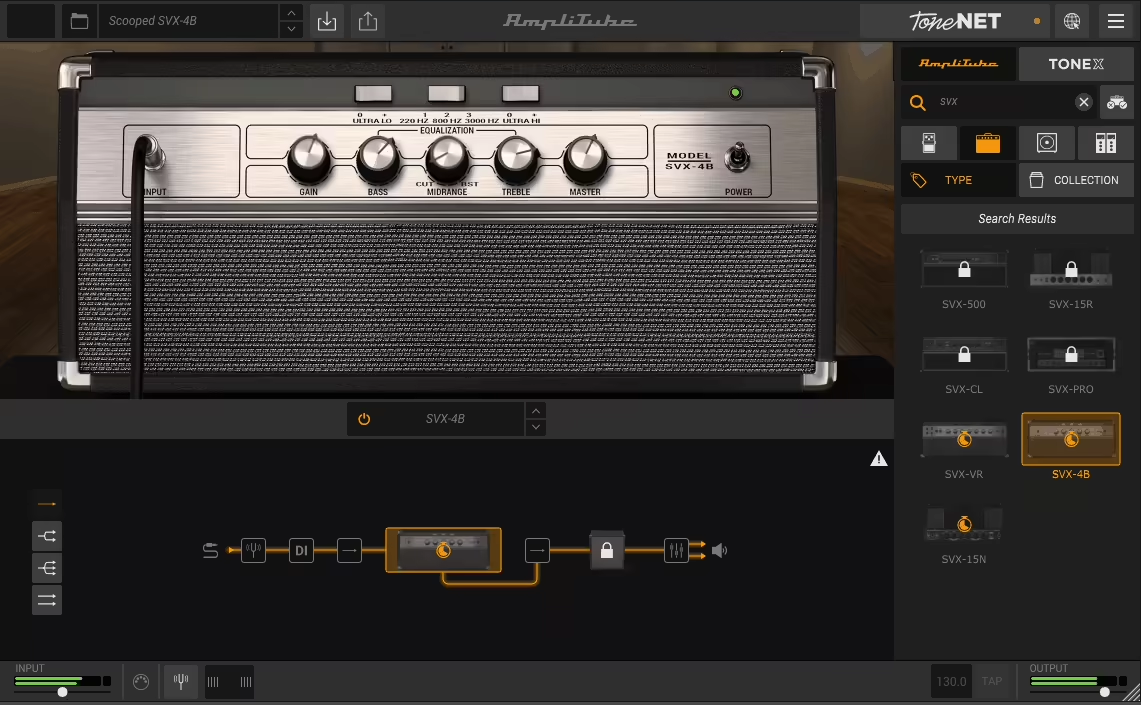
For players who want authentic, responsive bass tones that hold together under real recording conditions, AmpliTube SVX 2 is a genuine upgrade worth taking seriously. The three new amp models deliver depth and punch you rarely hear from standard bass plugins, and the low-end stays clear and controlled even when you push the gain harder than you probably should.
What really sets it apart is the VIR Cabinet Section, which gives you up to 2,400 impulse responses per cabinet with precise mic placement and realistic room behavior. That level of cab realism is unusual, and it shows the moment you start switching positions.
It integrates seamlessly with AmpliTube 5 for full signal chains, parallel routing, and more complex processing setups, and it runs standalone with full MIDI support for live use with controllers like iRig Stomp I/O or BlueBoard.
If you record DI bass at home, this gets you surprisingly close to the sound of a real miked cabinet without leaving your chair.
3. Shreddage Amp XTC
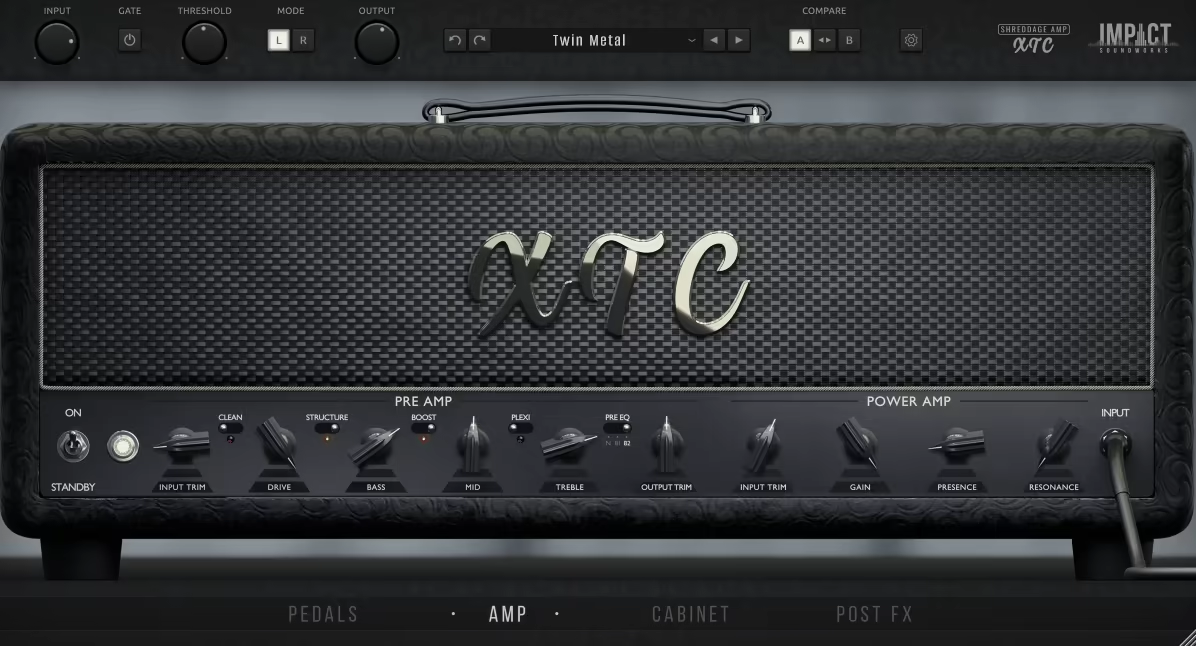
Most amp sims fake touch sensitivity. Shreddage Amp XTC actually has it, and that’s the thing that keeps me coming back. It has the character of a boutique German amp, staying dynamic and responsive at lower gain, then opening up with rich harmonics when you really dig in. That kind of responsiveness is hard to engineer and most plugins don’t bother trying.
The circuit-level modeling captures every transistor and tube stage, and you can feel the difference in how it responds. Dual channels with separate gain and drive controls, plus Structure, Boost, and Plexi switches, let you go from sparkly clean to heavy modern crunch without ever fighting the plugin.
The modular pedalboard covers 12 slots split pre- and post-cab, stocked with a Tube Screamer, Klon Centaur, LA-2A-style compressor, BBD delay, chorus, EQ, and reverb. Then there’s the advanced cabinet section with 13 cabs, SM57/U87/TLM103/R-121 mic options, on and off-axis blending, stereo panning, and a custom IR loader on top of all that.
For metal and aggressive rock bass, nothing here comes close.
4. Ampeg SVT-VR by Brainworx
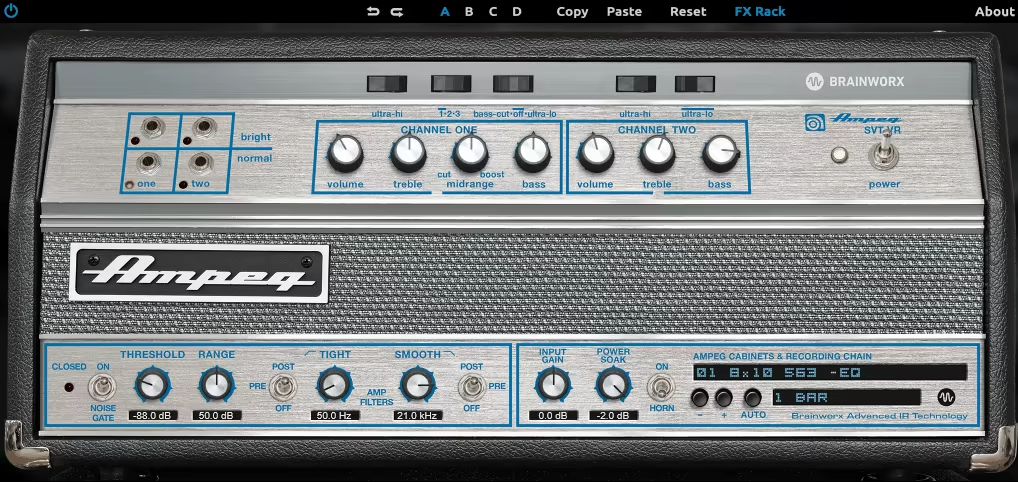
If you’ve ever tracked bass through a real SVT, you know exactly what this plugin is going for. That deep, chest-hitting low-end, the growling mids, the sense that the amp is working with you and not just amplifying your signal. Brainworx’s SVT-VR gets you there without the weight, the heat, or the maintenance bills.
It’s built around a true 300-watt SVT recreation with two channels, 3-band and 2-band EQs, and Ultra-Low, Ultra-Hi, and Bass Cut switches for detailed tone shaping.
The 23 Neve-recorded chains give you studio-quality cab tones ready to drop straight into a session, and the Brainworx FX Rack handles the dynamics with a Noise Gate, Power Soak, and Tight and Smooth filters. CPU usage runs high on dense sessions, so keep that in mind, but the tone you get in return makes it a trade-off most people will make without hesitation.
5. Overloud Mark Studio 2
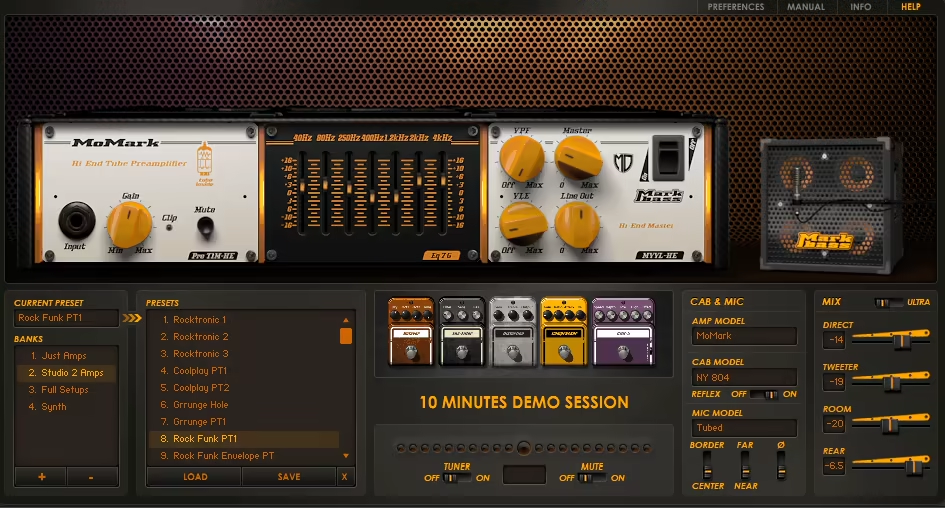
There’s a reason Markbass amps show up on so many professional stages, and Mark Studio 2 captures that sound with enough flexibility to cover a wide range of styles without feeling like a compromise. Six real amp models, including the TA501, R500, Classic 300, TTE500, Little Mark Tube, and MoMark, are each modeled carefully enough to deliver the signature warmth and punch the brand is known for. Nine cabinets ranging from compact 1x12s to the massive Classic 108 8×10 cover any playing situation you can think of.
The built-in pedalboard handles octave, envelope filter, distortion, chorus, and compressor, and the six-mic blending system lets you mix two microphones simultaneously while controlling the balance between Direct, Line Out, and Mic outputs. It genuinely feels like working in a real studio setup, minus the noise and the cable runs.
Just be ready to spend some time with the mic and IR balance before it sits exactly right in a mix. It rewards patience, and it’s worth it.
6. Nembrini Audio Bass Hammer
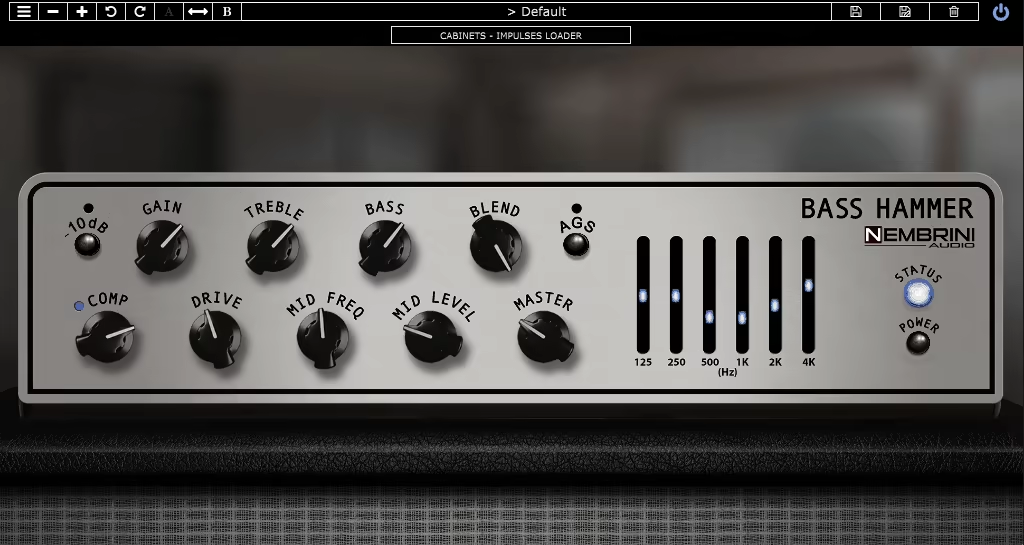
Getting aggressive bass tone that still sounds alive and dynamic is harder than it looks, and that’s exactly what the Bass Hammer pulls off consistently. The Adaptive Gain Sculpting engine is the key difference here. It adjusts the EQ curve and gain in real time based on how you’re playing, adding harmonic richness and keeping the mids punchy without sacrificing any low-end depth. That’s a genuinely clever piece of engineering that you notice immediately.
The six-band graphic EQ at 125Hz, 250Hz, 500Hz, 1kHz, 2kHz, and 4kHz gives you precise control over exactly where your tone sits in a mix. Four cabinet models, four microphone emulations, and a parallel DI channel with a built-in compressor and ambient reverb let you build a complete, mix-ready sound entirely inside one plugin.
The dual IR loader takes it further, letting you blend two custom impulse responses and combine them with the DI signal before or after processing. The interface is dense and takes some time to learn, but the results are genuinely impressive once you’ve put the hours in.
7. Neural DSP Darkglass Ultra
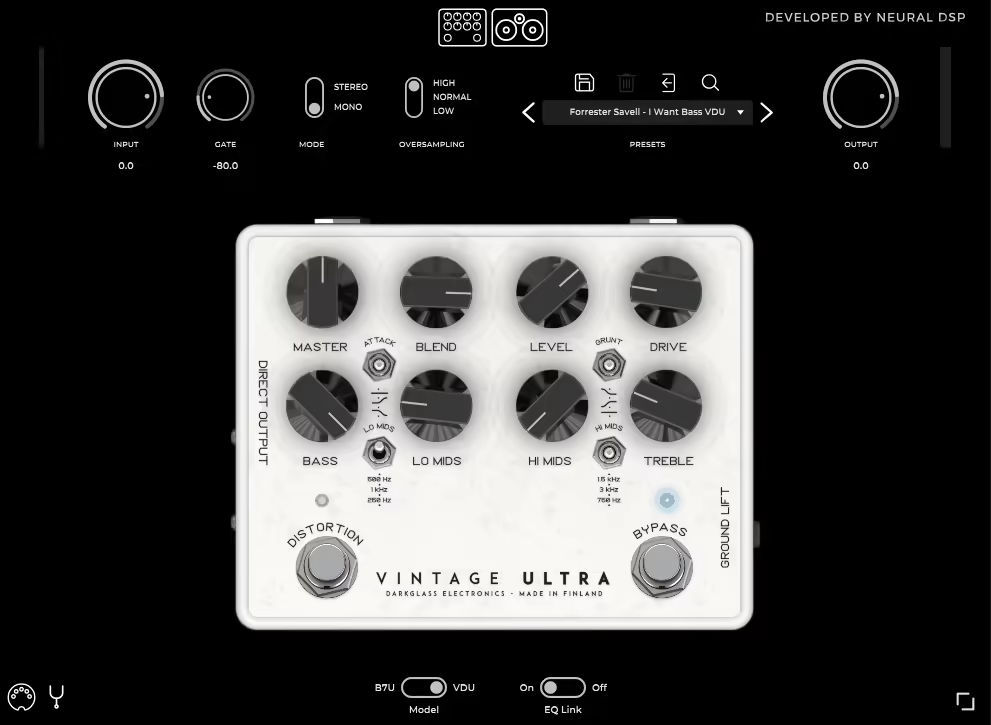
Tight, aggressive, and ready to cut through a mix straight out of the box. That’s what you get with the Darkglass Ultra, and it earns that reputation by faithfully recreating both the B7K Ultra and Vintage Ultra preamps without cutting corners on the saturation or the midrange character that defines the Darkglass sound. You can switch between modern grit and smoother vintage warmth in seconds, and both modes hold up under real mixing conditions.
The controls are comprehensive without being overwhelming. Drive, Blend, Level, Attack, and Grunt handle the overall character, while the four-band EQ with selectable mid frequencies from 250Hz to 1kHz and 750Hz to 3kHz gives you surgical precision when you need it. The DG210C cabinet with seven virtual microphones, a sub-kick channel, and a Tweeter knob adds edge and brightness across different positions. It also runs standalone without a DAW, which makes it genuinely useful for live practice.
The only real complaints are the lack of a bundled pedalboard and fairly minimal DI enhancements, but for the core Darkglass sound, this is the definitive plugin version of it.8. Nembrini Audio Bass Driver
8. Bass Driver Multiband Overdrive
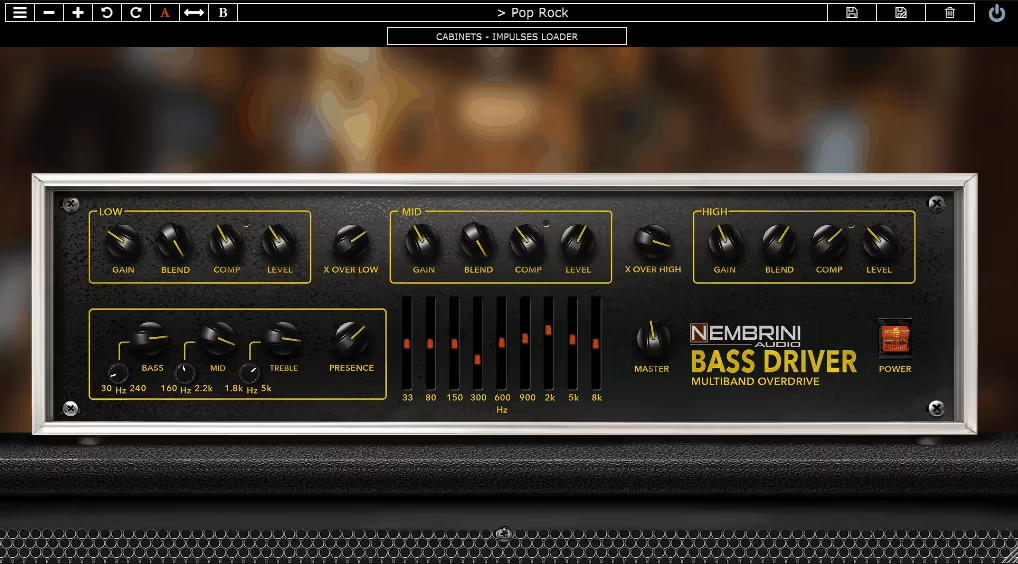
Frequency-specific overdrive sounds like a technical feature until you actually hear what it does to a bass track, and that’s where the Bass Driver Multiband Overdrive makes its case. The three-band overdrive engine with parametric crossovers splits your signal into low, mid, and high bands, applying distortion exactly where you want it. The lows stay fat and controlled, the highs stay smooth, and nothing smears across the spectrum in the way it does with single-band drive plugins.
Four bass cabinets, four microphone models, and a parallel DI path with a console-style compressor and ambient reverb give you a complete signal chain without reaching for another plugin.
The impulse loader supports two external IRs with mix controls, and the Bass Enhancer circuit, inspired by the Little Labs Voice Of God, adds deep, physical low-end that you feel as much as hear. You might need to spend some time with the EQ to get it sitting perfectly in a mix, but the raw material here is excellent.
9. Audified GK Amplification 3 PRO
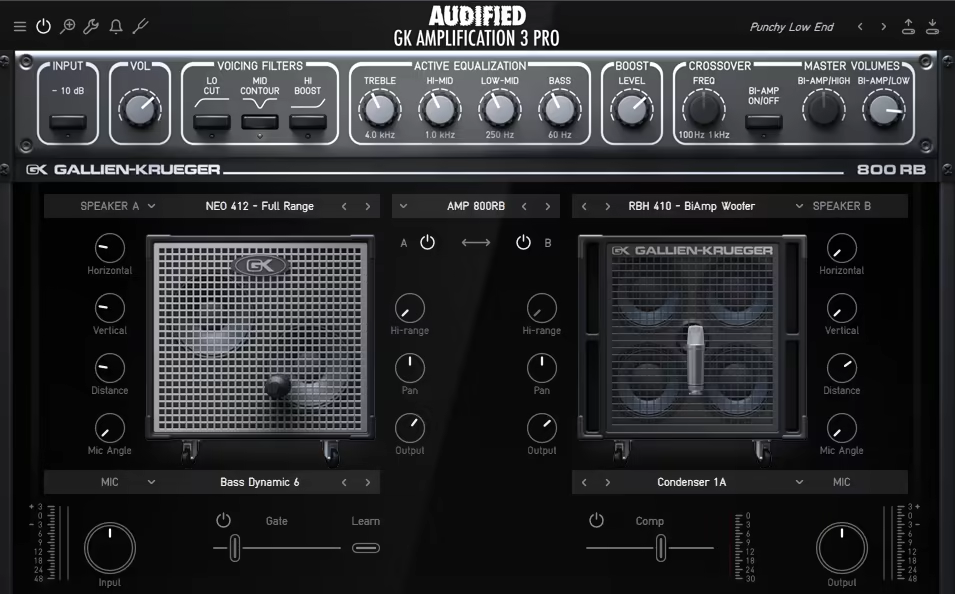
Three amps in one plugin sounds straightforward until you realize how different the 800RB, MB150, and 2001RB actually are from each other, and how carefully GK Amplification 3 PRO has modeled each one. The 800RB brings punchy, gritty rock character. The MB150 is cleaner and more compact-sounding. The 2001RB is the big, full-range modern workhorse. Having all three available without switching plugins gives you a lot of genuine tonal range without any artificial feel.
The Smart Gate, Compressor, and built-in Tuner keep your signal clean and consistent during tracking or live use, and three matching cabinets with woofer and tweeter variations, nine mic options with adjustable placement, and a custom IR loader round out a feature set that’s more comprehensive than the price suggests.
The interface looks a bit dated compared to newer plugins, but the GK tone is real, and for a lot of bass players, that’s the only thing that matters.
10. Brainworx bx_bassdude
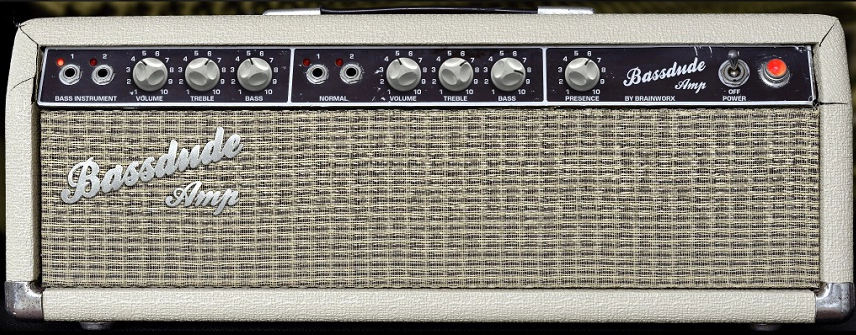
Some plugins reward you for playing into them rather than just tweaking settings, and the bx_bassdude is one of them. At lower volumes it stays smooth and clean. Push it past volume 4 and you get genuine tube crunch that feels earned rather than digitally imposed, because it’s accurately recreating the early 1960s Blonde Bassman and everything that made that amp respond the way it did.
The 35 impulse responses recorded through a Neve console using real cabinets, microphones, and outboard gear give you mix-ready tones right out of the box. Instrument and Bass modes let it work for guitar too, and the built-in Noise Gate, hi/lo-pass filters, lo-fi delay, and Power Soak simulation give you enough studio control to shape dynamics and saturation without reaching for anything external. It won’t give you modern high-gain aggression and it isn’t trying to. As a vintage tone machine, it’s excellent.
11. Positive Grid BIAS Amp 2 Pro (Discontinued)
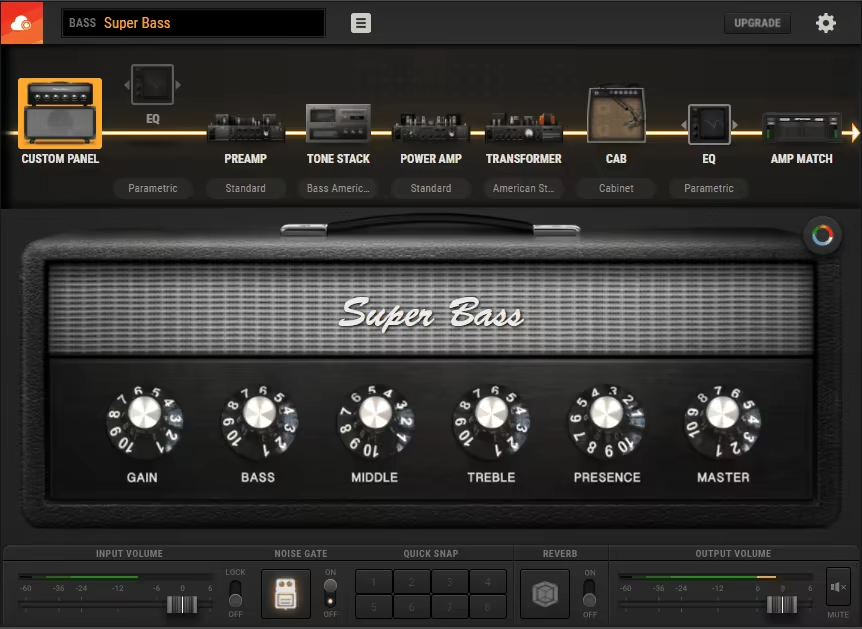
There was genuinely nothing else like BIAS Amp 2 Pro when it was around. The virtual amp designer let you mix and match preamp tubes, power amp circuits, transformers, tone stacks, and cabinets to build something from scratch, and the results felt and responded like real hardware in a way that was unusual for the time and is still impressive looking back.
Amp Match technology could analyze and copy the tone of any real amp or recorded track, and with up to 100 factory presets plus the ability to save your own, it was a legitimate tone-matching tool rather than a gimmick.
ToneCloud integration turned it into a community platform, with thousands of artist-designed amps available for download and cloud storage for your own designs. It’s discontinued now, so if you own it already, keep it and don’t let it go. If you don’t, finding something that does everything it did in one package is going to take some searching.
12. Aurora DSP Mammoth
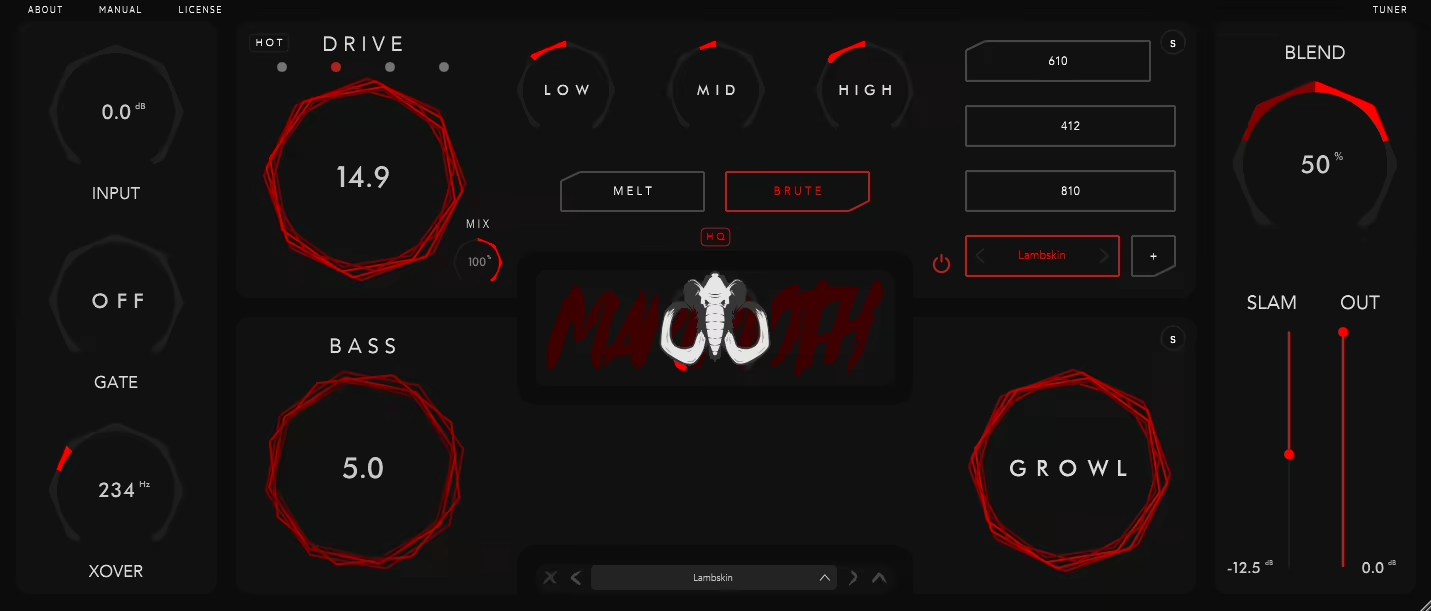
Parallel processing is one of those features that sounds like a buzzword until you hear what it actually does for a bass tone, and Mammoth is the plugin that makes the strongest case for it. It splits your signal into low and high bands using a variable 20Hz to 800Hz crossover, keeping the lows clean while pushing the highs through one of four drive models, then blending everything back together. The result is a modern bass tone with real definition at every volume level, because the low-end never gets consumed when you push the gain.
The four drive models cover serious ground: Green for classic preamp warmth, Red for V4 head character, Purple for AC30 bass head tone, and Blue for B7K-style aggression. A 3-band EQ, Bass Maximizer, Growl control, IR loader, and three Aurora-designed cabinet sims keep everything mix-ready without needing outside help. It absolutely deserves a spot on any serious bass plugin shortlist.
13. Native Instruments Guitar Rig 7 Pro
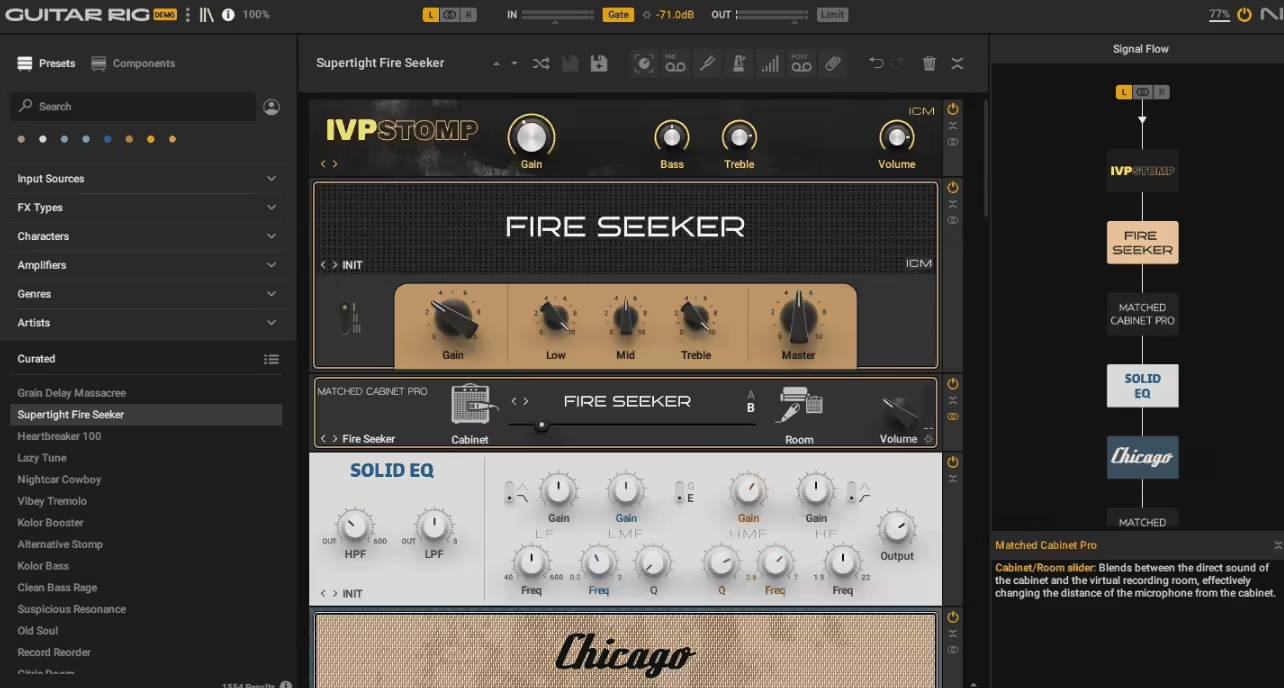
Flexibility without chaos is a hard balance to strike in a plugin suite, and Guitar Rig 7 Pro pulls it off better than most. The four Intelligent Circuit Modeling amps, including the Super Fast 100, Reverb Delight, AC Box XV, and Bass Rage, use machine learning to closely match the tone and dynamic response of real hardware. Bass Rage in particular is worth serious attention from anyone who wants something with genuine personality rather than generic amp sim character.
The expanded creative tools add Tape Wobble, Noise Machine, Vintage Vibrato, and Kolor for texture that most amp sims simply don’t offer. The Ozone Maximizer handles loudness and dynamics without needing a separate plugin, and the redesigned IR loader pulls from top-tier engineers like Jens Bogren and Kristian Kohle for realistic cabinet depth. Loop Machine Pro makes it useful for live performance as much as studio work. The interface gets busy quickly, and if you just want to plug in and play, it can genuinely frustrate you. If depth and creative range are what you’re looking for, it’s hard to beat.
14. Waves Voltage Amps
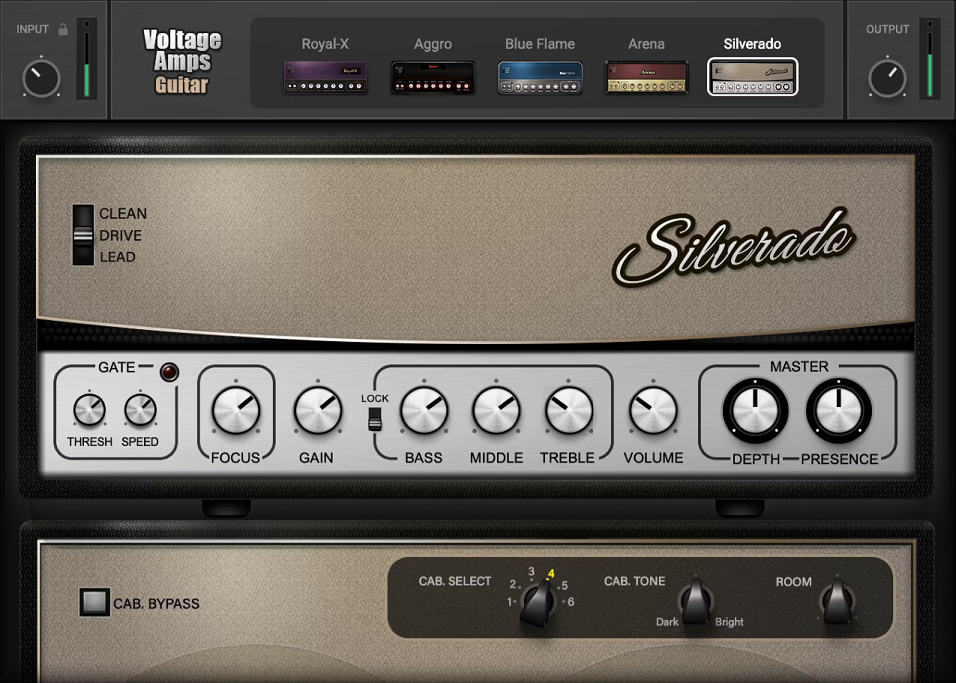
Not every session needs a plugin with a hundred parameters, and that’s where Voltage Amps makes its case. Seven amp models covering clean to high-gain across classic American and British amp styles, all sounding balanced and musical with minimal tweaking required. It gets out of your way and lets you focus on playing, which is more valuable than it sounds when you’re trying to move quickly through a session.
The Focus control is genuinely smart design, letting you adjust the amp’s character to match your specific instrument and pickups without EQ gymnastics. Muddy humbuckers get tightened up, sharp single coils get smoothed out, and the whole thing takes seconds. Over 400 artist-designed presets from producers including Butch Vig and Dave Mustaine mean you can find something inspiring fast, and 100 plugin FX chains extend the palette further. It’s not the deepest plugin here, but for professional-sounding bass tone with minimal friction, it consistently delivers.

Hello, I’m Viliam, I started this audio plugin focused blog to keep you updated on the latest trends, news and everything plugin related. I’ll put the most emphasis on the topics covering best VST, AU and AAX plugins. If you find some great plugin suggestions for us to include on our site, feel free to let me know, so I can take a look!